A new report from the AAA indicates that American motorists encounter damage from potholes three times a year, with each incident costing an average $300 to repair. Middle and working class drivers feel the pinch disproportionately.


The AAA survey serves as yet another reminder that rather than laying more asphalt for new roads, governments at all levels need to prioritize maintenance and repair—referred to as a "fix-it-first" approach. The damage caused by poorly roads costs Americans an extra $3 billion in annual auto repair costs.
"AAA cautions drivers to remain alert to avoid pothole damage, and urges state and local governments to fully fund and prioritize road maintenance to reduce vehicle damage, repair costs and driver frustration," states the AAA press release.
The problems range from tire punctures and bent wheels, to more expensive suspension damage.
Poorly maintained roads have a disproportionate effect on middle and working class drivers—something critics of gas tax increases who are quick to cite the "regressiveness" of the gas tax might consider.
According to AAA’s survey, middle- and lower-income individuals are the most worried about potholes, with the majority of respondents in households having annual incomes under $75,000 expressing the highest levels of concern over damaged roadways. This is likely due in part to the financial impact, as pothole damage can lead to expensive and extensive vehicle repairs.
While the responsibility for well-maintained public roads lies squarely with government agencies, there are steps motorists can do to lessen damage to their vehicles. See AAA's tips to drivers. Recommendations are also listed in their fact sheet [PDF] on the survey.
Finally, no mention of damages to bicycles, but as any cyclist knows, they feel, quite literally, the effects of poorly maintained roads. Cycling Weekly (UK) prepared a "Guide to tackling potholes on a bike."
Read the full story: Pothole Damage Costs U.S. Drivers $3 Billion Annually
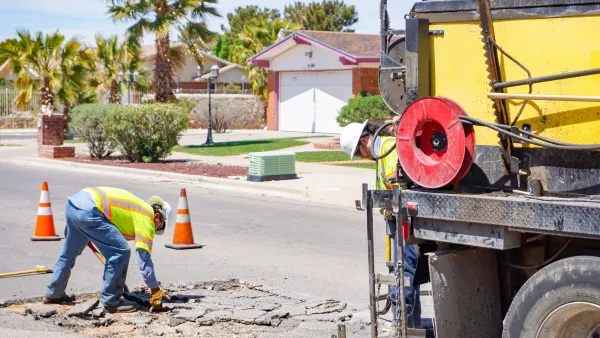
Report: 16% of roads that received federal funds remain in poor condition
Despite a glut of federal funding, most state DOTs used the money for expanding highways instead of maintaining existing roads.
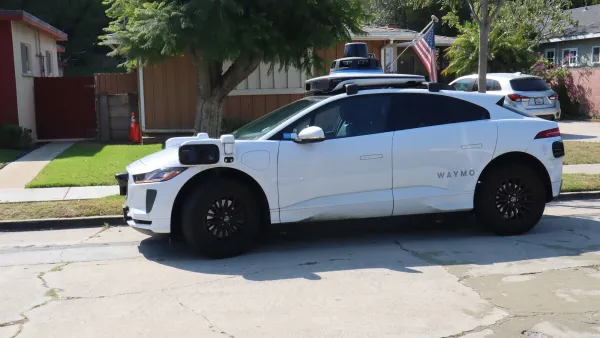
Waymo robotaxis are now finding potholes
The cars use their onboard technology to identify potholes and send the data to city officials and Waze users.
Portland Gas Tax Renewal Up to Voters
Without the extension, the city’s transportation bureau faces a $32 million shortfall.

Planetizen Federal Action Tracker
A weekly monitor of how Trump’s orders and actions are impacting planners and planning in America.

California plans to bury El Niño’s downpour
If the state plays its cards right, it may be able to store a billion acre-feet of El Niño’s water in aquifers.

Desperate measures: Advocates weigh draining Lake Powell to fill Colorado River
Draining the reservoir could reduce evaporation losses by a couple hundred thousand acre-feet.

Chicago voters approve permanent festival grounds, penalty for vacant property owners
Currently, major summer and fall festivals take over public parks for weeks at a time, drawing criticism from nearby residents

NYC votes to cut outdoor dining red tape, speed up permitting
New York City also voted to allow the Department of Transportation to begin work on urgent projects before notifying elected officials.

California appears to reject Prop. 45
The proposition would have expanded the projects that qualify for a streamlined environmental review, effectively paring down the California Environmental Quality Act.

FREE Course: Walkable City 1: Why Walkability?
After describing his path towards focusing on walkability as the essence of good planning, Jeff Speck marches through his five principal reasons for making more walkable places.
Reinventing Malls: Planning Alchemy—Turning Gray Fields Into Gold
The course focuses on the opportunities and imperatives that shape reinvention of mall sites.

City of Rosemead
Rutgers University, Edward J. Bloustein School of Planning and Public Policy
One Hundred Miles
Hunter College, City University of New York (CUNY)
The Architects Foundation
University of Cincinnati Online
City of Cambridge
Montrose County
The Pocatello Development Authority