The state’s Transportation Commission outlined three major programs that should receive gas tax funding.


“California Transportation Commission staff have released their recommendations for the third funding cycle for programs established by Senate Bill 1, the Road Repair and Accountability Act of 2017,” reports Melanie Curry in Streetsblog California. “Notably this is the first time that the CTC's recently formed Interagency Equity Advisory Committee participated in the evaluation of projects. This is also the first program cycle to incorporate the principles of the state’s Climate Action Plan for Transportation Infrastructure (CAPTI).”
The Commission’s recommendations include investments in three programs: “Solutions for Congested Corridors, Trade Corridors Enhancement, and Local Partnership programs.”
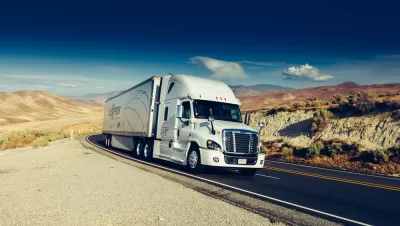
The Solutions for Congested Corridors program is designed to “provide more transportation choices while preserving the character of local communities and creating opportunities for neighborhood enhancement.” The Trade Corridor program “is supposed to fund a wide range of infrastructure improvements along heavily used freight corridors in the state,” while the Local Partnership program “was set up to provide funding to local jurisdictions that tax themselves to pay for local transportation system improvements,” such as roadway improvements and active transportation and transit projects.
FULL STORY: Recommendations for Gas-Tax-Funded Programs Announced

Oregon Transportation Bill Saves 500 ODOT Jobs, but Leaves Future Funding Uncertain
A bill passed in a special legislative session will raise over $4 billion for transportation and public transit in the next 10 years, but fails to establish a long-term funding solution.
Oregon Governor Proposes Higher Gas Tax, Vehicle Fees to Fund ODOT
Gov. Kotel called a special legislative session in late August to address the budget gap at the state transportation department.
Portland Transportation Bureau Faces ‘Existential’ Cuts
PBOT’s director says the agency’s impending budget shortfall could imperil even basic transportation and infrastructure services.

Planetizen Federal Action Tracker
A weekly monitor of how Trump’s orders and actions are impacting planners and planning in America.

The state-sanctioned urbicide of Austin
People don’t kill cities. Freeways do.

US to reduce Colorado River water deliveries to Mexico
A new Colorado Treaty amendment reduces Mexico’s Colorado River water allocation by 250,000 acre feet.

Guerilla urbanists are building DIY bus stop benches in Chicago
A before-and-after of one of the bus stops with a new bench. The new benches are not officially sanctioned or permitted, but the residents who placed them hope they will be the start of a network of DIY benches across the city.

Mamdani overhauls NYC's Vision Zero plan with 100 new policy goals
The overhaul aims to reduce traffic deaths and make streets safer for pedestrians, cyclists and drivers through lower speed limits, new safety infrastructure and more.

Amtrak not solely to blame for New Jersey commuter rail's unreliability, report finds
A new study from the Garden State Initiative found that NJ Transit’s budget grew 20% across a 4 year period, but reliability declined significantly over the same period.

FREE Course: Walkable City 1: Why Walkability?
After describing his path towards focusing on walkability as the essence of good planning, Jeff Speck marches through his five principal reasons for making more walkable places.
Reinventing Malls: Planning Alchemy—Turning Gray Fields Into Gold
The course focuses on the opportunities and imperatives that shape reinvention of mall sites.

Eagle County Government
Harvard University Graduate School of Design
Nashville Planning Department
The Architects Foundation
University of Cincinnati Online
The Pocatello Development Authority
The Urban Renewal Agency of the City of Pocatello
Journal of the American Planning Association