Ken Greenberg, the former director of architecture and urban design for the city of Toronto, sits down to discuss how Toronto needs to transform to ensure a less auto-reliant future that serves a changing demographic of younger urban dwellers.


Toronto is at a crossroads according to the city's former director or architecture and urban design, Ken Greenberg. While the city continues to pour money into highway projects like the Gardner Expressway (saving a few commuters 2-3 minutes per day), newer residents in the city who have given up their cars (or never drove in the first place) aren't being adequately served. Luke Simcoe of Metro writes that Greenberg sees the city reacting too slowly to changes in consumer demand.
Greenberg, who helped revitalize Regent Park and is heading up the new Under Gardiner project, says the private sector has been quicker to adapt to the return of urbanism than city officials.
“Developers who are being driven by the market are providing fewer parking spaces in new buildings, for example,” he said. “We used to talk about two spaces for every unit and now we’re down in some places to one for every four units.”
Greenberg urged municipal leaders to follow suit, lest they cede their authority to developers or “disruptive” companies like Uber, Airbnb or Google.
Greenberg advises Toronto leaders to be less risk-adverse and take chances with new pilot programs with potential for positive change. "What a city really is is a giant R&D lab, full of trial and error. We need to embrace that..."
Read the full story: 'The city is a giant R&D lab:' Architect and planner Ken Greenberg talks Toronto

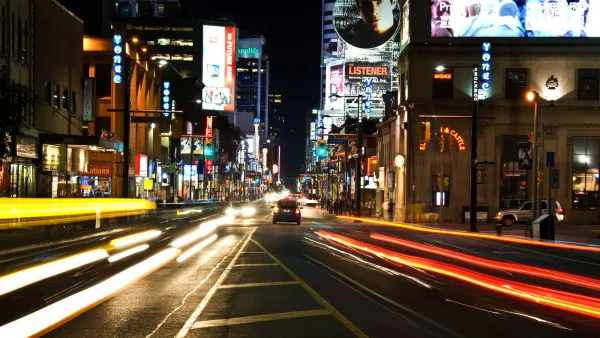
Pedestrian-Friendly Makeover of a Busy Toronto Street Stops Short of the Car-Free Ideal
The yongeTOmorrrow project is heading toward the finish line with widespread support from advocates, but a few want the plan to go one step further.
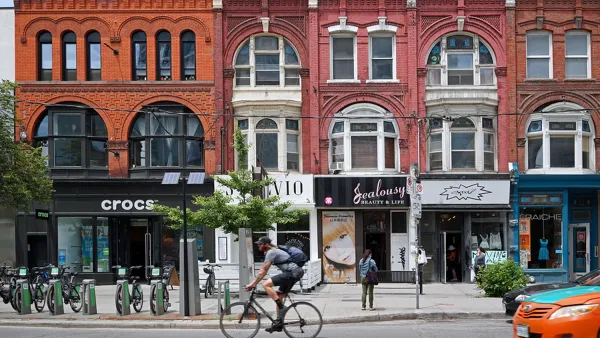
Biking Takes Off in Toronto
People in cities all over the world are choosing the bike as their preferred mode of transportation as the coronavirus shakes up work and travel patterns. Residents of the largest city in Canada are no exception.
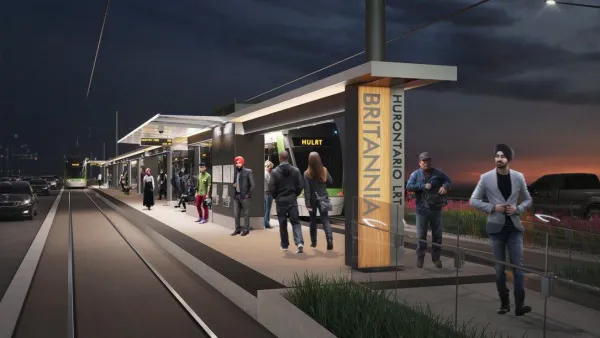
Light Rail Transit Planned for Suburban Toronto at Risk
Doug Ford's Progressive Conservative government is proving to be a harsh critic of plans for light rail transit in Mississauga.

Planetizen Federal Action Tracker
A weekly monitor of how Trump’s orders and actions are impacting planners and planning in America.

Amtrak, CN end decades-long dispute with eight-year agreement
The new operating agreement establishes an updated framework for the companies to work together, including processes to resolve disputes.

Judges permit Denver to divert 77,000 acre feet from the Colorado River for reservoir expansion
Overuse and climate change have caused the Colorado River’s water levels to plummet.

Boston has spent millions making the Green Line more accessible — and there’s no end in sight
While the city has invested millions into expanding and adding platforms to the Green Line to make it more accessible, new train cars set to arrive next year will be too tall for disabled passengers to board without raising the current platforms.

Idaho may see an 18% drop in federal surface transit funding — the largest estimated cut in the US
Transit systems in rural communities are much more reliant on federal funding to provide their services.

How ‘post-disaster gentrification’ alters neighborhoods after natural calamities
After hurricanes, fires or other calamities, the original residents of a community are often replaced by younger, wealthier residents.

FREE Course: Walkable City 1: Why Walkability?
After describing his path towards focusing on walkability as the essence of good planning, Jeff Speck marches through his five principal reasons for making more walkable places.
Reinventing Malls: Planning Alchemy—Turning Gray Fields Into Gold
The course focuses on the opportunities and imperatives that shape reinvention of mall sites.


City of Wisconsin Rapids
Harvard University Graduate School of Design
KFH Group Inc.
The Architects Foundation
University of Cincinnati Online
The Pocatello Development Authority
The Urban Renewal Agency of the City of Pocatello