The Suncoast Parkway has produced $22 million a year in revenue after a consultant said it would bring in $150 million a year. Yet the Florida Department of Transportation wants to expand the road.


Craig Pittman tells the story of the Suncoast Parkway in Citrus County, Florida. Before the Parkway opened, explains Pittman, "a consultant predicted that it would be so full of cars its toll booths would rake in $150 million a year by 2014."
The rub: "That forecast wasn't close. Nor were the next two. The consultant eventually settled on a forecast of $38 million a year." Pittman even has to add the kicker: "when 2014 rolled around, the road was so empty it collected a mere $22 million."
There is another twist, however, in the story of the Suncoast Parkway. Pittman reports: "the Florida Department of Transportation now wants to spend $256.7 million to extend the Suncoast another 13 miles north through Citrus County. And the projections the DOT is relying on to justify what has been dubbed Suncoast 2 are from the same consultant that got the first phase so wrong."
The article provides more background on the San Francisco-base consultant URS Greiner Woodward, which is responsible for "overly sunny financial projections for the Veterans Expressway in Tampa; the Seminole Parkway near Sanford; the Polk Parkway near Lakeland; and the Garcon Point Bridge near Pensacola." (Pittman adds that two years URS was taken over by Aecom, which now has a "$5.9 million annual contract for making toll road projections.")
The article includes a lot more details about the plan for Suncoast 2, as its called, as well, including the argument of both opponents and supporters of the proposal.
Read the full story: Getting it wrong: Suncoast Parkway set to expand even as it fails to meet projections
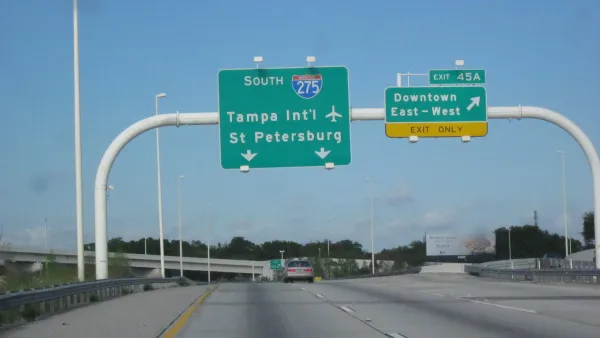
Environmentalists Urge Gov. Ron DeSantis to Veto Florida Toll Roads Bill
Florida has the distinction of having more toll roads than any other state. Environmentalists want Gov. DeSantis (R) to veto a bill that would build three new ones, adding over three hundred miles of asphalt through mostly rural, unpopulated areas.
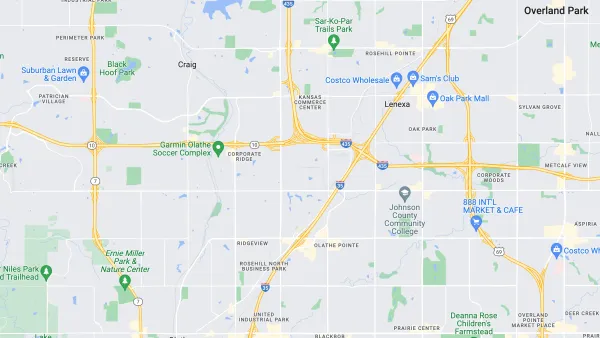
Tolling Gaining Traction for Highway Projects in Kansas
After the state broke ground on a tolled express lane project at the eastern edge of Kansas, near Kansas City, tolls are also under consideration in the nascent stages of a corridor study located at the southwest edge of the same region.
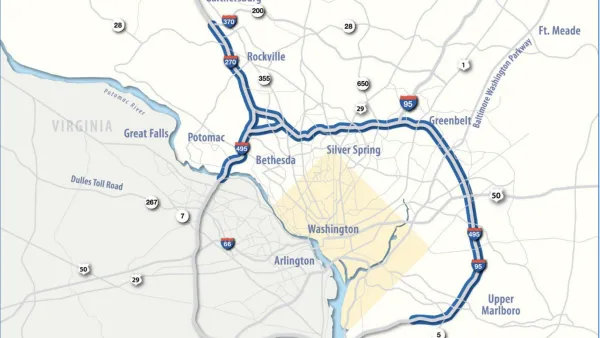
Maryland Toll Road Project Loses Key Operator Amid Lawsuits, Shifting Political Landscape
The loss of toll operator Transurban could be a death knell for the controversial I-495/I-270 Managed Lanes Project in Maryland.

Planetizen Federal Action Tracker
A weekly monitor of how Trump’s orders and actions are impacting planners and planning in America.

California plans to bury El Niño’s downpour
If the state plays its cards right, it may be able to store a billion acre-feet of El Niño’s water in aquifers.

Desperate measures: Advocates weigh draining Lake Powell to fill Colorado River
Draining the reservoir could reduce evaporation losses by a couple hundred thousand acre-feet.

Chicago voters approve permanent festival grounds, penalty for vacant property owners
Currently, major summer and fall festivals take over public parks for weeks at a time, drawing criticism from nearby residents

NYC votes to cut outdoor dining red tape, speed up permitting
New York City also voted to allow the Department of Transportation to begin work on urgent projects before notifying elected officials.

California appears to reject Prop. 45
The proposition would have expanded the projects that qualify for a streamlined environmental review, effectively paring down the California Environmental Quality Act.

FREE Course: Walkable City 1: Why Walkability?
After describing his path towards focusing on walkability as the essence of good planning, Jeff Speck marches through his five principal reasons for making more walkable places.
Reinventing Malls: Planning Alchemy—Turning Gray Fields Into Gold
The course focuses on the opportunities and imperatives that shape reinvention of mall sites.

City of Rosemead
Rutgers University, Edward J. Bloustein School of Planning and Public Policy
One Hundred Miles
Hunter College, City University of New York (CUNY)
The Architects Foundation
University of Cincinnati Online
City of Cambridge
Montrose County
The Pocatello Development Authority