The Kiira Motor Corporation of Uganda has developed a 35-seat bus that includes solar panels on the roof. The bus travels up to 50 miles on two rechargeable batteries. Due to its limited range, the Kayoola is intended for inner-city travel.


Kate Yoder reports on a car company taking advantage of the consistently sunny conditions in Uganda:
"The Kayoola bus, created by Ugandan engineers at Kiira Motors Corporation, sports solar panels on its roof to capture the powerful rays that beam down on the equatorial nation. Quartz reports that the 35-seater can travel up to 80 km (50 mi) on two rechargeable batteries that run off the solar panels.
Yoder also includes details about the intended uses of the bus:
Due to this restricted travel range, the bus is intended for inner-city use rather than inter-city travel. Kiira is hoping that the Kayoola can assist in Uganda’s public transportation problem, according to a local news source.
Yoder also reports that a "prototype of the bus took its first test drive on Jan. 31, and the official launch is set for Feb. 16."
Read the full story: Say hello to East Africa’s first solar-powered bus

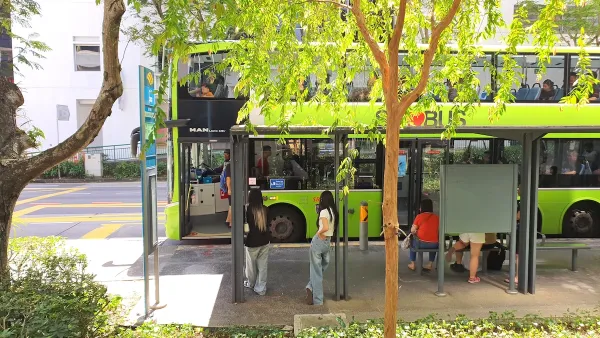
Eating, littering on Singapore buses now a fineable offense
Passengers who put other riders in danger may be charged thousands of Singapore dollars.

Trump administration unlawfully slashed $7 billion in clean energy grants, judge rules
The Environmental Protection Agency ended the Solar For All program, which provided the grants, after President Donald Trump’s inauguration.

LA Metro’s ultimatum: no extra buses for LA28 if federal funding isn’t imminently secured
If Metro does not provide additional buses, LA28 organizers will have to find a new way to manage Olympic traffic. LA28’s budget does not include a line item for transit.

Planetizen Federal Action Tracker
A weekly monitor of how Trump’s orders and actions are impacting planners and planning in America.

California plans to bury El Niño’s downpour
If the state plays its cards right, it may be able to store a billion acre-feet of El Niño’s water in aquifers.

Desperate measures: Advocates weigh draining Lake Powell to fill Colorado River
Draining the reservoir could reduce evaporation losses by a couple hundred thousand acre-feet.

In Texas, data centers are swallowing promised parkland
Residents who moved to Taylor, Texas for a rural community now have to contend with three data centers in their backyard.

How a Chicago-sized wind farm beat the odds and powered on
The project spanned five presidential administrations and a standoff with a U.S. military base.

MTA gives itself 30 days to transform pit into basketball court
The site has been under construction since 2022; the city originally estimated it would finish the court in 2024.

FREE Course: Walkable City 1: Why Walkability?
After describing his path towards focusing on walkability as the essence of good planning, Jeff Speck marches through his five principal reasons for making more walkable places.
Reinventing Malls: Planning Alchemy—Turning Gray Fields Into Gold
The course focuses on the opportunities and imperatives that shape reinvention of mall sites.

City of Rosemead
Rutgers University, Edward J. Bloustein School of Planning and Public Policy
One Hundred Miles
Hunter College, City University of New York (CUNY)
The Architects Foundation
University of Cincinnati Online
City of Cambridge
Montrose County
The Pocatello Development Authority