Transit ridership around the country was up by 85 percent in all modes in 2024.


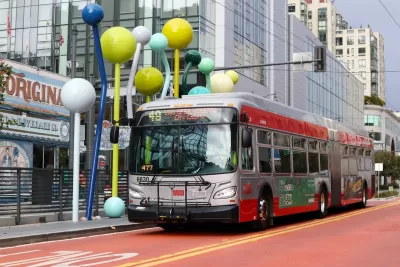
New research from the American Public Transportation Association (APTA) reveals that U.S. transit ridership is up to 85 percent of pre-pandemic levels, despite office occupancy remaining low, at 52 percent.
According to an article in Mass Transit, transit agencies across the country delivered 7.7 billion passenger trips in 2024, almost half a billion more than the prior year. According to APTA President and CEO Paul P. Skoutelas, “Ridership continues to rebound despite limited office attendance, proving public transportation serves far more than traditional commuters. Our systems are vital lifelines, taking people to work, school, healthcare and special community events.”
Bus ridership rebounded more strongly than train trips, and smaller cities saw higher ridership levels than larger cities. APTA’s analysis indicates “a strong return on investment—$5 in economic output for every $1 invested” in public transit. Transit accessibility also improved, with 99.8 percent of buses nationwide now being ADA compliant.
FULL STORY: APTA’s new report reveals U.S. transit ridership increasing to 85 percent of pre-pandemic levels

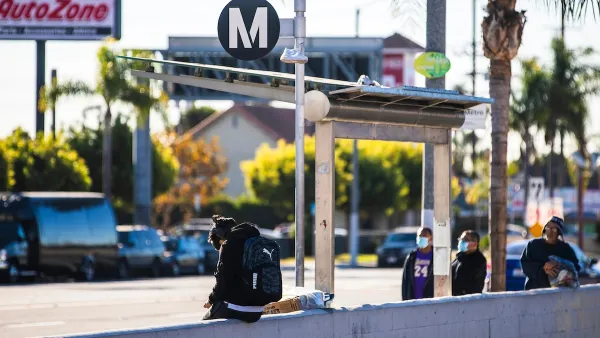
LA Bus Ridership Keeps Dropping as ICE Raids Continue
Bus boardings fell for a second month amid fears of immigration raids.
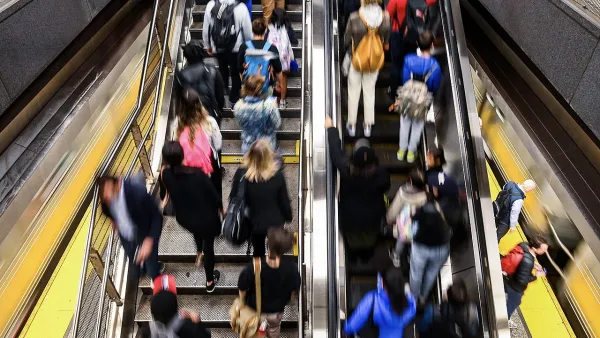
MTA Poised to Break Ridership, On-Time Service Records
New York City’s transit system saw strong increases in ridership and improvements in service quality in the first half of 2025.
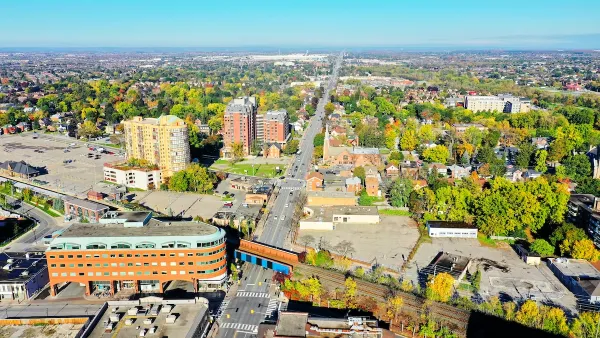
This Toronto Suburb Has More Bus Riders Than Columbus, Ohio
Brampton, Ontario used gradual improvements in service to prove that if you build it, they will ride.

Planetizen Federal Action Tracker
A weekly monitor of how Trump’s orders and actions are impacting planners and planning in America.

The state-sanctioned urbicide of Austin
People don’t kill cities. Freeways do.

US to reduce Colorado River water deliveries to Mexico
A new Colorado Treaty amendment reduces Mexico’s Colorado River water allocation by 250,000 acre feet.

5 New England states march closer to 800 megawatt wind energy project
Securing federal approval for the project may be complicated under the Trump administration, which has historically been hostile towards domestic wind power.

Baltimore to break ground on $50 million Transit Priority Project
The project will bring faster bus trips, safer streets and better bike connections to Baltimore.

Airbnb launches $250 million 'last-dollar financing' housing accelerator, makes first investment in Austin
The company will put $6.4 million towards affordable housing development in Texas’ capital.

FREE Course: Walkable City 1: Why Walkability?
After describing his path towards focusing on walkability as the essence of good planning, Jeff Speck marches through his five principal reasons for making more walkable places.
Reinventing Malls: Planning Alchemy—Turning Gray Fields Into Gold
The course focuses on the opportunities and imperatives that shape reinvention of mall sites.

Eagle County Government
Harvard University Graduate School of Design
Nashville Planning Department
The Architects Foundation
University of Cincinnati Online
The Pocatello Development Authority
The Urban Renewal Agency of the City of Pocatello
Journal of the American Planning Association