A case is emerging from data shared by Citibike that the system gets the most use by commuters. Federal legislation is in the works that would make bikeshare-as-transit official.


"More than 10 million rides were taken on a Citi Bike in New York City in 2015, and public data released by Citi Bike suggests that many of those trips were commutes to or from work," according to an article by Kelsey E. Thomas.
Thomas also shares the data-crunching work of Todd Schneider, who analyzed data released by Citi Bike between July 2013 and November 2015, finding that "the times and routes of rides follow commuting trends, suggesting that the bikes are used primarily for utilitarian purposes."
Schneider notes that the data supports the thinking behind federal legislation introduced recently by Representatives Earl Blumenauer (D-OR) and Vern Buchanan (R-FL), titled the Bikeshare Transit Act [pdf]. In a separate article published earlier in January, Josh Cohen reports that the Bikeshare Transit Act would make bikeshare projects eligible for the U.S. Department of Transportation's Congestion Mitigation and Air Quality Improvement Program (CMAQ) and other federal money.
Read the full story: What 22 Million Rides Tell Us About NYC Bike-Share

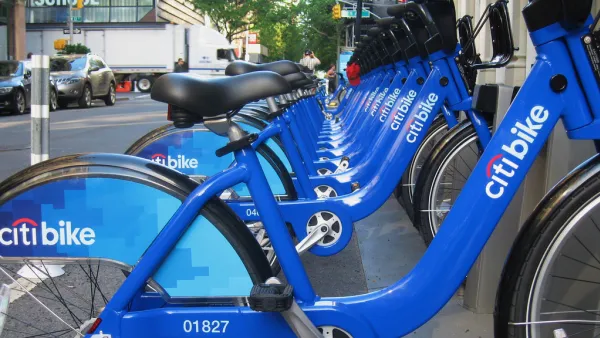
Dockless Bikeshare Coming to New York, With or Without Permits
A rival to Citibike will add 300 new bikeshare bikes to the streets of New York City.
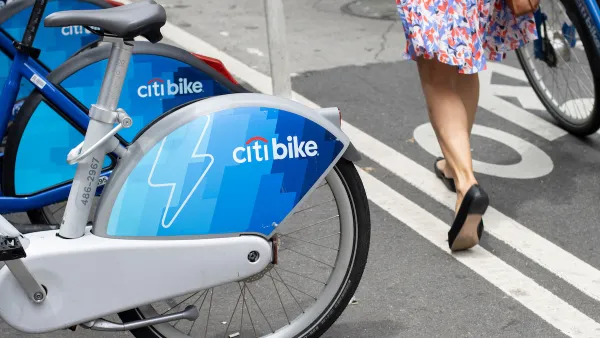
Keeping NYC’s E-Bike Fleet Charged and Running
How a crew of hundreds maintains one of the world’s largest bike share systems.
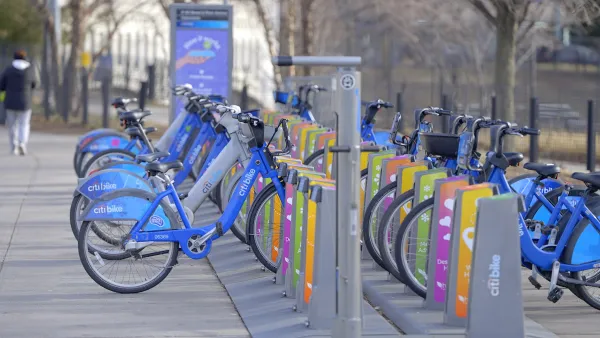
Citi Bike’s New Prices Take Effect
The system plans to expand to 40,000 bikes and 2,000 stations.

Planetizen Federal Action Tracker
A weekly monitor of how Trump’s orders and actions are impacting planners and planning in America.

Amtrak, CN end decades-long dispute with eight-year agreement
The new operating agreement establishes an updated framework for the companies to work together, including processes to resolve disputes.
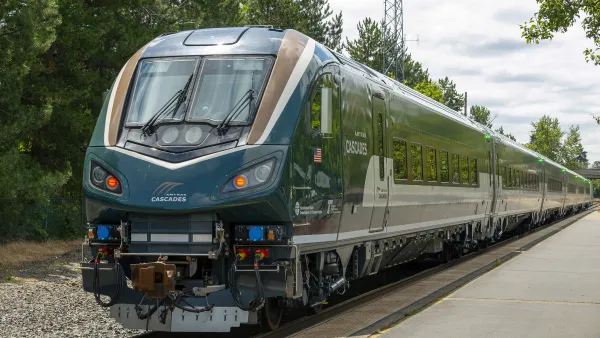
Northwest rail fans eager for Sept. 30 debut of Amtrak’s Airo fleet
Get ready for that new train smell and more seats. But they won’t go faster or run more frequently on the Cascades route in Washington and Oregon.

St. Louis Metro to test if single-car trains can reduce operating costs, maintain rider satisfaction
The pilot program will run from October to spring 2027, and begin with one single-car train operating on Metrolink’s Red and Blue lines.

Pennsylvania is building data centers in abandoned mines
Housing data centers in mines provides an alternative to destroying local forests and may spare residents from data centers’ noise and air pollution.

If Corpus Christi can’t revive desalination plant project, it may owe Texas $235 million
Earlier this month, city officials declined to pursue developing the plant for the second time in a year.

FREE Course: Walkable City 1: Why Walkability?
After describing his path towards focusing on walkability as the essence of good planning, Jeff Speck marches through his five principal reasons for making more walkable places.
Reinventing Malls: Planning Alchemy—Turning Gray Fields Into Gold
The course focuses on the opportunities and imperatives that shape reinvention of mall sites.

City of Thousand Oaks
City of Wisconsin Rapids
Harvard University Graduate School of Design
The Architects Foundation
University of Cincinnati Online
The Pocatello Development Authority
The Urban Renewal Agency of the City of Pocatello