Federal regulators might have killed a proposal that would have built the tallest skyscraper on the West Coast in the city of Seattle.


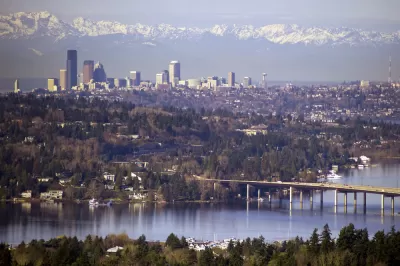
"The Federal Aviation Administration has sent a 'notice of presumed hazard' to the developer who has proposed to build a 102-story building at Fourth Avenue and Columbia Street in downtown Seattle," reports Marc Stiles.
The notice argues that the proposed tower would obstruct operations at Boeing Field. A shorter construction crane could also "interfere with helicopter flights to and from Harborview Medical Center," according to Stiles.
The notice also gave the project's developer, Miami-based Crescent Heights Inspirational Living, a path toward completion of the project: choosing a project alternative that would top the building out at 965 feet tall. The current tallest building on the West Coast is the U.S. Bank Tower in Los Angeles, which stands 1,018 feet tall.
Read the full story: FAA says proposed 102-story tower is too tall
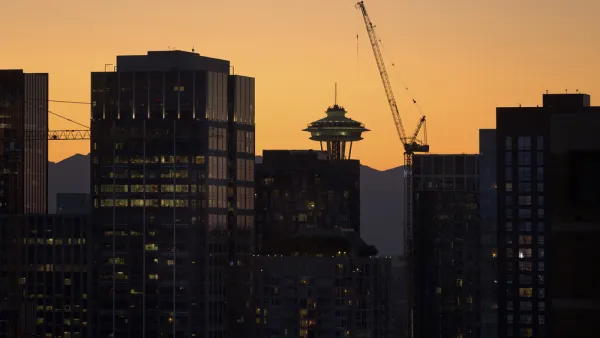
Tracking the Skyward Progress of Western U.S. Cities
A Washington Post feature analyzes the changing skylines of cities from the Rocky Mountains to the Pacific Ocean.
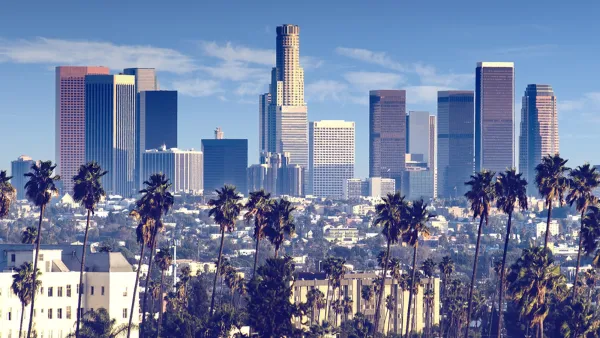
West Coast Cities Redefining Height With Batch of New Skyscrapers
The title of tallest building west of the Mississippi, property of the U.S. Bank Tower in Los Angeles since 1989, will soon go to another building. What does that say about the post-recession of West Coast cities?
Zoning Changes Bring Good and Bad in Downtown Seattle
Zoning changes in downtown Seattle have created a more dense area, as was intended. But the zoning changes are also bringing some unintended consequences.

Planetizen Federal Action Tracker
A weekly monitor of how Trump’s orders and actions are impacting planners and planning in America.

California plans to bury El Niño’s downpour
If the state plays its cards right, it may be able to store a billion acre-feet of El Niño’s water in aquifers.

Desperate measures: Advocates weigh draining Lake Powell to fill Colorado River
Draining the reservoir could reduce evaporation losses by a couple hundred thousand acre-feet.

Housing is the top priority of Seattle’s sole new councilmember
Jenks campaigned on building 1,000 new units of affordable housing.

New tax cuts may slash $1.5 billion in funding for Miami transit, public parks
Amendment 3 will save Miami-Dade homeowners $2,700 in 2028.

Arizona, Wisconsin, Pennsylvania hope to finally advance climate goals post-midterms
The three states have spent years under Republican or divided control.

FREE Course: Walkable City 1: Why Walkability?
After describing his path towards focusing on walkability as the essence of good planning, Jeff Speck marches through his five principal reasons for making more walkable places.
Reinventing Malls: Planning Alchemy—Turning Gray Fields Into Gold
The course focuses on the opportunities and imperatives that shape reinvention of mall sites.

City of Rosemead
Rutgers University, Edward J. Bloustein School of Planning and Public Policy
One Hundred Miles
University of Michigan School for Environment and Sustainability (SEAS)
Hunter College, City University of New York (CUNY)
The Architects Foundation
City of Cambridge
Montrose County
The Pocatello Development Authority