The title of tallest building west of the Mississippi, property of the U.S. Bank Tower in Los Angeles since 1989, will soon go to another building. What does that say about the post-recession of West Coast cities?


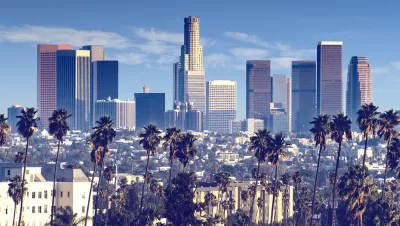
"The West Coast’s largest cities are reaching for the record books as a succession of towers vying for the mantle of the “tallest west of the Mississippi” go up across the region," according to an article by Antonio Pacheco.
The 1,018-foot-tall U.S. Bank Tower, built in 1989 and currently anchoring the skyline of Los Angeles, currently holds the title of tallest building west of the Mississippi. "However, developers in Los Angeles, San Francisco, and Seattle are seeking to depose the U.S. Bank Tower," according to Pacheco, "all three cities currently have high-rises in the works set to surpass the record."
The three buildings in question, each detailed from a design perspective and supplemented with flashy renderings of the finished product:
- In Seattle, a 1,111-foot-tall proposal for the 4/C Tower. That project already ran afoul of the Federal Aviation Administration, so the final height of this building is not yet considered final.
- In San Francisco, the 1,070-foot-tall Salesforce Tower "is slowly rising out of San Francisco’s Transbay Center," writes Pacheco. Planetizen correspondent Irvin Dawid detailed the Salesforce Tower in April 2014.
- The U.S. Bank Tower's nearest neighbor among this collection, the under-construction Wilshire Grand Tower, will reach 1,099 feet tall at the top of its spire.
Pacheco writes of each of these projects in the context of each of these cities testing the waters of the post-recession era of city building—asking of each city what it envisions for tall, mixed-use, and transit-oriented development.
Read the full story: Seattle, San Francisco, and Los Angeles vie for tallest tower west of the Mississippi

2020 Population Growth Rates for the 50 Biggest U.S. Cities
The Census Bureau released new data on May 27 that includes the first four months of the pandemic. Seattle tops the growth rate at 2.2% from July 1, 2019, to July 1, 2020, while Baltimore and San Francisco land at the bottom with -1.4%.
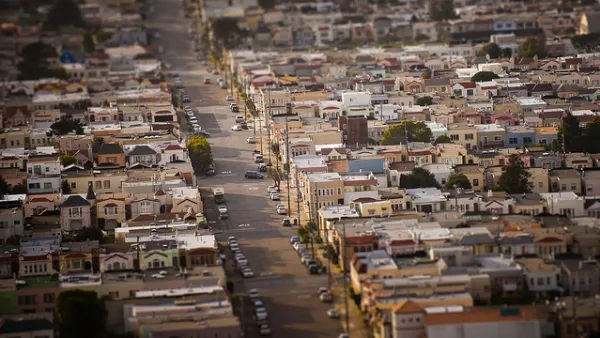
San Francisco's Outer Neighborhoods Fear Change from Housing Bill
Legislation from a former supervisor could transform much of San Francisco, particularly the outer-neighborhoods, by increasing heights and density along transit corridors. Opposition is growing.
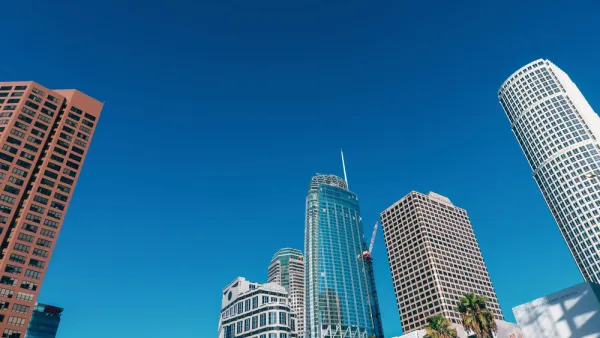
Los Angeles' New Tower and the Silly Rules That Govern Building Height
Los Angeles' new Wilshire Grand tower is tall and impressive. But, in reality, it's about 100 feet shorter and perhaps less impressive than the arbiters of skyscrapers say it is. Whatever the definition, it might be time to quit venerating height.

Planetizen Federal Action Tracker
A weekly monitor of how Trump’s orders and actions are impacting planners and planning in America.

‘Going backwards:’ Baltimore mayor, students rally against state's transit funding plan
Maryland's proposed six-year plan provides no funding for Baltimore’s BMORE bus program and reduces its road maintenance funding.

Detroit to transform waterfront with $2.2 billion investment
Developers will convert about 18 acres of unused parking lot space into civic spaces.

This Boston neighborhood is filling its roads with obstacles — intentionally
Somerville is embracing ‘extreme street makeovers’ to make its roads safer for pedestrians and cyclists.

Planned $2 billion courthouse in MA sparks tension with local government
Springfield owns an essential piece of the land developers intend to build on, and some city officials do not want to see the project come to fruition.

Californians can now transform balconies into power generators
Gov. Gavin Newsom has legalized plug-in solar technology, which allows residents to plug solar panels directly into their outlets

FREE Course: Walkable City 1: Why Walkability?
After describing his path towards focusing on walkability as the essence of good planning, Jeff Speck marches through his five principal reasons for making more walkable places.
Reinventing Malls: Planning Alchemy—Turning Gray Fields Into Gold
The course focuses on the opportunities and imperatives that shape reinvention of mall sites.

City of Thousand Oaks
City of Wisconsin Rapids
Harvard University Graduate School of Design
The Architects Foundation
University of Cincinnati Online
Northern Illinois Transit Authority (NITA)
The Pocatello Development Authority
The Urban Renewal Agency of the City of Pocatello