A former planning commissioner recalls often being surprised at the passion and anger displayed toward small changes around the city of San Francisco, and attempted to get to the nature of the fear driving the opposition.


David Prowler, a former member of the San Francisco Planning Commission and a former director of the Mayor’s Office of Economic Development, penned a column for the San Francisco Chronicle providing a taxonomy of the fears that sometimes control the debate about development in the city.
So, for example, nostalgia often creates a false sense of the city's history relative to its current issues. Failing to distinguish facts and problems can lead to failures in problem solving ("Problems have solutions, facts don’t," writes Prowler. Xenophobia is a common theme among opposition forces throughout the city's history as well, and Prowler suggests that the "animus" against techies doesn’t feel much different than previous examples from the city's history.
Prowler calls on a long political history in San Francisco for perspective in his argument, acknowledging that the city has real problems, but diagnosing the types of fears like those listed above in the hopes they can be overcome in the name of solutions.
Read the full story: Don’t let fear get in the way of solutions
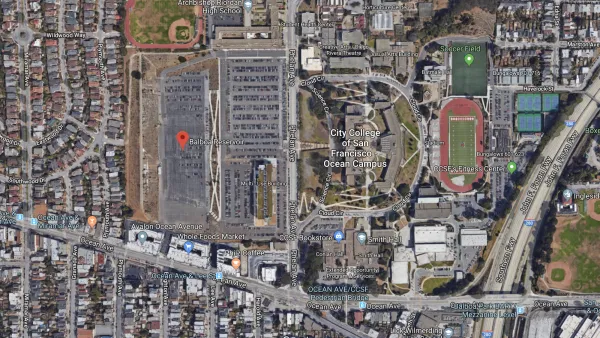
After Decades of Failure, 1,000-Plus Homes Coming to the Balboa Reservoir in San Francisco
Four developers tried, and four developers failed, until the San Francisco Board of Supervisors changed the story in August 2020.
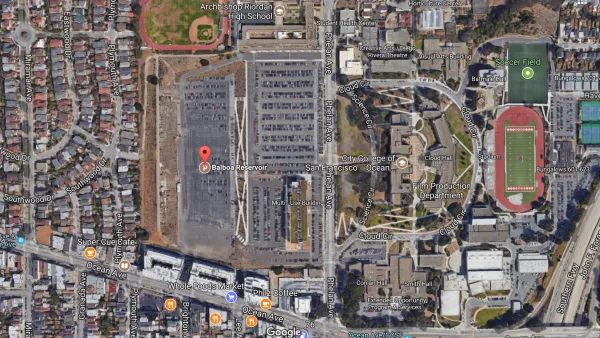
1,100 New Homes Planned in the Middle of San Francisco
The prospect of a large mixed-use development on a 17-acre parking lot in the center of San Francisco took a substantial step forward this week.

San Francisco's Massive 'Central SoMa Plan' Faces Litigation
The Central SoMa Plan took more than seven years of planning and debate to approve. A new lawsuit, expected to be just the first of many, threatens to erase all that work.

California plans to bury El Niño’s downpour
If the state plays its cards right, it may be able to store a billion acre-feet of El Niño’s water in aquifers.

Desperate measures: Advocates weigh draining Lake Powell to fill Colorado River
Draining the reservoir could reduce evaporation losses by a couple hundred thousand acre-feet.

Eastern Nebraska is running out of electricity
Data centers and electrification are straining eastern Nebraska’s grid, throttling economic development.

SpaceXAI may be fined $6 million for data center lacking water permits
A Mississippi agency also responds after a federal judge criticized the state’s Clean Air Act enforcement.

Housing is the top priority of Seattle’s sole new councilmember
Jenks campaigned on building 1,000 new units of affordable housing.

New tax cuts may slash $1.5 billion in funding for Miami transit, public parks
Amendment 3 will save Miami-Dade homeowners $2,700 in 2028.

FREE Course: Walkable City 1: Why Walkability?
After describing his path towards focusing on walkability as the essence of good planning, Jeff Speck marches through his five principal reasons for making more walkable places.
Reinventing Malls: Planning Alchemy—Turning Gray Fields Into Gold
The course focuses on the opportunities and imperatives that shape reinvention of mall sites.

City of Rosemead
Rutgers University, Edward J. Bloustein School of Planning and Public Policy
One Hundred Miles
University of Michigan School for Environment and Sustainability (SEAS)
Hunter College, City University of New York (CUNY)
The Architects Foundation
City of Cambridge
Montrose County
The Pocatello Development Authority