Washington, D.C. provides a model for trends found in other cities: people living near transit are trending younger, whiter, and more educated.


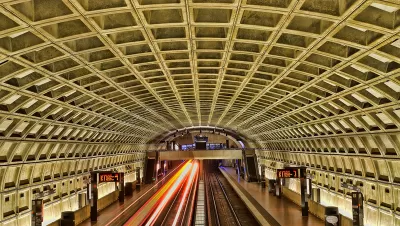
Emily Badger reports on a telling fact of the new demographic realities of Washington, D.C.:
"A new Census working paper by Brian McKenzie confirms that the demographics around rail stops in both the District and the wider Washington region reflect a population of workers that's disproportionately young, white and highly educated — and rapidly becoming more so."
The paper finds that while the demographics of Washington, D.C. are trending whiter, younger, and more educated, the change is happening faster around Metro stops than the District average. The trends "hold in the five-county area outside the District, in places like Alexandria, Arlington and Silver Spring served by Metrorail as well."
The implications of the demographic shift, according to Badger, means that developers and landlords are catering housing around transit toward more affluent populations so that housing is becoming more expensive. As prices go up, many of the people that rely on transit can no longer afford to live in places with easy transit access.
The article includes a lot more detail of the data from the working paper.
Read the full story: What people who live near metro stops increasingly have in common

Smartphone Fare Cards Now Available for D.C. Metro
The future is now.
Op-Ed: Newer Model Density Falls Short of its Promise
The general principle is simple: more density equals lower prices and less environmental impact. But suburbia's imprint is deep, both on cities themselves and on how we expect to inhabit them.
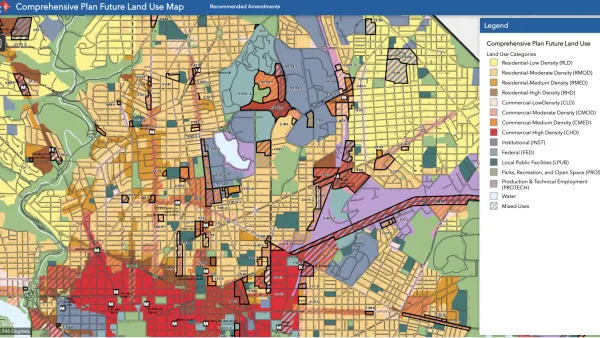
D.C. Comprehensive Plan Update Needs Equity Improvements, Report Says
The new D.C. Office of Equity has produced an evaluation of proposed changes to the D.C. Comprehensive Plan.

Planetizen Federal Action Tracker
A weekly monitor of how Trump’s orders and actions are impacting planners and planning in America.

California plans to bury El Niño’s downpour
If the state plays its cards right, it may be able to store a billion acre-feet of El Niño’s water in aquifers.

Desperate measures: Advocates weigh draining Lake Powell to fill Colorado River
Draining the reservoir could reduce evaporation losses by a couple hundred thousand acre-feet.

US buildings threatened, destroyed by fires set to triple by 2060
Researchers found a high fire risk for socioeconomically vulnerable neighborhoods in the American West.

LA residents may be allowed to paint their own crosswalks
Councilwoman Katy Yaroslavsky put out a motion instructing the Los Angeles Department of Public Transportation to study the feasibility of allowing volunteers to paint crosswalks.

Dallas moves to overhaul its zoning code
The city's zoning reform will allow more multi-family and mixed-use developments.

FREE Course: Walkable City 1: Why Walkability?
After describing his path towards focusing on walkability as the essence of good planning, Jeff Speck marches through his five principal reasons for making more walkable places.
Reinventing Malls: Planning Alchemy—Turning Gray Fields Into Gold
The course focuses on the opportunities and imperatives that shape reinvention of mall sites.

City of Rosemead
Rutgers University, Edward J. Bloustein School of Planning and Public Policy
One Hundred Miles
Hunter College, City University of New York (CUNY)
The Architects Foundation
University of Cincinnati Online
City of Cambridge
Montrose County
The Pocatello Development Authority