Tens of thousands of wild horses still inhabit the western states. The Bureau of Land Management is caught between two camps: ranchers who want them contained and advocates who want them to roam free.


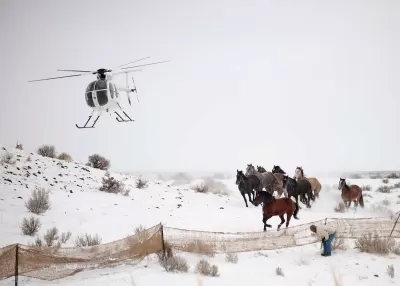
James McWilliams covers a rural land use drama: how to handle thousands of free-ranging wild horses. Currently, the Bureau of Land Management (BLM) contains many of the animals and attempts to control their movements. "The primary reason they're confined is the nearly 18,000 ranchers grazing an estimated 747,963 'animal units'—a bureaucratic term that can represent either a horse, a cow/calf pair, or five sheep—on 155 million acres of land."
Ranchers must compete with the horses for forage opportunities, a difficult task during drought. "They view the remaining 58,150 mustangs and burros roaming wild across 10 western states as invasive pests who gorge on precious forage and trample the landscape into hardpan."
Since the 1971 Wild Free-Roaming Horses and Burros Act, the BLM has been charged with protection and management of wild herds on federal land. "Because the BLM also issues grazing allotments to private ranchers [...] the agency is entrusted to balance wild horse and cattle populations on land where these animals overlap."
Many ranchers argue for drastic measures to contain the horses. But advocates say they're exaggerating the problem. "Of all the public grazing land the BLM manages (155 million acres), wild horses are technically allowed to graze on only 17 percent of it."
Read the full story: Western Cattlemen Square Off Against 60,000 Mustangs

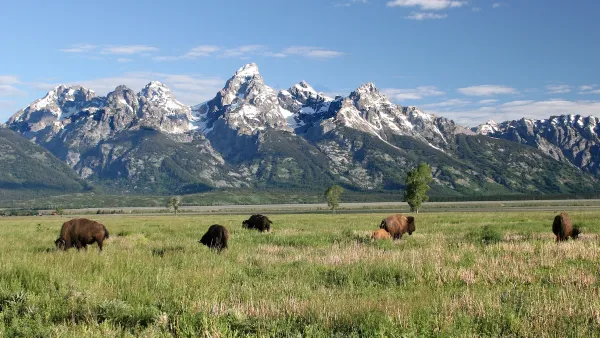
Grand Teton Foundation Races to Fundraise — or Lose Key Wildlife Corridor
Wyoming could sell a currently protected parcel of land, key to elk and other hoofed mammal migration paths, to private developers.
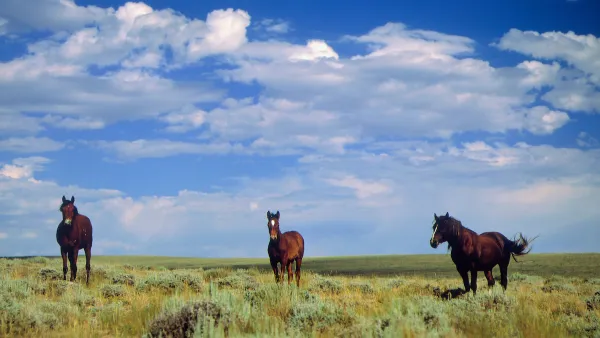
Utah and Wyoming Sue BLM Over Conservation Rule
The states allege the agency overstepped federal regulations in its attempt to boost conservation efforts on public lands.
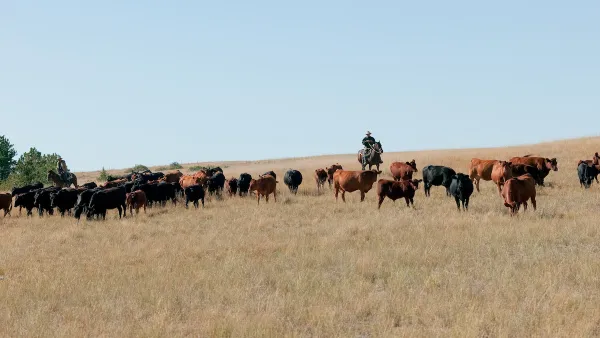
BLM Grazing Lands Largely Fail Health Assessment
Grazing lands under the agency’s management are not meeting its own criteria for ecosystem conservation and sustainable use.

Planetizen Federal Action Tracker
A weekly monitor of how Trump’s orders and actions are impacting planners and planning in America.

‘Going backwards:’ Baltimore mayor, students rally against state's transit funding plan
Maryland's proposed six-year plan provides no funding for Baltimore’s BMORE bus program and reduces its road maintenance funding.

Detroit to transform waterfront with $2.2 billion investment
Developers will convert about 18 acres of unused parking lot space into civic spaces.

SF residents can no longer use potential shadows to block housing developments
The SHADE act also halves the allotted time for certain appeals before projects can progress.

HUD, USDA agree on framework to simplify housing environmental review standards
Their agreement is a requirement of the 21st Century ROAD to Housing Act.

Cost of water rising at a faster pace than inflation, median household income
California and Maryland residents have seen their water bills grow especially high.

FREE Course: Walkable City 1: Why Walkability?
After describing his path towards focusing on walkability as the essence of good planning, Jeff Speck marches through his five principal reasons for making more walkable places.
Reinventing Malls: Planning Alchemy—Turning Gray Fields Into Gold
The course focuses on the opportunities and imperatives that shape reinvention of mall sites.

planning NEXT
City of Thousand Oaks
City of Wisconsin Rapids
The Architects Foundation
University of Cincinnati Online
Northern Illinois Transit Authority (NITA)
The Pocatello Development Authority
The Urban Renewal Agency of the City of Pocatello