An expensive, contentious project to redesign and possibly relocate the Port Authority Terminal finally has a way forward: an international design competition to be concluded a year from now.


"The Port Authority [of New York and New Jersey] approved a multibillion-dollar plan Thursday to replace the dilapidated 65-year-old West Side bus terminal, with a goal of deciding on a final design by next fall," reports David Porter. The project is expected to cost between $7 billion and $10 billion. Dana Rubinstein reported earlier this year that the price of the terminal could hit $10 billion—ten times more than a Port Authority estimate from only a year earlier.
The vote puts into motion a design competition for the terminal's redesign an specific plan, with a winner expected to be chosen from an international field by September 2016. The Port Authority also authorized the hiring of a consultant "to study ridership projections over the next few decades and review the terminal project in the context of other transit projects in the region," according to Porter.
An editorial in The Record unearths more of the significance of the decision by the Port Authority, noting especially that the recent vote was achieved despite months of delays and dissension in the decision making process. From the editorial: "It will be years before work begins on replacing the bus terminal, but for now, having the 12 commissioners committed to moving forward means something. And it is unlikely that we would see a unanimous vote from the Port Authority board if there were not support from the offices of Governor Christie and New York Gov. Andrew Cuomo. That may add more juice to the project."
Read the full story: Port Authority bus terminal to get multibillion-dollar redesign
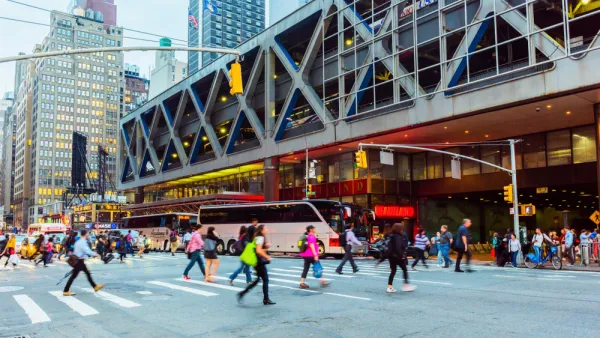
Revealed: Plans for Makeover of the World's Busiest Bus Terminal
The Port Authority Bus Terminal, described as the busiest bus terminal in the world, is due for a makeover, due to its "ragged" appearance and importance to the economy of the New York and New Jersey.
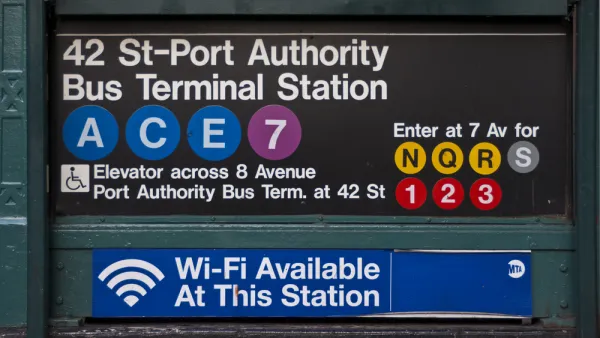
Resistance Rising Against Port Authority's Manhattan Bus Terminal Plans
Nicole Gelinas writes a column that deliberately establishes an urban vs. suburban conflict over the issue of a $10 billion proposal to build a new Port Authority bus terminal on Manhattan's West Side.
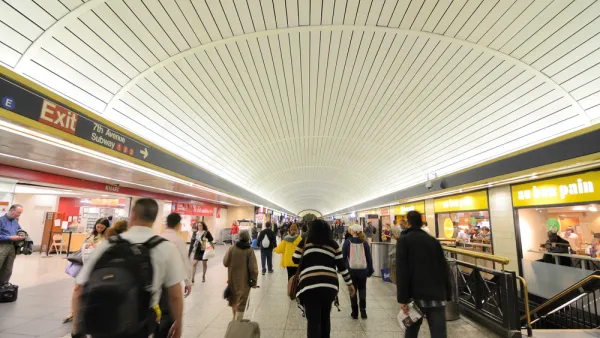
Chronic Homelessness Persists at New York City Transit Hubs and Airports
Two train stations, two airports, and one bus terminal double as homeless shelters in New York City. When some close for the night, the subways fill in.

Desperate measures: Advocates weigh draining Lake Powell to fill Colorado River
Draining the reservoir could reduce evaporation losses by a couple hundred thousand acre-feet.

Eastern Nebraska is running out of electricity
Data centers and electrification are straining eastern Nebraska’s grid, throttling economic development.

Move over, LA: St. Louis gears up for Olympics, invests millions in downtown redevelopment
The Missouri city will host the 2028 Olympic soccer group stage and knockout matches.

Bill to overhaul energy permitting clears Senate
The Bipartisan American Affordability and Jobs Act of 2026 still needs to pass the House of Representatives.

MTA sends Dem leaders a wish list to mend Trump’s damages
Requests include exempting new train and bus components from tariffs and increasing transit security funding.

Mass. votes against statewide minimum lot size for single-family homes
Over 2 million residents voted on Question 7; it was decided by just over 30,000 votes.

FREE Course: Walkable City 1: Why Walkability?
After describing his path towards focusing on walkability as the essence of good planning, Jeff Speck marches through his five principal reasons for making more walkable places.
Reinventing Malls: Planning Alchemy—Turning Gray Fields Into Gold
The course focuses on the opportunities and imperatives that shape reinvention of mall sites.

City of Rosemead
Rutgers University, Edward J. Bloustein School of Planning and Public Policy
One Hundred Miles
University of Michigan School for Environment and Sustainability (SEAS)
Hunter College, City University of New York (CUNY)
The Architects Foundation
City of Cambridge
The Pocatello Development Authority
The Urban Renewal Agency of the City of Pocatello