Sacramento's parking revenues will pay for the city's share of the arena construction loan.


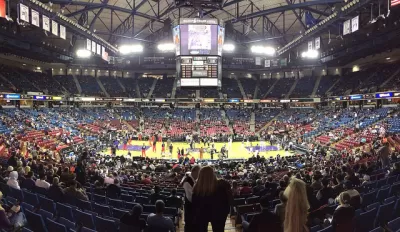
After years of controversial negotiations, the city of Sacramento has finally completed its share of financing for the $500 million basketball arena that will house the Sacramento Kings. The downtown sports complex will include bars, restaurants, and other retail shops intended to revitalize the neighborhood and draw thousands of new visitors to the area. Financing for the complex comes from both public and private sources.
The $272.9 million bond will be paid off with the city's parking revenues, which are expected to increase. Proposals for increasing parking revenue include a hourly rate increase, more restrictions on the hours of no-cost parking, and event-specific pricing. However, according to Dale Kasler, "officials have said the rate hikes would have taken place regardless of the arena debt."
At 5.67 percent interest, City Treasurer Russ Fehr calculates an annual debt service of $18 million. "The Kings will pay an estimated two-thirds of the debt service through lease payments and property taxes generated by the new arena," writes Kasler. Although the Treasurer says the city got a deal, they could have potentially got the loan at 5 percent back in February but were delayed from proceeding by a citizen's lawsuit, which alleged that the city was providing additional unapproved subsidies to the Kings project.
Read the full story: Sacramento completes Kings arena financing with $272.9 million bond sale
Business Owners Vote to Fund Sacramento Streetcar Operations
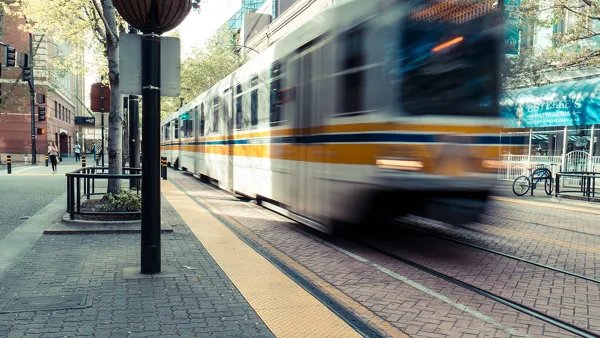
The two-thirds threshold proved to be no obstacle for Sacramento streetcar proponents in a special election held June 21, when at least *250 businesses owners voted to tax themselves to fund operations of the proposed streetcar.
Sacramento Streetcar Funding Reaches Key Goal
Imagine taking a streetcar across Sacramento's iconic Tower Bridge for a three mile trip. Backers are en route to securing matching local funding for the project. However, local voters will have the final say in a June 2 Mello-Roos special election.
Streamlined CEQA Reform Passes Under a New Bill
Senator Steinberg's CEQA reform bill, SB 731, which we have been following all year, died - but many of the most important aspects - LOS, aesthetic and parking impacts, have been transferred to SB 743 (Kings Arena bill), though applied more narrowly.

Planetizen Federal Action Tracker
A weekly monitor of how Trump’s orders and actions are impacting planners and planning in America.

California plans to bury El Niño’s downpour
If the state plays its cards right, it may be able to store a billion acre-feet of El Niño’s water in aquifers.

Desperate measures: Advocates weigh draining Lake Powell to fill Colorado River
Draining the reservoir could reduce evaporation losses by a couple hundred thousand acre-feet.

Los Angeles just elected an urban planner as its mayor
Transportation analysts are optimistic that Raman will be more aggressive in addressing transit issues than Bass.

Mamdani’s pied-à-terre tax survives legal challenge
A panel of judges found that the plaintiffs failed to demonstrate injury as a result of New York City's implementation of the tax.

Eastern Nebraska is running out of electricity
Data centers and electrification are straining eastern Nebraska’s grid, throttling economic development.

FREE Course: Walkable City 1: Why Walkability?
After describing his path towards focusing on walkability as the essence of good planning, Jeff Speck marches through his five principal reasons for making more walkable places.
Reinventing Malls: Planning Alchemy—Turning Gray Fields Into Gold
The course focuses on the opportunities and imperatives that shape reinvention of mall sites.

City of Rosemead
Rutgers University, Edward J. Bloustein School of Planning and Public Policy
One Hundred Miles
University of Michigan School for Environment and Sustainability (SEAS)
Hunter College, City University of New York (CUNY)
The Architects Foundation
City of Cambridge
Montrose County
The Pocatello Development Authority