Too often, street-side parklets become little more than semi-private patios for the businesses that sponsor them. Pavement parks, replacing dangerous intersections, may be a more worthwhile option.


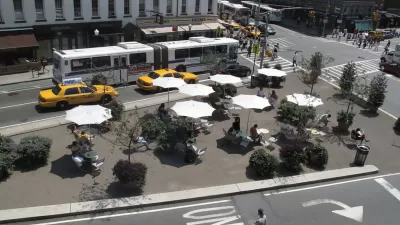
Parklets are beloved of many urbanists, and Daniel Cohen argues they shouldn't be. Besides their minuscule size, parklets can be off-putting to pedestrians who confuse them for private spaces. "Perhaps it's fair that the parklet paid for by and in front of the ice cream shop is used primarily by their customers, but a semi-public use of public space is only semi-better than private car parking."
Cohen observes that parklets are generally located along commercial arterials, furthering limiting their appeal. "If given the choice to sit within inches of fast-moving cars and their emissions and the choice to sit anywhere else, I'm going to take the latter."
Seattle's First Hill "pavement park" replaces a dangerous intersection in a residential neighborhood. Cohen praises its accessibility, permanence, and significant imprint on the area. The pavement park fills a need for public space and helps calm traffic: factors that, Cohen argues, parklets have failed to address.
Read the full story: Stop Building Mediocre Parklets, Start Building Pavement Parks

Minneapolis Activists Use DIY Traffic Circles to Identify, Slow ICE
Residents are using the pop-up roundabouts to slow traffic and make their presence known on Minneapolis streets.
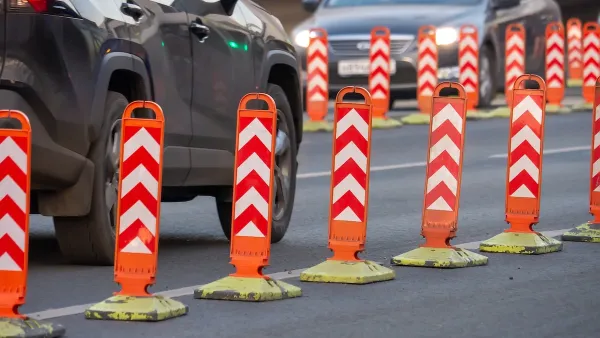
Indianapolis Encourages Tactical Urbanism With Lending Library, Grant Program
Residents can apply to receive assistance with traffic calming projects that can provide valuable data and lead to permanent changes.
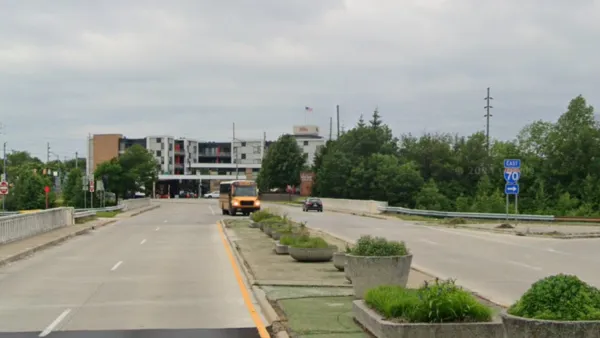
Indy Neighborhood Group Builds Temporary Multi-Use Path
Community members, aided in part by funding from the city, repurposed a vehicle lane to create a protected bike and pedestrian path for the summer season.

Planetizen Federal Action Tracker
A weekly monitor of how Trump’s orders and actions are impacting planners and planning in America.

California plans to bury El Niño’s downpour
If the state plays its cards right, it may be able to store a billion acre-feet of El Niño’s water in aquifers.

Desperate measures: Advocates weigh draining Lake Powell to fill Colorado River
Draining the reservoir could reduce evaporation losses by a couple hundred thousand acre-feet.

Chicago voters approve permanent festival grounds, penalty for vacant property owners
Currently, major summer and fall festivals take over public parks for weeks at a time, drawing criticism from nearby residents

NYC votes to cut outdoor dining red tape, speed up permitting
New York City also voted to allow the Department of Transportation to begin work on urgent projects before notifying elected officials.

California appears to reject Prop. 45
The proposition would have expanded the projects that qualify for a streamlined environmental review, effectively paring down the California Environmental Quality Act.

FREE Course: Walkable City 1: Why Walkability?
After describing his path towards focusing on walkability as the essence of good planning, Jeff Speck marches through his five principal reasons for making more walkable places.
Reinventing Malls: Planning Alchemy—Turning Gray Fields Into Gold
The course focuses on the opportunities and imperatives that shape reinvention of mall sites.

City of Rosemead
Rutgers University, Edward J. Bloustein School of Planning and Public Policy
One Hundred Miles
Hunter College, City University of New York (CUNY)
The Architects Foundation
University of Cincinnati Online
City of Cambridge
Montrose County
The Pocatello Development Authority