It's a case of the haves vs. the have-nots in transportation spending for a rapidly growing suburban area of Houston.


Matthew Tresaugue reports on the political debate in Montgomery County, located just north of Houston, prior to the November 3 election, when voters will decide on a $280 million bond for funding new and improved roadways.
At the center of the brewing controversy is The Woodlands, a township that helped defeat a larger version of the bond in an election four months ago. "After urging county leaders to try again on the coming ballot, the township's governing board has come out against the revised bond measure, saying that the package is tainted because it was put together in negotiations outside public view," reports Tresaugue.
The decision to rescind its support for the new bond measure has driven a wedge between the township and the county. Meanwhile new development is quickly coming online throughout the county, following a trend led by The Woodlands. Tresaugue explains the land use pressures at work in the county:
"With The Woodlands nearing build-out, new housing developments are sprouting across south Montgomery County. The mobility needs east of The Woodlands are especially acute, according to a new analysis by the Houston-Galveston Area Council, a regional planning body. Within the next five years, the fast-growing area needs at least $207 million to improve and widen nine roadways to keep traffic moving, the draft report concluded."
The article goes on to detail some of the specific road projects targeted by plans, and the funding package provided by the bond measure, for the unincorporated neighborhoods east of the Woodlands.
Read the full story: Woodlands' leaders shifts on roads bond irk neighbors

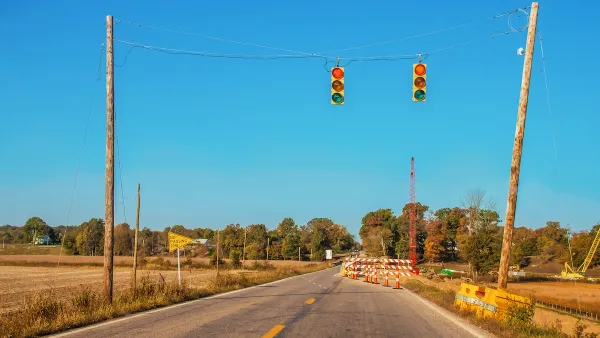
Report: Some Rural States Ahead of More Urbanized Ones in Reducing Transportation Emissions
This is a largely unintended consequence of states with lower populations and resources focusing on repairing existing roads and infrastructure rather than expanding and building new roads.
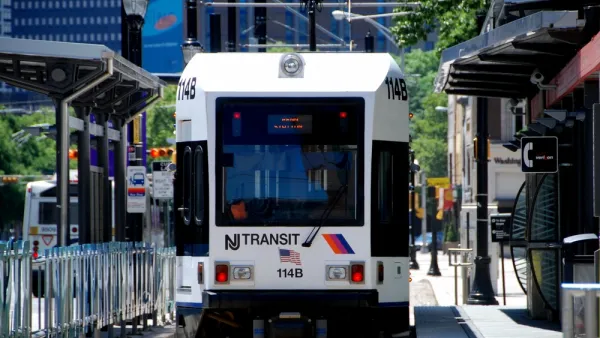
New Jersey to Cash in $2.4 Billion of Transportation Bonds
The $2.4 billion in New Jersey Transportation Trust Fund Authority bonds will fund infrastructure upgrades, including potential improvements for NJ Transit, which has had a summer of service disruptions, fare and tax hikes, and budget woes.
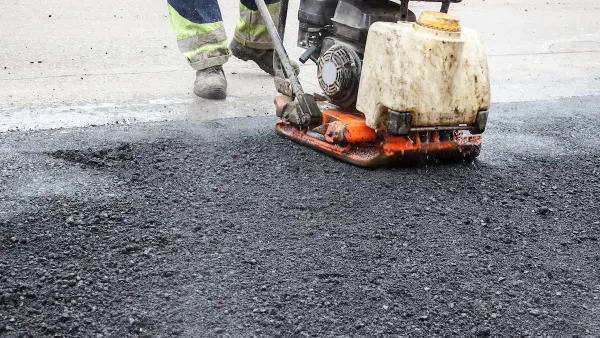
State Transportation Leaders Call for Maintenance Over New Projects
Experts suggest departments facing budget gaps should prioritize basic repairs and maintenance over road-building and highway expansion projects.

Planetizen Federal Action Tracker
A weekly monitor of how Trump’s orders and actions are impacting planners and planning in America.

Amtrak, CN end decades-long dispute with eight-year agreement
The new operating agreement establishes an updated framework for the companies to work together, including processes to resolve disputes.

Judges permit Denver to divert 77,000 acre feet from the Colorado River for reservoir expansion
Overuse and climate change have caused the Colorado River’s water levels to plummet.

NYC DOT wants faster, more permanent street upgrades
The city is examining ways to build more concrete infrastructure without getting entangled in 'decades-long' projects.

'Something we’ve never seen before:' rising utility rates could strain city finances nationwide
Data centers, climate change and other factors have caused utility rates in the United States to increase by 38% since 2020.

Trump to overrule local leaders, lease millions of acres of America’s Pacific Island territories’ seafloors to mining companies
International law says that the Indigenous people of America’s territories have a right to prior and informed consent regarding projects that impact their countries.

FREE Course: Walkable City 1: Why Walkability?
After describing his path towards focusing on walkability as the essence of good planning, Jeff Speck marches through his five principal reasons for making more walkable places.
Reinventing Malls: Planning Alchemy—Turning Gray Fields Into Gold
The course focuses on the opportunities and imperatives that shape reinvention of mall sites.

Harvard University Graduate School of Design
KFH Group Inc.
Greater Baltimore Committee
The Architects Foundation
University of Cincinnati Online
The Pocatello Development Authority
The Urban Renewal Agency of the City of Pocatello