What does it mean to be a Chief Resilience Officer for one America's largest cities? Doggerel spoke to Patrick Otellini, Chief Resilient Officer for San Francisco, to find out what it takes to make a truly resilient city.



What are the most important lessons you’ve learned since taking on this role?
Well, being the first city to launch our strategy through the 100RC process, we were very much a pilot. Everyone acknowledged that this was a new experiment.
In my previous role as San Francisco’s director of earthquake safety — as in a lot of work that we do in the city government — our work was very focused and very intentional. And we were very successful in a lot of our efforts. But when we started with 100RC we were able to take a pause, step back into a research phase, which allowed us to understand things in a more dynamic way. That’s been a treat that we don’t often get in the public sector. In going through that process, we’ve been able to strengthen a lot of our existing programs, identifying cobenefits and beginning to tie these together in a really great way.
Read the full story: Beyond the big one: Real recovery in San Francisco

More Detail on What Happened to 100 Resilient Cities
The Rockefeller Foundation has cited costs and a new strategic direction to explain why it abruptly cut off the program this year. While the work may live on in some form, the move underscores the risks of relying on private funding.
Could the Humble Heat Pump Be a Decarbonization Hero?
Buildings are responsible for a little less than half of greenhouse gas emissions in the U.S. Break this figure down further and you'll find that building heating accounts for about a fifth of all U.S. emissions.

To Meet Climate Change Goals, San Francisco Tries Networking
San Francisco's Business Council on Climate Change serves as a 'convener' between municipal government and the private sector to tackle issues related to climate change. Writer Andrew Wade spoke with the Council's executive director, Michael Parks.

Planetizen Federal Action Tracker
A weekly monitor of how Trump’s orders and actions are impacting planners and planning in America.

Amtrak, CN end decades-long dispute with eight-year agreement
The new operating agreement establishes an updated framework for the companies to work together, including processes to resolve disputes.

Judges permit Denver to divert 77,000 acre feet from the Colorado River for reservoir expansion
Overuse and climate change have caused the Colorado River’s water levels to plummet.

Boston has spent millions making the Green Line more accessible — and there’s no end in sight
While the city has invested millions into expanding and adding platforms to the Green Line to make it more accessible, new train cars set to arrive next year will be too tall for disabled passengers to board without raising the current platforms.

Idaho may see an 18% drop in federal surface transit funding — the largest estimated cut in the US
Transit systems in rural communities are much more reliant on federal funding to provide their services.

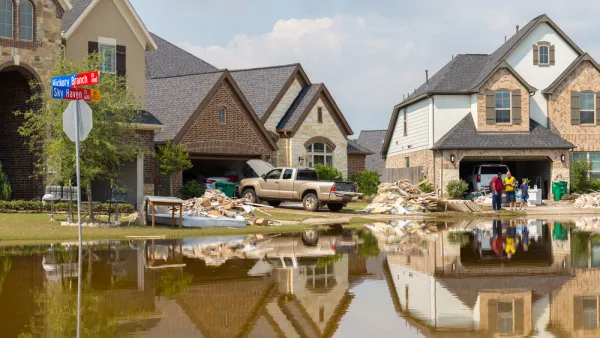
How ‘post-disaster gentrification’ alters neighborhoods after natural calamities
After hurricanes, fires or other calamities, the original residents of a community are often replaced by younger, wealthier residents.

FREE Course: Walkable City 1: Why Walkability?
After describing his path towards focusing on walkability as the essence of good planning, Jeff Speck marches through his five principal reasons for making more walkable places.
Reinventing Malls: Planning Alchemy—Turning Gray Fields Into Gold
The course focuses on the opportunities and imperatives that shape reinvention of mall sites.

Harvard University Graduate School of Design
KFH Group Inc.
Greater Baltimore Committee
The Architects Foundation
University of Cincinnati Online
The Pocatello Development Authority
The Urban Renewal Agency of the City of Pocatello