New tools and technologies of the so-called Internet of Things are helping cities get a better handle on water scarcity and overabundance.


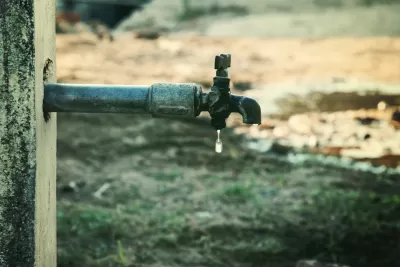
"Whether cities face scarcity or abundance—forced to conserve water or plan for torrential rain—new tools are emerging that leverage the Internet of Things to effectively manage water," according to an article by Laura Adler.
Adler goes on to survey the different types of technologies in use in cities around the country. For instance: " Companies such as Hortau and CropX and nonprofits like Santa Cruz County’s Community Water Dialogue are implementing radio- or cellular-enabled sensor systems that track variables including rainfall, humidity, soil composition, topography, temperature, and sunlight. Coupled with analytics and weather prediction data, this information enables farmers to make smarter decisions about irrigation."
On the drought side of the equation, Adler also mentions technological innovations for irrigation on municipal properties and for preventing leaks from urban water transportation systems.
For managing stormwater, Adler notes that the Internet of Things is helping cities plan for and anticipate heavy rainfall. For instance: "Firms like Opti are helping cities pull together data from water storage facilities and weather predictions to ensure that there is sufficient space to collect and process rainwater runoff. With analytics and smart infrastructure management, cities can plan for maximum runoff capture and processing, with the dual benefit of increasing water harvesting and reducing pollution."
Read the full story: Come Drought or High Water

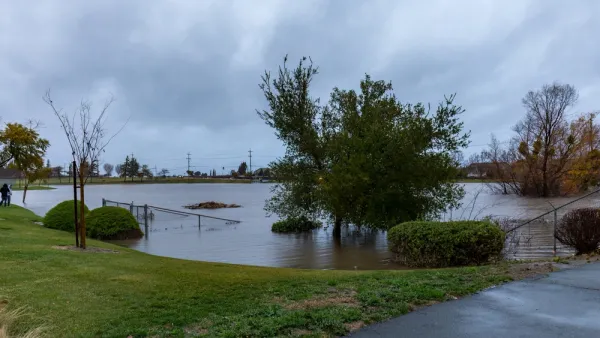
California’s Reservoirs are Filling Up, but For How Long?
Recent storms are bringing plenty of water to parched parts of California, but scientists warn the relief won’t be a long-term solution to longer, drier periods.

The Lesser-Known Programs in the Infrastructure Bill
While the focus has been on flashier components of the infrastructure bill, some smaller initiatives could have outsized impacts by shifting priorities and funding resilience efforts.
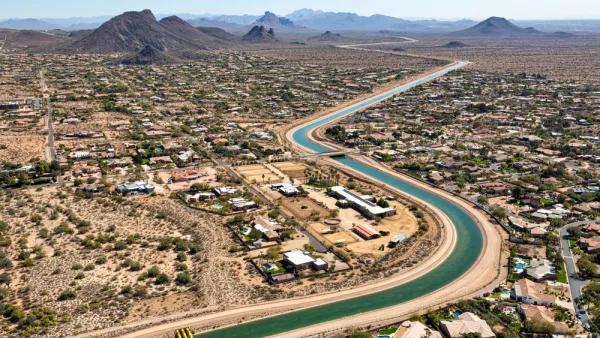
Arizona Governor Pledges $1 Billion to Water Infrastructure
The billion-dollar investment in the state's water supplies sounds good on paper, but lawmakers must also distribute funding effectively to mitigate the state's urgent water shortage.

Planetizen Federal Action Tracker
A weekly monitor of how Trump’s orders and actions are impacting planners and planning in America.

Amtrak, CN end decades-long dispute with eight-year agreement
The new operating agreement establishes an updated framework for the companies to work together, including processes to resolve disputes.

Northwest rail fans eager for Sept. 30 debut of Amtrak’s Airo fleet
Get ready for that new train smell and more seats. But they won’t go faster or run more frequently on the Cascades route in Washington and Oregon.

Brightline Florida files for bankruptcy
The transit company is over $5 billion in debt.

St. Louis Metro to test if single-car trains can reduce operating costs, maintain rider satisfaction
The pilot program will run from October to spring 2027, and begin with one single-car train operating on Metrolink’s Red and Blue lines.

Pennsylvania is building data centers in abandoned mines
Housing data centers in mines provides an alternative to destroying local forests and may spare residents from data centers’ noise and air pollution.

FREE Course: Walkable City 1: Why Walkability?
After describing his path towards focusing on walkability as the essence of good planning, Jeff Speck marches through his five principal reasons for making more walkable places.
Reinventing Malls: Planning Alchemy—Turning Gray Fields Into Gold
The course focuses on the opportunities and imperatives that shape reinvention of mall sites.

City of Thousand Oaks
City of Wisconsin Rapids
Harvard University Graduate School of Design
The Architects Foundation
University of Cincinnati Online
The Pocatello Development Authority
The Urban Renewal Agency of the City of Pocatello