Not all streets are created equal: Some have sidewalks and some don't.


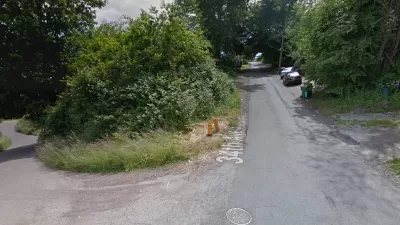
Stephen Fesler shares a map of Seattle streets that lack sidewalks—a hot button issue in Seattle where residents of some neighborhoods are "infuriated that they still don't have access to walking facilities in their neighborhoods."
The map reveals that streets north of 85th Street as well as streets in the Industrial District, West Seattle, and Southeast Seattle are lacking sidewalks.
"For a bit of perspective though, it's worth noting that Seattle has over 2,000 miles of sidewalks, which collectively cover 72% of city blocks. The City of Seattle estimates that replacement cost of this existing infrastructure is somewhere around $1.5 billion. But that still leaves some 900 miles (28% of city blocks) without any sidewalks; adding those to the pedestrian network would cost at least another $675 million."
The post goes on to explain how some of the neighborhoods without sidewalks got that way (hint: late incorporation) as well as how excuses and promises are sometimes what residents get instead of action regarding the state of pedestrian infrastructure in their neighborhoods.
Read the full story: MAP OF THE WEEK: LACK OF SIDEWALKS IN SEATTLE

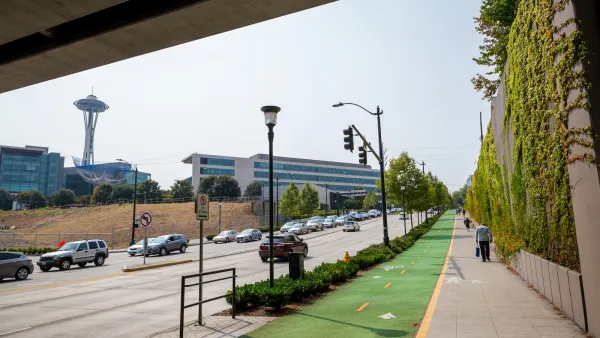
Seattle's transportation levy had a fruitful first year
The city repaired over 17,000 potholes, completed close to 21,000 sidewalk projects, and planted over 1,100 trees with revenue from an eight-year levy approved by voters in 2024.
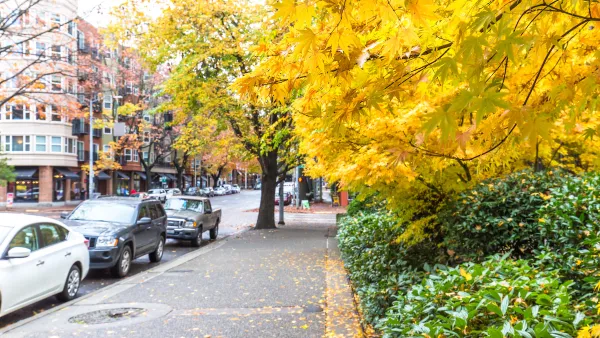
Proposal Could Mandate Sidewalks as Part of Seattle Complete Streets
Almost a third of the city’s neighborhood streets lack sidewalks.

Without Sidewalks, Making Seattle Streets More Pedestrian Friendly
Over a quarter of city blocks lack sidewalk infrastructure. An advocacy project to reduce traffic speeds and increase pedestrian safety on these streets has evolved into a city-funded program.

Planetizen Federal Action Tracker
A weekly monitor of how Trump’s orders and actions are impacting planners and planning in America.

‘Going backwards:’ Baltimore mayor, students rally against state's transit funding plan
Maryland's proposed six-year plan provides no funding for Baltimore’s BMORE bus program and reduces its road maintenance funding.

Detroit to transform waterfront with $2.2 billion investment
Developers will convert about 18 acres of unused parking lot space into civic spaces.

Newsom vetoes high-speed rail supervision bill after agency receives condemnatory audit
The audit found the CHSRA approved almost $600,000 in unallowable travel expenses.

Nation sees first electric plane-boat hybrid take off in public demo
The Viceroy Seaglider can fly at speeds of 180mph for up to 180 miles.

One of nation’s poorest counties to receive $6 billion data center
The developers estimate the project will create 200 permanent jobs and 1,000 temporary construction jobs.

FREE Course: Walkable City 1: Why Walkability?
After describing his path towards focusing on walkability as the essence of good planning, Jeff Speck marches through his five principal reasons for making more walkable places.
Reinventing Malls: Planning Alchemy—Turning Gray Fields Into Gold
The course focuses on the opportunities and imperatives that shape reinvention of mall sites.

City of Thousand Oaks
City of Wisconsin Rapids
Harvard University Graduate School of Design
The Architects Foundation
University of Cincinnati Online
Northern Illinois Transit Authority (NITA)
The Pocatello Development Authority
The Urban Renewal Agency of the City of Pocatello