One of the most influential environmental regulators may be someone you never heard of. She is Mary Nichols, chair of the California Air Resources Board—twice over. She is pushing automakers to exceed the current 2025 goal for electric vehicles.


"Even if most people outside California have never heard of Mary Nichols, she’s the world’s most influential automotive regulator, says Levi Tillemann, author of The Great Race, a book on the future of automobile technology," writes John Lippert for Bloomberg News. "Under her leadership, the Air Resources Board [CARB or ARB] has been the driving force for electrification," Tillemann says.
Regulations on the books in California, set in 2012, require that 2.7 percent of new cars sold in the state be (in 2015), in the regulatory jargon, ZEVs [zero-emission-vehicles]. These are defined as battery-only or fuel-cell cars, and plug-in hybrids. The quota rises every year starting in 2018 and reaches 22 percent* [sic] in 2025. Nichols wants 100 percent of the new vehicles sold to be zero- or almost-zero-emissions by 2030, in part through greater use of low-carbon fuels that she’s also promoting.
In addition to the ARB regulation, Governor Jerry Brown signed an executive order in 2012 "laying the foundation for 1.5 million zero-emission vehicles on California’s roadways by 2025."
Credits for EVs play key role
The ZEV mandate is more complicated than a simple numerical quota for electric vehicles. There can be a range of credits for plug-in hybrids, such as the Chevrolet Volt, and other advanced technologies (the almost-zero-emission category Nichols refers to). [See regulation on credits (PDF)]
Edmund's Senior Editor, John O'Dell, explains: "Automakers are required to amass a certain number of credits each year and they can meet the requirement in one of two ways."
- One is to build the required number of vehicles.
- If they can't or won't build as many as required, they can make up the difference by purchasing excess credits from automakers that have exceeded their base requirement."
Lippert chronicles the storied background of Mary Nichols, who worked for Gov. Brown in his first term as Chair of the Air Resources Board term as governor, President Clinton in the EPA, Republican Gov. Arnold Schwarzenegger as Chair of ARB, and continues in that position today.
*Correspondent's notes: As posted here when the initial "Advanced Clean Car Rules" was released in 2012, the EV target was 15% by 2025. I believe that 22% applies to "the minimum ZEV credit percentage requirement" by 2025. Look for a clarifying comment below shortly.
Hat tip to Brian Paddock.
FULL STORY: California Has a Plan to End the Auto Industry as We Know It

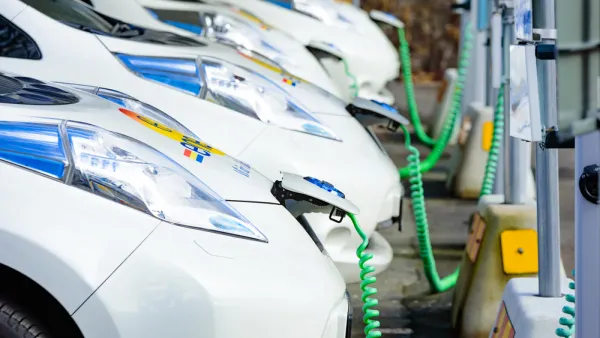
Legislation Will Increase Zero Emission Vehicle Mandate in California
With comprehensive legislation to enable California to continue its powerful agenda of tackling climate change in peril, a Southern California assemblywoman will introduce legislation to tackle the specific issue of sales of electric vehicles.
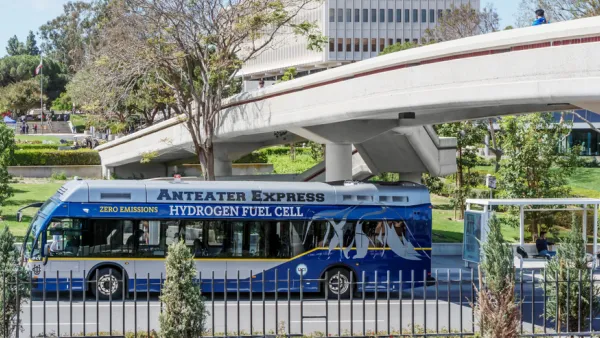
Can Hydrogen Make a Comeback?
While hydrogen fuel cell electric vehicles are much less popular than their battery-powered siblings, California remains committed to the zero-emission technology, with three state agencies investing in and monitoring its progress.
California Caps Income Eligibility for Electric Vehicle Rebates
Californians with incomes of $250,000 or more, or couples earning half a million dollars or more, have lost their eligibility to receive most state electric vehicle rebates as a result of a required vote by the California Air Resources Board.

The state-sanctioned urbicide of Austin
People don’t kill cities. Freeways do.

US to reduce Colorado River water deliveries to Mexico
A new Colorado Treaty amendment reduces Mexico’s Colorado River water allocation by 250,000 acre feet.

New Jersey’s second-largest city bans standalone data centers
Jersey City will continue to allow co-location facilities, such as those meant for research institutions that store their own data.

Amtrak not solely to blame for New Jersey commuter rail's unreliability, report finds
A new study from the Garden State Initiative found that NJ Transit’s budget grew 20% across a 4 year period, but reliability declined significantly over the same period.

EPA erases limits on planet-warming pollution from power plants
Under Monday’s plan, power plants would still have some limits on how much mercury, arsenic and other contaminants they can emit.

Phoenix announces new on-demand transit service, more frequent RAPID buses
Both new services will launch in October, and are part of Phoenix's Project Effective Access Solutions for Easing Congestion.

FREE Course: Walkable City 1: Why Walkability?
After describing his path towards focusing on walkability as the essence of good planning, Jeff Speck marches through his five principal reasons for making more walkable places.
Reinventing Malls: Planning Alchemy—Turning Gray Fields Into Gold
The course focuses on the opportunities and imperatives that shape reinvention of mall sites.

Eagle County Government
Harvard University Graduate School of Design
Nashville Planning Department
The Architects Foundation
University of Cincinnati Online
The Pocatello Development Authority
The Urban Renewal Agency of the City of Pocatello
Journal of the American Planning Association