The Denver Post reports on a growing backlash against urban renewal authority in Colorado.


"Urban renewal in Colorado, a decades-old strategy used by dozens of communities to replace or rejuvenate aging or derelict shopping malls and neighborhoods, has been under fire," reports John Aguilar.
" Earlier this year, Littleton passed a first-of-its-kind ballot measure in the state dramatically curtailing the power of its urban renewal authority. Wheat Ridge voters will decide on a similar measure in November."
Aguilar also cites two examples of cities where the use of eminent domain in moving redevelopment projects forward has ignited controversy. The string of controversies also led the Colorado State Legislature to pass House Bill 1348, which "gives more control to counties, and to school and fire districts, over the allocation of new tax revenues generated by redevelopment."
At the center of the controversy is the tax increment financing that pays off the bonds that fund construction of redevelopment projects in Colorado cities. The article cites a lot more examples of cities grappling with the use of urban renewal authority—and in the process provides a primer on tax increment financing and the politics of redevelopment.
Read the full story: Urban renewal backlash gains strength across Colorado
Pittsburgh Reaches Deal for 'Transformative' Redevelopment of Lower Hill District
The old Civic Arena site, formerly the home of the Pittsburgh Penguin NHL team, will be redeveloped with the help of the city's largest-ever tax increment financing district.
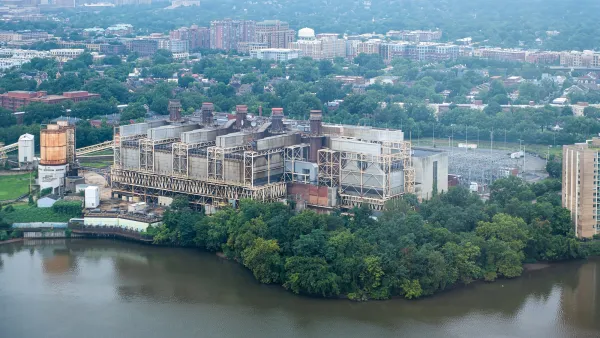
Former power plant in Alexandria to become walkable waterfront neighborhood with 800 homes
The Potomac River Generating Station was once the biggest source of air pollution in northern Virginia.
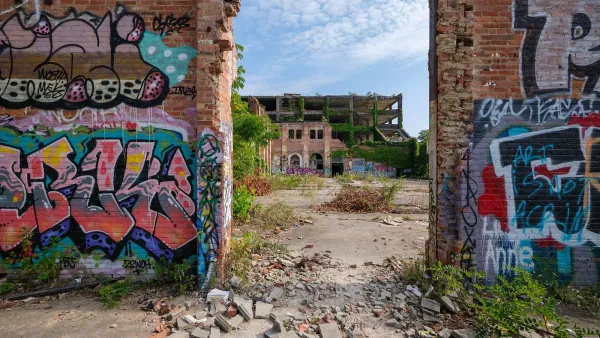
Cleveland announces new Midline industrial investment district
The plan calls for at least 1.5 million square feet of new industrial and commercial space alongside housing.

Planetizen Federal Action Tracker
A weekly monitor of how Trump’s orders and actions are impacting planners and planning in America.

California plans to bury El Niño’s downpour
If the state plays its cards right, it may be able to store a billion acre-feet of El Niño’s water in aquifers.

Desperate measures: Advocates weigh draining Lake Powell to fill Colorado River
Draining the reservoir could reduce evaporation losses by a couple hundred thousand acre-feet.

Los Angeles just elected an urban planner as its mayor
Transportation analysts are optimistic that Raman will be more aggressive in addressing transit issues than Bass.

Mamdani’s pied-à-terre tax survives legal challenge
A panel of judges found that the plaintiffs failed to demonstrate injury as a result of New York City's implementation of the tax.

Eastern Nebraska is running out of electricity
Data centers and electrification are straining eastern Nebraska’s grid, throttling economic development.

FREE Course: Walkable City 1: Why Walkability?
After describing his path towards focusing on walkability as the essence of good planning, Jeff Speck marches through his five principal reasons for making more walkable places.
Reinventing Malls: Planning Alchemy—Turning Gray Fields Into Gold
The course focuses on the opportunities and imperatives that shape reinvention of mall sites.

City of Rosemead
Rutgers University, Edward J. Bloustein School of Planning and Public Policy
One Hundred Miles
University of Michigan School for Environment and Sustainability (SEAS)
Hunter College, City University of New York (CUNY)
The Architects Foundation
City of Cambridge
Montrose County
The Pocatello Development Authority