Stymied for a time by lackluster investment, planned redevelopment of Hudson Yards on Manhattan's West Side is picking up speed. Joining residential buildings and budget hotels, office towers will bring municipal revenues back up.


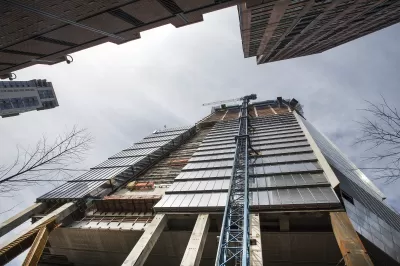
Hudson Yards' current palate of new residential and hotel structures hasn't been enough to fully justify an extensive redevelopment plan. "Critics have long complained that revenues from Hudson Yards development have fallen far short of what former Mayor Michael R. Bloomberg had once promised [...]"
However, "in the last 11 months alone, developers have paid the city $336 million in fees and development rights to allow for taller towers in the district."
Project architect Daniel Doctoroff, deputy mayor for economic development under former Mayor Bloomberg, remarked, "The planning and rezoning of the West Side for high-rise development, particularly office towers, was necessary for the city to continue to grow and prosper. Otherwise, Manhattan was running out of room for new development."
"Development on the West Side is generating so much money in fees and taxes, officials say, that for the first time in a decade, the city will not have to take money out of its budget to make payments on the $3 billion in bonds used to build parks and a subway line in the district."
Read the full story: Redevelopment of Manhattan’s Far West Side Gains Momentum


More Skyscrapers Coming Soon to New York City's Skyline
After a decade of skyward expansion, even more skyscrapers are on the horizon in Manhattan.
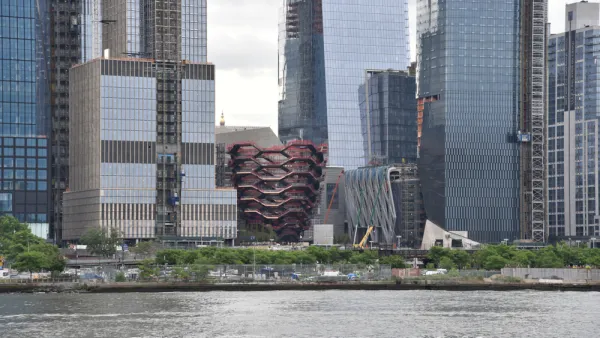
Promised Data-Driven Infrastructure On Hold at Hudson Yards
When the Manhattan megadevelopment got its start, big data was a major part of Hudson Yards' marketing pitch. Now it's "probably the last thing we'll get to."

Massive Empire State Complex Gains Key Political Support
New York Governor Kathy Hochul is backing one of the largest real estate development projects in U.S. history—larger even than the nearby Hudson Yards project.

Planetizen Federal Action Tracker
A weekly monitor of how Trump’s orders and actions are impacting planners and planning in America.

Amtrak, CN end decades-long dispute with eight-year agreement
The new operating agreement establishes an updated framework for the companies to work together, including processes to resolve disputes.

Northwest rail fans eager for Sept. 30 debut of Amtrak’s Airo fleet
Get ready for that new train smell and more seats. But they won’t go faster or run more frequently on the Cascades route in Washington and Oregon.

Brightline Florida files for bankruptcy
The transit company is over $5 billion in debt.

St. Louis Metro to test if single-car trains can reduce operating costs, maintain rider satisfaction
The pilot program will run from October to spring 2027, and begin with one single-car train operating on Metrolink’s Red and Blue lines.

Pennsylvania is building data centers in abandoned mines
Housing data centers in mines provides an alternative to destroying local forests and may spare residents from data centers’ noise and air pollution.

FREE Course: Walkable City 1: Why Walkability?
After describing his path towards focusing on walkability as the essence of good planning, Jeff Speck marches through his five principal reasons for making more walkable places.
Reinventing Malls: Planning Alchemy—Turning Gray Fields Into Gold
The course focuses on the opportunities and imperatives that shape reinvention of mall sites.

.jpg)
City of Thousand Oaks
City of Wisconsin Rapids
Harvard University Graduate School of Design
The Architects Foundation
University of Cincinnati Online
The Pocatello Development Authority
The Urban Renewal Agency of the City of Pocatello