One of the suggestions in Mayor Bill de Blasio's OneNYC citywide plan is nothing new: an oft-proposed subway extension down Utica Avenue in Brooklyn. Some question whether the area's relatively low density warrants such an expense.


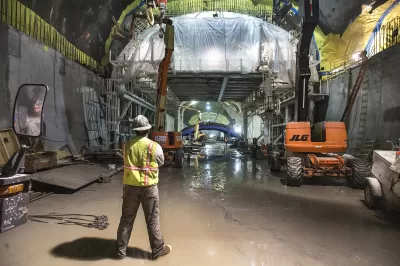
Nowhere in the country is transit ridership growing quicker than in the American subway's original home. "Between 2009 and 2014—just five years—the New York Subway system's ridership increased by 384 million annual rides, far more than any other U.S. rail system carries in total."
So far, the city has found it difficult to fund the service improvements that figure demands. Mayor de Blasio's recently-released city plan suggests sweeping changes to the system, notably including two Second Avenue Subway extension phases.
Another suggestion has garnered attention: "Most dramatically, OneNYC recommends that the MTA study the extension of the Subway south along Utica Avenue through East Flatbush and Flatlands, a roughly four-mile route that would, if built, include the first new Subway stations outside Manhattan since 1989 and the first in Brooklyn since 1956."
However, the article observes that a full subway investment beneath Utica may be overkill: population density around the proposed Utica line is significantly lower than in the areas surrounding other proposed paths. An alternative exists: light rail. "Missing from the discussion is any intermediary between buses and Subways—it's as if the vocabulary of high-capacity surface rail has been excised from the minds of transportation planners in New York City."
It is important to note that the Utica line, if built, would predominantly serve poorer minority communities. Any discussion of its pros and cons should keep that fact in mind.
Read the full story: Utica Avenue, OneNYC, and New York’s growth

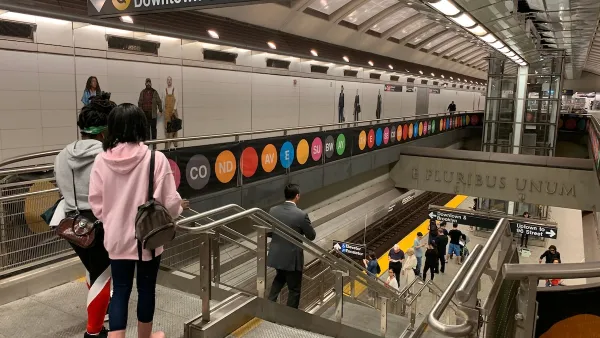
After 50 Years, Subway to East Harlem to Break Ground
The MTA approved a contract to extend the Q Line to three new stations, with surface work slated to begin in September.
MTA Poised to Break Ridership, On-Time Service Records
New York City’s transit system saw strong increases in ridership and improvements in service quality in the first half of 2025.
New York Subway Reaches One Billion Ride Milestone
The system’s 2024 performance is on track for its fastest growth since the pandemic.

Planetizen Federal Action Tracker
A weekly monitor of how Trump’s orders and actions are impacting planners and planning in America.

Amtrak, CN end decades-long dispute with eight-year agreement
The new operating agreement establishes an updated framework for the companies to work together, including processes to resolve disputes.

Northwest rail fans eager for Sept. 30 debut of Amtrak’s Airo fleet
Get ready for that new train smell and more seats. But they won’t go faster or run more frequently on the Cascades route in Washington and Oregon.

St. Louis Metro to test if single-car trains can reduce operating costs, maintain rider satisfaction
The pilot program will run from October to spring 2027, and begin with one single-car train operating on Metrolink’s Red and Blue lines.

Pennsylvania is building data centers in abandoned mines
Housing data centers in mines provides an alternative to destroying local forests and may spare residents from data centers’ noise and air pollution.

If Corpus Christi can’t revive desalination plant project, it may owe Texas $235 million
Earlier this month, city officials declined to pursue developing the plant for the second time in a year.

FREE Course: Walkable City 1: Why Walkability?
After describing his path towards focusing on walkability as the essence of good planning, Jeff Speck marches through his five principal reasons for making more walkable places.
Reinventing Malls: Planning Alchemy—Turning Gray Fields Into Gold
The course focuses on the opportunities and imperatives that shape reinvention of mall sites.

City of Thousand Oaks
City of Wisconsin Rapids
Harvard University Graduate School of Design
The Architects Foundation
University of Cincinnati Online
The Pocatello Development Authority
The Urban Renewal Agency of the City of Pocatello