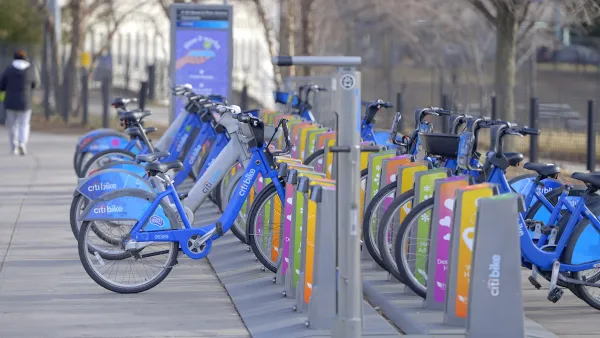
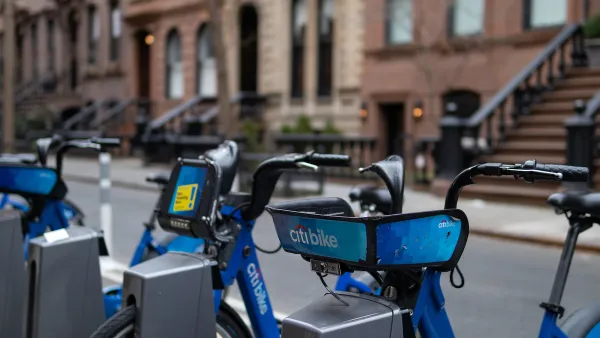
The more things change, the more things stay the same. The latest installment of New Yorkers afraid of bike infrastructure has erupted in response to a proposed expansion of Citi Bike into the Upper West Side.


Frank Rosario reports on the bikelash underway on the Upper West Side ahead of the proposed additon of Citi Bike to 39 new docks in the neighborhood. According to Rosario, "Upper West Side residents packed a community board meeting to fight the pending flood of Citi Bike stations — saying many sites pose a deadly risk to pedestrians, especially children."
Rosario cites four residents who express concern over the expansion of the bike share system in the neighborhood. Tiom Valenzuela, for instance, says, "There will be way too much combat between Citi Bike riders and pedestrians."
Debrw Bottle is concerned about conflicting traffic with existing bus traffic arounf the American Museum of Natural History. "The idea of bikes trying to enter into the traffic pattern in addition to everything else going on there is, frankly, just inconceivable," she says.
"Our street is a very narrow one. There are mothers with strollers, and there are young children walking around,” said Joanne Aidala.
The article is written in typical sensationalist and tabloid style, even including a map of "unsafe" new Citi Bike stations—though who deemed the sites unsafe and by what metrics are not mentioned. There's also no mention of the threat of motor vehicle traffic to the pedestrians in the neighborhood.
Read the full story: Upper West Siders lash out against ‘deadly’ Citi Bike stations

Keeping NYC’s E-Bike Fleet Charged and Running
How a crew of hundreds maintains one of the world’s largest bike share systems.
Citi Bike’s New Prices Take Effect
The system plans to expand to 40,000 bikes and 2,000 stations.
Citi Bike’s New Contract: What You Need to Know
Double the e-bikes, but no system expansion: an outline of what riders can expect from Citi Bike’s new agreement with the city.

Planetizen Federal Action Tracker
A weekly monitor of how Trump’s orders and actions are impacting planners and planning in America.

California plans to bury El Niño’s downpour
If the state plays its cards right, it may be able to store a billion acre-feet of El Niño’s water in aquifers.

Desperate measures: Advocates weigh draining Lake Powell to fill Colorado River
Draining the reservoir could reduce evaporation losses by a couple hundred thousand acre-feet.

Los Angeles just elected an urban planner as its mayor
Transportation analysts are optimistic that Raman will be more aggressive in addressing transit issues than Bass.

Mamdani’s pied-à-terre tax survives legal challenge
A panel of judges found that the plaintiffs failed to demonstrate injury as a result of New York City's implementation of the tax.

Eastern Nebraska is running out of electricity
Data centers and electrification are straining eastern Nebraska’s grid, throttling economic development.

FREE Course: Walkable City 1: Why Walkability?
After describing his path towards focusing on walkability as the essence of good planning, Jeff Speck marches through his five principal reasons for making more walkable places.
Reinventing Malls: Planning Alchemy—Turning Gray Fields Into Gold
The course focuses on the opportunities and imperatives that shape reinvention of mall sites.

City of Rosemead
Rutgers University, Edward J. Bloustein School of Planning and Public Policy
One Hundred Miles
University of Michigan School for Environment and Sustainability (SEAS)
Hunter College, City University of New York (CUNY)
The Architects Foundation
City of Cambridge
Montrose County
The Pocatello Development Authority