Mayor Ed Lee has announced plans to devote $28.9 million to housing, medical aid, and counseling programs. Nonprofits will partner with the city in an effort to put rising municipal revenue to good use.


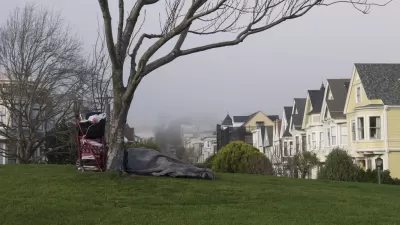
To combat chronic homelessness, San Francisco Mayor Lee will stand behind a simple cure: give them housing. His two-year plan is "the biggest expansion of residential complexes for indigents in San Francisco in more than a decade."
Supportive housing expansion lies at the center of the plan: "Chief among the proposals is spending $14.5 million to turn five single-room occupancy hotels with a total of 500 rooms into city-leased supportive-housing complexes."
Corresponding programs to bolster personal service will receive funding. "Another $1.8 million is set aside to improve the case manager-to-resident ratio in most of the city's supportive-housing complexes, from the current 1 to 100 down to 1 to 35, which studies have shown is a much more successful ratio."
The social effects of tech often get bad press. However, "the new funding plan is mainly possible because of tech-driven increases in city tax revenue, Lee and others said. 'Some people vilify the new techies coming in, but the fact is that when the city has a great economy like this, then we can invest,' said Randy Shaw, head of the Tenderloin Housing Clinic, which will help run some of the new housing."
Read the full story: Mayor Lee looks to spend millions more on homeless
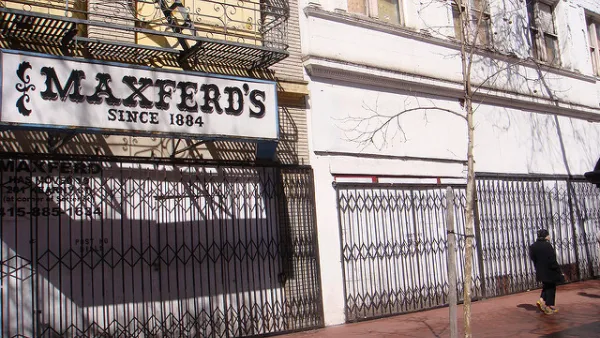
The Evolution of SROs and Supportive Housing for San Francisco's Homeless
The San Francisco Chronicle released a series of reports in a special "Beyond Homelessness" edition on San Francisco's attempts to address chronic homelessness. The city spends $112 million annually to operate 75 aging single-room-occupancy hotels.
Modular Housing for Homeless in San Francisco Hits Roadblocks
Lego-type housing construction has attracted the attention of two separate developers as an efficient means to provide housing for the city's large homeless population but has met objections from labor unions and the Mayor's Office.
Where Have All the Anti-Tech Protestors Gone?
In San Francisco at this time last year, Google bus protestors and Ellis Act rage were making the news everyday. The City seems a little more...adjusted these days.

Planetizen Federal Action Tracker
A weekly monitor of how Trump’s orders and actions are impacting planners and planning in America.

California plans to bury El Niño’s downpour
If the state plays its cards right, it may be able to store a billion acre-feet of El Niño’s water in aquifers.

Desperate measures: Advocates weigh draining Lake Powell to fill Colorado River
Draining the reservoir could reduce evaporation losses by a couple hundred thousand acre-feet.

Housing is the top priority of Seattle’s sole new councilmember
Jenks campaigned on building 1,000 new units of affordable housing.

New tax cuts may slash $1.5 billion in funding for Miami transit, public parks
Amendment 3 will save Miami-Dade homeowners $2,700 in 2028.

Arizona, Wisconsin, Pennsylvania hope to finally advance climate goals post-midterms
The three states have spent years under Republican or divided control.

FREE Course: Walkable City 1: Why Walkability?
After describing his path towards focusing on walkability as the essence of good planning, Jeff Speck marches through his five principal reasons for making more walkable places.
Reinventing Malls: Planning Alchemy—Turning Gray Fields Into Gold
The course focuses on the opportunities and imperatives that shape reinvention of mall sites.

City of Rosemead
Rutgers University, Edward J. Bloustein School of Planning and Public Policy
One Hundred Miles
University of Michigan School for Environment and Sustainability (SEAS)
Hunter College, City University of New York (CUNY)
The Architects Foundation
City of Cambridge
Montrose County
The Pocatello Development Authority