Walker wants to do away with Wisconsin's 2009 "complete streets" law and add a $25 retail tax to anyone purchasing a bike. Could this be because his re-election opponent was a former Trek Bicycle executive, or is he just anti-bike?


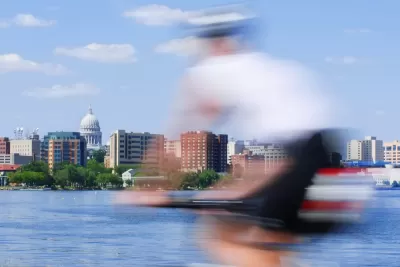
Walker, a prospective Republican presidential candidate, eyes "savings of $3.7 million a year if the [Complete Streets] program were repealed," writes Steven Elbow of The Capital Times. According to the program's webpage on the Wisconsin Department of Transportation [DOT] website, the program aims to design and operate roadways "to enable safe, convenient, and comfortable access and travel for all users."
Fund complete streets program with new "bicycle registration fee."
Elbow points to a "May 19 Legislative Fiscal Bureau paper (that) estimated that the repeal would save $190,500 a year." It suggests that the fee, which appears to be an excise tax in this writer's eyes, "be collected from bike sellers and deposited into the state transportation fund, as a means to fund the program. The Fiscal Bureau estimated that the fee would generate $7.2 million over two years."
The Wisconsin Bicycle Federation and some bike retailers are strongly opposed to both of the Walker measures.
"The irony is the Republicans have been looking for ways to cut taxes on business," said executive director Dave Cieslewicz [former pro-biking Madison mayor]. "But for some reason they’ve singled out the bike industry as the one industry they want to tax."
According to the Bicycle Retailer, "Trek Bicycle's president, John Burke, is urging Wisconsin cyclists to contact their state lawmakers in support of the state's Complete Streets Law, which Gov. Scott Walker has proposed eliminating. Burke, in an email sent this week, also urged them to oppose a $25 state."
Burke's sister, Mary Burke, a former Trek executive, ran against Walker as the Democratic candidate.
Do other states have bike taxes?
According to the DOT, there have been "proposals in Washington and Oregon to impose taxes of between $5 and $25 on bicycle sales, though neither took root.
Jessica Lechuga of Bloomberg BNA writes that "(a)s more state and local jurisdictions are adding bike lanes, they are also entertaining proposals to raise revenues from cyclists by imposing bike registration and transfer of ownership fees."
For example, Honolulu is requiring those who own a bicycle with 20-inch-diameter wheels or larger to register their bikes. For a one-time registration fee of $15 or a transfer-of-ownership fee of $5, a bicyclist receives a decal for the tube on which the seat sits. The collected taxes are deposited into a special bikeway fund that may only be used for city projects and programs related to bicycles.
However, unlike the Wisconsin proposal, this is an actual fee, not a sales or excise tax, and is administered by a city and county, not a state. Chicago also considered such a fee.
"It's not clear if the bike tax will be included in the final Transportation Department budget, which the budget committee is expected to take up next week," concludes Elbow.
Bike Tax In; Gasoline Tax, Electric and Hybrid Vehicle Taxes Out.
A revenue proposal that Walker is apparently no longer considering is increasing the main source of transportation funding, the state gas tax, as we noted in February. In November, his transportation secretary had a plan "to raise $750 million over the next two years by lowering the gasoline excise tax while adding a wholesale sales tax and charging electric vehicles and hybrids an annual fee."
Correspondent's notes: Please do not confuse the title of this post with the governor owning a Vendetta Cycle—apologies for any hurt feelings. Hat tip: AASHTO May 21 Transportation Update.
Read the full story: Wisconsin bike tax floated as possible transportation budget measure

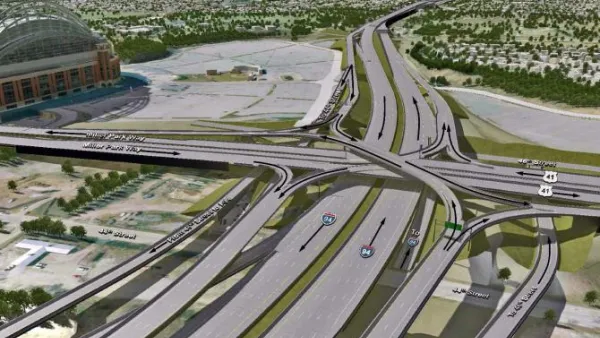
New Governor, Same Billion Dollar Freeway Expansion Plan
Wisconsin Gov. Tony Evers is picking up a plan previously championed and abandoned by former Gov. Scott Walker: The North-South expansion of I-94 west of Milwaukee.
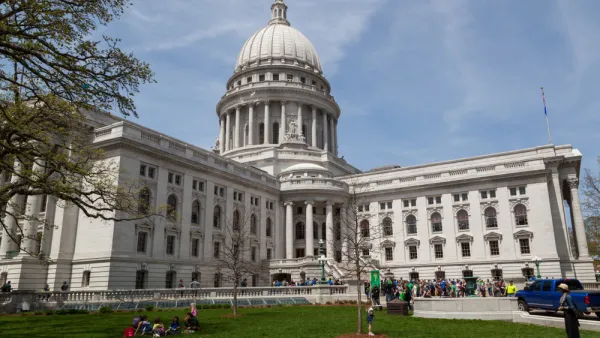
Wisconsin Republicans Unite to Support Road Tolling Over Gas Tax Hike
Assembly and Senate Republicans agree that the best way to fill the transportation funding gap is to add tolls to existing highways and bridges, yet they won't add toll infrastructure funding to the budget. A gas tax could be implemented immediately.
Wisconsin Law Could Delay Major Highway Projects
A plan to save money on highway megaprojects is likely to backfire, experts warn.

Amtrak, CN end decades-long dispute with eight-year agreement
The new operating agreement establishes an updated framework for the companies to work together, including processes to resolve disputes.

Northwest rail fans eager for Sept. 30 debut of Amtrak’s Airo fleet
Get ready for that new train smell and more seats. But they won’t go faster or run more frequently on the Cascades route in Washington and Oregon.

Judges permit Denver to divert 77,000 acre feet from the Colorado River for reservoir expansion
Overuse and climate change have caused the Colorado River’s water levels to plummet.

NYC to turn city-owned property into thousands of homes
The city has scheduled a public hearing regarding the development for October.

Buses travel at 5mph along this route in NYC. The Bronx's first-ever busway looks to change that
Prior to the busway, buses on the Bx36 route traveled as slowly as 5 miles per hour.

Pittsburg launches 'EZ permits,' aims for one-day turnaround for low-risk permits
The pilot ‘fast lane’ for permits is part of a bundle of modernization efforts for Pittsburg’s permitting process.

FREE Course: Walkable City 1: Why Walkability?
After describing his path towards focusing on walkability as the essence of good planning, Jeff Speck marches through his five principal reasons for making more walkable places.
Reinventing Malls: Planning Alchemy—Turning Gray Fields Into Gold
The course focuses on the opportunities and imperatives that shape reinvention of mall sites.

City of Thousand Oaks
City of Wisconsin Rapids
Harvard University Graduate School of Design
The Architects Foundation
University of Cincinnati Online
The Pocatello Development Authority
The Urban Renewal Agency of the City of Pocatello