A new study finds that biking to work does wonders for reducing stress levels throughout the day. Too bad most it's so hard to fund biking infrastructure.


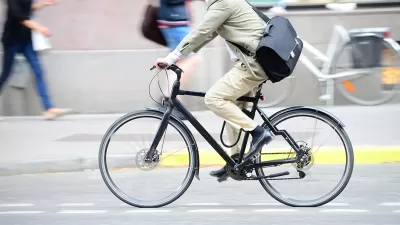
Lloyd Alter reports on a study out of the Calming Technology lab that finds bike commutes can improve stress. The researchers collected data using Spire breathing monitors from over 20,000 commutes by 1,000 commuters. "Not only did cyclists arrive at work less stressed, but an hour later were still more relaxed than those who came by transit or car," reports Alter. "They are also in better shape when they reverse the commute and go home…"
Alter acknowledges that the new study is only the latest in a growing body of work connecting bike commutes to reduced stress levels. Alter begs the question, after linking to several previous studies, of when politicians will catch up with the science and start spending money on infrastructure that supports healthy commutes, rather then more and bigger freeways.
Read the full story: Stressed at work? Commute by bike.


Study Finds Benefit in Proximity to Bike Lanes: 45 Minutes of Exercise a Week
Researchers in the United Kingdom have found that people who live near bike lanes are more likely to exercise—45 minutes more exercise per week, in fact.
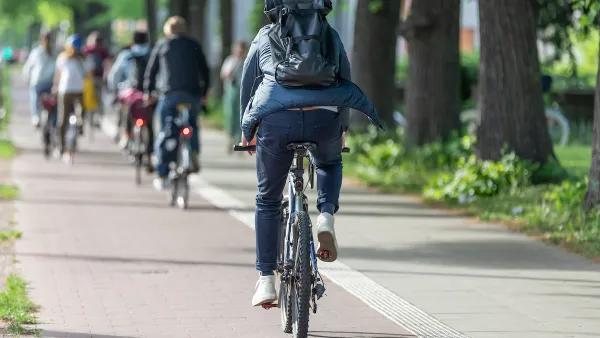
Promoting Cycling as Public Health Measure
An argument for better bike infrastructure from a healthcare perspective.
Historically Redlined Neighborhoods Have Higher Rates of Pedestrian Deaths, Study Says
The consequences of historic redlining continue to have consequences in the present day United States. Add another example to the list.

Planetizen Federal Action Tracker
A weekly monitor of how Trump’s orders and actions are impacting planners and planning in America.

Northwest rail fans eager for Sept. 30 debut of Amtrak’s Airo fleet
Get ready for that new train smell and more seats. But they won’t go faster or run more frequently on the Cascades route in Washington and Oregon.

Record-breaking wildlife overpass in Colorado brings 91% reduction in animal collisions
Prior to the overpass, vehicles were hitting one deer per day on Colorado’s Interstate 25.

Detroit to transform waterfront with $2.2 billion investment
Developers will convert about 18 acres of unused parking lot space into civic spaces.

‘Going backwards:’ Baltimore mayor, students rally against state's transit funding plan
Maryland's proposed six-year plan provides no funding for Baltimore’s BMORE bus program and reduces its road maintenance funding.

Trump wants to cancel nearly 98% of funding for HUD housing support program
Multiple housing groups are suing the administration in an effort to preserve the funding.

FREE Course: Walkable City 1: Why Walkability?
After describing his path towards focusing on walkability as the essence of good planning, Jeff Speck marches through his five principal reasons for making more walkable places.
Reinventing Malls: Planning Alchemy—Turning Gray Fields Into Gold
The course focuses on the opportunities and imperatives that shape reinvention of mall sites.

City of Thousand Oaks
City of Wisconsin Rapids
Harvard University Graduate School of Design
The Architects Foundation
University of Cincinnati Online
Northern Illinois Transit Authority (NITA)
The Pocatello Development Authority
The Urban Renewal Agency of the City of Pocatello