In February, the city council approved One Paseo, a 1.4 million-square-foot mix of offices, residences, retail, and entertainment. The project's detractors have forced a referendum, putting a kink in San Diego's urbanist planning ambitions.



One Paseo, in various iterations, has been a subject of debate in San Diego for the past six years. "Project backers say that One Paseo closely follows the city's stated goal of creating a 'city of villages,' channeling growth to high-density, infill projects."
Critics say the project does little to integrate its density with the low-slung, affluent neighborhoods nearby. "'On its own terms, it is a very, very good project,' says William Fulton, the city's former planning director [...] 'But it is an island in an auto-oriented suburban development.'"
High-density development, in general, faces "stiff resistance from neighborhood groups, which typically wield tremendous influence in the city's planning process. A proposal to build taller buildings near light-rail stations in the Bay Park area of San Diego was ultimately tabled after community complaints about views and traffic."
On May 18, the San Diego City Council will opt either to repeal their February decision or put the matter to a public vote.
Read the full story: San Diego Wrestles With Densification

10 Principles for Smart Growth in Existing Communities
Frustrated by what's passing as "smart growth" and "transit oriented development," Bill Adams postulates ten refinements (or less subtly stated clarifications) of the principles of smart growth and new urbanism.
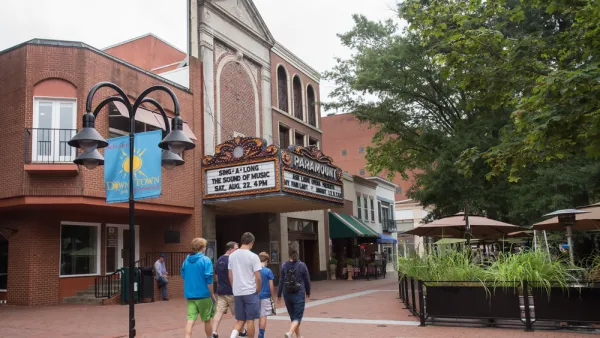
Controversial Comprehensive Plan Update Moves Forward in Charlottesville
Residents have had a chance to oppose the new residential density proposed by the "Charlottesville Plans Together" comprehensive planning process.
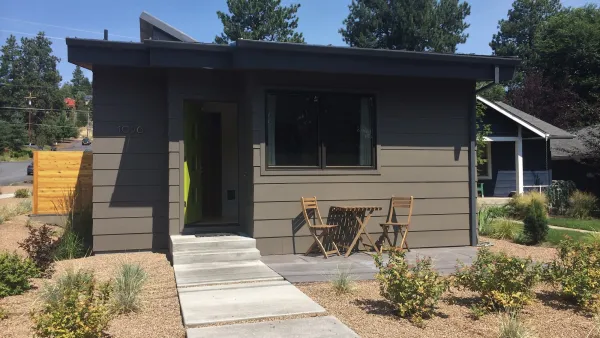
San Diego Residents Challenge the City's ADU Regulations
Residents in some of the city's single-family neighborhoods worry about the potential impacts of ADU construction on local character and parking.

Planetizen Federal Action Tracker
A weekly monitor of how Trump’s orders and actions are impacting planners and planning in America.

Amtrak, CN end decades-long dispute with eight-year agreement
The new operating agreement establishes an updated framework for the companies to work together, including processes to resolve disputes.

Judges permit Denver to divert 77,000 acre feet from the Colorado River for reservoir expansion
Overuse and climate change have caused the Colorado River’s water levels to plummet.

NYC DOT wants faster, more permanent street upgrades
The city is examining ways to build more concrete infrastructure without getting entangled in 'decades-long' projects.

'Something we’ve never seen before:' rising utility rates could strain city finances nationwide
Data centers, climate change and other factors have caused utility rates in the United States to increase by 38% since 2020.

Trump to overrule local leaders, lease millions of acres of America’s Pacific Island territories’ seafloors to mining companies
International law says that the Indigenous people of America’s territories have a right to prior and informed consent regarding projects that impact their countries.

FREE Course: Walkable City 1: Why Walkability?
After describing his path towards focusing on walkability as the essence of good planning, Jeff Speck marches through his five principal reasons for making more walkable places.
Reinventing Malls: Planning Alchemy—Turning Gray Fields Into Gold
The course focuses on the opportunities and imperatives that shape reinvention of mall sites.

Harvard University Graduate School of Design
KFH Group Inc.
Greater Baltimore Committee
The Architects Foundation
University of Cincinnati Online
The Pocatello Development Authority
The Urban Renewal Agency of the City of Pocatello