A growing body of evidence shows that bike lanes put more people on bikes while also helping those people on bikes stay off sidewalks. The latest example: Honolulu.


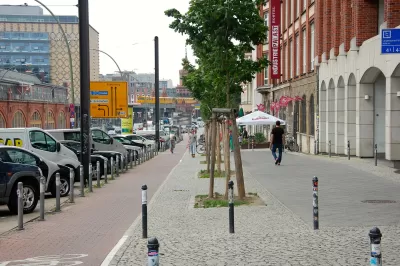
Michael Andersen reports that Honolulu is the latest example in a consistent trend: "almost every protected bike lane cuts sidewalk biking in half."
Not only that, but the decrease in bikes on the sidewalk corresponds with a large increase in total bikes on the road. In the case of Honolulu's first protected bike lane, on King Street:
"From August 2014 (before barriers were installed) to February 2015 (after), the number of bikes using King Street (both directions, road bed and sidewalk combined) soared 71 percent.
"And in the same period, Honolulu bicycle coordinator Chris Sayers said Monday, the number of bikes on the sidewalk plummeted 65 percent."
Andersen and the team at People for Bikes also contacted bike coordinators around the country who have performed similar counts and aggregated their findings into a chart available with the article.
Read the full story: HONOLULU INSTALLS PROTECTED BIKE LANE, SEES MASSIVE DROP IN SIDEWALK BIKING

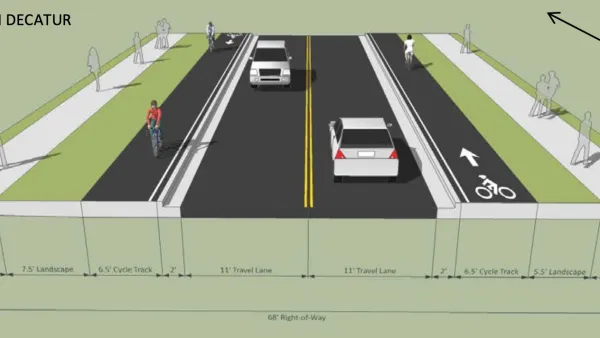
Separated Bike Lanes, Traffic Calming Coming to Decatur Street
Decatur's Church Street is set to undergo a transformation that will reduce traffic lanes, add cycletracks, and widen sidewalks in an effort to make the corridor more 'people-friendly.'

Bike Lanes Pitted Against Sidewalks in Kansas City
A proposed ordinance that would allow neighborhood associations to request removal of bike lanes has sparked a debate over how to prioritize bike and pedestrian infrastructure.
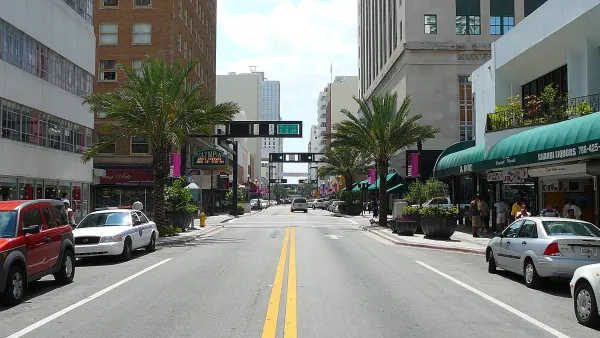
Miami Funds Protected Bike Lanes With E-Scooter Fees
The city, which has some of the nation's most dangerous streets for pedestrians and cyclists, is installing 3 miles of new bike lanes and pedestrian ramps on some of its busiest downtown corridors.

Planetizen Federal Action Tracker
A weekly monitor of how Trump’s orders and actions are impacting planners and planning in America.

Amtrak, CN end decades-long dispute with eight-year agreement
The new operating agreement establishes an updated framework for the companies to work together, including processes to resolve disputes.

Judges permit Denver to divert 77,000 acre feet from the Colorado River for reservoir expansion
Overuse and climate change have caused the Colorado River’s water levels to plummet.

South Chicago development proposal would 'upzone' neighborhoods to increase density
The South Chicago Land Use Framework plan also aims to promote pedestrian and transit-oriented developments.

Boston has spent millions making the Green Line more accessible — and there’s no end in sight
While the city has invested millions into expanding and adding platforms to the Green Line to make it more accessible, new train cars set to arrive next year will be too tall for disabled passengers to board without raising the current platforms.

Idaho may see an 18% drop in federal surface transit funding — the largest estimated cut in the US
Transit systems in rural communities are much more reliant on federal funding to provide their services.

FREE Course: Walkable City 1: Why Walkability?
After describing his path towards focusing on walkability as the essence of good planning, Jeff Speck marches through his five principal reasons for making more walkable places.
Reinventing Malls: Planning Alchemy—Turning Gray Fields Into Gold
The course focuses on the opportunities and imperatives that shape reinvention of mall sites.

City of Wisconsin Rapids
Harvard University Graduate School of Design
KFH Group Inc.
The Architects Foundation
University of Cincinnati Online
The Pocatello Development Authority
The Urban Renewal Agency of the City of Pocatello