A city known for its love of the automobile has been building out its bike network in recent years. The question remains: Is it enough?


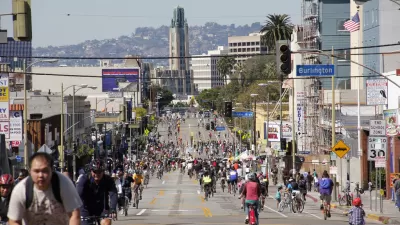
Following an unflattering portrayal of the state of bike infrastructure in Los Angeles, by reporter Aaron Mendelson, the Los Angeles Department of Transportation released new data enabling Mendelson and the KPCC team to create an animated map showing the expansion of the city's bike infrastructure network between the years 2006 and 2015.
First the backstory:
"The LADOT maintains a bike map on its website, but doesn't typically release the raw data behind it to the public. But for this story, the agency shared the latest data—current as of April 1—and we're posting it to Github."
As for what the new data and animated map show: "in 2005, the city of Los Angeles had 245 miles of bike infrastructure: bike lanes, bike paths and streets where drivers are alerted to share the road by bike signs and markings….In the decade since then, the system had more than doubled to 562.25 miles of bike lanes, paths and routes."
Mendelson notes that not all bike infrastructure is created equal, and some parts of the existing network would still likely be deemed unsafe to many potential riders.
Read the full story: Watch a decade of growth in LA's bike infrastructure
Commentary: LA’s ‘Large Asphalt Repair’ Policy Privileges Drivers, Endangers Others
A new policy to perform spot repairs rather than resurfacing entire streets lets the city skirt requirements to install accessibility and pedestrian infrastructure.

Olympian-in-Training Operates New Googly-Eyed Hollywood Bike Lane Sweeper
A bike-towed sweeper will clean Hollywood Boulevard bike lanes twice a month.
New Bike Lanes Coming to Hollywood Boulevard
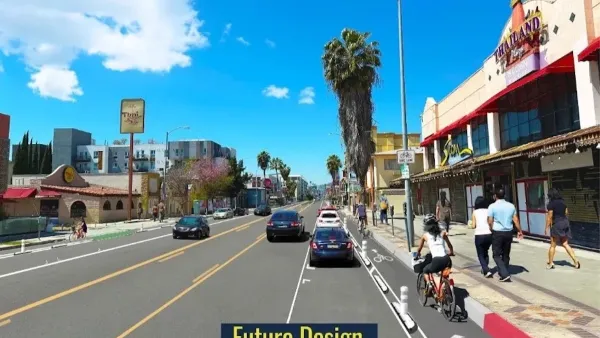
Los Angeles is adding 3.6 miles of new protected bike lanes in East Hollywood.

Planetizen Federal Action Tracker
A weekly monitor of how Trump’s orders and actions are impacting planners and planning in America.

California plans to bury El Niño’s downpour
If the state plays its cards right, it may be able to store a billion acre-feet of El Niño’s water in aquifers.

Desperate measures: Advocates weigh draining Lake Powell to fill Colorado River
Draining the reservoir could reduce evaporation losses by a couple hundred thousand acre-feet.

Chicago voters approve permanent festival grounds, penalty for vacant property owners
Currently, major summer and fall festivals take over public parks for weeks at a time, drawing criticism from nearby residents

NYC votes to cut outdoor dining red tape, speed up permitting
New York City also voted to allow the Department of Transportation to begin work on urgent projects before notifying elected officials.

California appears to reject Prop. 45
The proposition would have expanded the projects that qualify for a streamlined environmental review, effectively paring down the California Environmental Quality Act.

FREE Course: Walkable City 1: Why Walkability?
After describing his path towards focusing on walkability as the essence of good planning, Jeff Speck marches through his five principal reasons for making more walkable places.
Reinventing Malls: Planning Alchemy—Turning Gray Fields Into Gold
The course focuses on the opportunities and imperatives that shape reinvention of mall sites.

City of Rosemead
Rutgers University, Edward J. Bloustein School of Planning and Public Policy
One Hundred Miles
Hunter College, City University of New York (CUNY)
The Architects Foundation
University of Cincinnati Online
City of Cambridge
Montrose County
The Pocatello Development Authority