As affordable housing and its related challenges—gentrification, preservation, and displacement, for example—become more challenging in Nashville, candidates in the city's 2015 race must take a stand on the issue or risk alienating voters.


"In Nashville's 2015 race for mayor, affordable housing has found its moment," reports Joey Garrison.
"Soaring home prices, rapidly changing communities and a hunger to slow it down have converged with the politics of an election year — thrusting the challenge of protecting and spurring affordable housing into the spotlight."
Garrison goes on to describe some of the conversations taking place among the city's leadership as it tries to maintain the city's prosperous run while still keeping the city accessible to a range of incomes. Earlier this month, for instance, Tony Gonzalez reported on the release of a new study by Professor and Urban Planner James Fraser, who, along with a team of researchers, described the state of the housing market in Nashville as one of crisis.
Garrison also shares the political agenda of local affordable housing advocates:
Affordable housing activists want dedicated funding to replenish the Barnes Fund on an annual basis and a starting point of capital — some say around $65 million — to truly be viable. They've also pushed for a new inclusionary zoning housing policy that would require new large-scale residential projects to include units that are priced for families earning less than Davidson County's median income, which is currently $56,377 for a family of four.
Read the full story: Affordable housing emerges as key issue in mayor's race
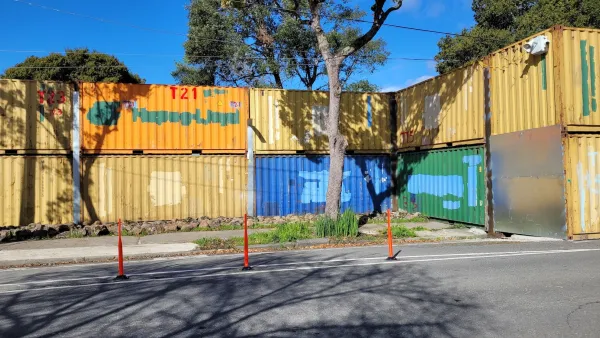
Berkeley promised to build supportive housing in People's Park. Where is it?
More than two years after People's Park was cordoned off, there is no word on a timeline for a promised affordable housing project.

Denver Land Trust Fights Displacement Whether It Owns the Land or Not
Tierra Colectiva, a community land trust in the Denver neighborhoods of Globeville and Elyria-Swansea, combines community organizing, traditional CLT development, and more unusual roles in a large affordable housing development.

San Francisco Mayor’s ‘Family Zoning’ Plan Faces Pushback, Displacement Concerns
Newly proposed legislation aims to protect long-term tenants from displacement caused by Mayor Lurie’s proposed zoning reform plan, which would allow for more housing construction in parts of the city.

Planetizen Federal Action Tracker
A weekly monitor of how Trump’s orders and actions are impacting planners and planning in America.

Washington state to charge fee to drivers with fuel-efficient cars
Revenue from the fee will go towards supporting the state’s highways.

Trump to blast ‘hydrocarbon highway’ through ‘world’s longest art gallery’
Environmental and historic preservation groups are suing to stop the project.

Data centers need power – lower income, rural residents pay the price
In 2025, data centers paid only 38% of the energy infrastructure costs linked to their growth, with households, especially rural and low-income residents, bearing the remaining burden.

MBTA Green Line project moved to next phrase of CIG program
The modernization effort will cost $4.08 billion.

22-mile pedestrian and bike path to encircle Atlanta by 2030
The project will also support affordable housing.

FREE Course: Walkable City 1: Why Walkability?
After describing his path towards focusing on walkability as the essence of good planning, Jeff Speck marches through his five principal reasons for making more walkable places.
Reinventing Malls: Planning Alchemy—Turning Gray Fields Into Gold
The course focuses on the opportunities and imperatives that shape reinvention of mall sites.

City of Charlotte
City of Rosemead
Rutgers University, Edward J. Bloustein School of Planning and Public Policy
University of Michigan School for Environment and Sustainability (SEAS)
Hunter College, City University of New York (CUNY)
The Architects Foundation
University District Partnership