The Atlanta Beltline agency is actively working to prevent the displacement of longtime residents along the trail system, where property values are rising rapidly.


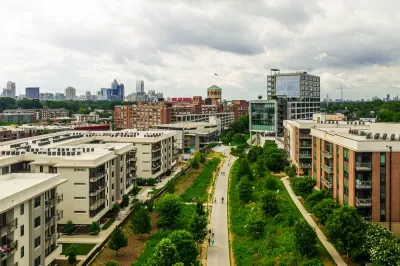
The Atlanta Beltline met its goal of creating or preserving 300 or more affordable housing units along its trail network in 2024, reports Kristal Dixon in Axios. Atlanta Beltline Inc. says it created 569 units in 2024 and is on track to surpass its goal again in 2025. “The Beltline has also reached 74% of its goal to preserve or create 5,600 affordable housing units by 2030 along targeted areas around the corridor.”
According to Dixon, “Part of that work includes making sure residents aren't displaced due to gentrification spurred by the Beltline coming to their neighborhoods.” The agency has helped 250 homeowners to date who might otherwise be at risk of displacement through its Legacy Resident Retention Program, which “helps offset rising property taxes for people who owned their homes before March 2017 and make no more than 100% of the metro area median income, which is $75,300 for one person and $86,000 for two people.”
Read the full story: Atlanta Beltline exceeds affordable housing goals for 2024

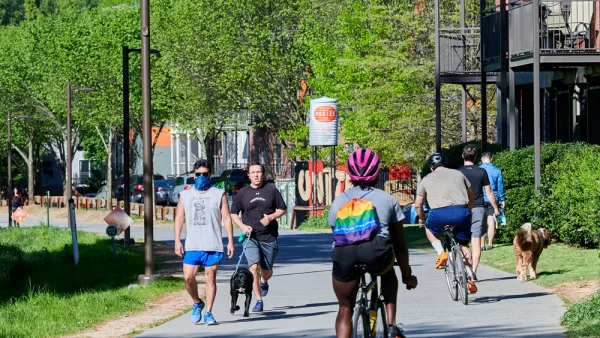
How To Prevent ‘Green Gentrification’: Lessons from the BeltLine
For one author, the key is focusing on affordable housing from the start.

Affordable Housing Funding Reaches New Heights for Beltline Neighborhoods
The city of Atlanta has allocated $11.9 million of its $45 million budget for the Beltline for affordable housing.
A Dirty Little Secret: Rising Property Values Are Incompatible With Affordability
Rising property values come with positive community development, but this shift can make neighborhoods inaccessible to low-income renters and fixed-income homeowners.

Planetizen Federal Action Tracker
A weekly monitor of how Trump’s orders and actions are impacting planners and planning in America.

California plans to bury El Niño’s downpour
If the state plays its cards right, it may be able to store a billion acre-feet of El Niño’s water in aquifers.

Chicago breaks ground on $3 billion megadevelopment
The new neighborhood, titled Foundry Park, will one day host 3,700 residences.

Satanic Place Names
From streams and lakes to valleys and canyons, I mapped more than 1,000 places named after the Devil.

California High-Speed Rail Authority CEO resigns after $600,000 scandal
Under Ian Choudri, the authority used taxpayer dollars to fund first class flights and trips to nightclubs.

Want to study the Missouri River? Soon, you may need unanimous approval from 10 states
Legislation would require 10 governors’ permission to study or build projects moving water outside the basin.

FREE Course: Walkable City 1: Why Walkability?
After describing his path towards focusing on walkability as the essence of good planning, Jeff Speck marches through his five principal reasons for making more walkable places.
Reinventing Malls: Planning Alchemy—Turning Gray Fields Into Gold
The course focuses on the opportunities and imperatives that shape reinvention of mall sites.

City of Rosemead
Rutgers University, Edward J. Bloustein School of Planning and Public Policy
One Hundred Miles
Hunter College, City University of New York (CUNY)
The Architects Foundation
University of Cincinnati Online
City of Cambridge
Montrose County
The Pocatello Development Authority