Oakland, as the urban counterpart to San Francisco in the Bay Area, is on a lot of people's radar as a place to improve on some of the lessons of recent waves of urbanization. What planning precedents shaped the city on the other side of the Bay?


Egon Terplan and Magda Maaouidive into four of the seminal plans that created the city of Oakland, California as we know it today. Writing for SPUR, which is launching work in the city, Terplan and Maaoui focus on downtown, where the city and its grid were born.
The article examines four plans, as described in the article:
- The Kellersberger survey and grid (1852);
- The Robinson Plan, which emphasized civic infrastructure but was not implemented (1906);
- The Hegemann Report (1915), which resulted in the implementation of much of the Robinson Plan and included a regional vision for connecting to Berkeley; and
- The Bartholomew Plan, which ushered in planning for the automobile (1928)
The article is recommended reading for anyone who enjoys tracing the planning decisions of the distant past to the city of today, especially in a place as dynamic and fraught as Oakland, California.
If you're interested in following that reading up with an exploration of Oakland's present situation, read this in-depth analysis by Planetizen blogger Reuben Duarte.
Read the full story: Four Plans That Shaped Downtown Oakland’s First 100 Years

Pittsburgh Moves Ahead With Zoning Changes for University-Adjacent Neighborhood
The implementation of a new master plan for the neighborhood of Oakland, home to the University of Pittsburgh, is moving forward despite controversy and a contentious community engagement process.

Comprehensive Planning Sucks. Here's One Attempt to Make It Better
Thirty community organizations have come together to deliver a response to Oakland's RFP for a comprehensive planning consultant. It's one of three proposals, but certainly the only one with cartoons.
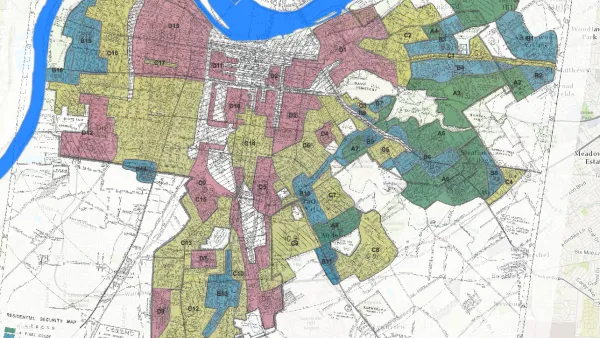
Story Mapping the Racism in Planning History
A Story Map created by the Louisville Metro Office of Planning & Design Services offers a detailed, visual presentation of the history of racism and discriminatory in the planning and zoning of the Louisville and Jefferson County.

Eastern Nebraska is running out of electricity
Data centers and electrification are straining eastern Nebraska’s grid, throttling economic development.

Move over, LA: St. Louis gears up for Olympics, invests millions in downtown redevelopment
The Missouri city will host the 2028 Olympic soccer group stage and knockout matches.

California High-Speed Rail Authority picks trainset manufacturer
The California High-Speed Rail Authority aims to start servicing passengers by 2033.

Dallas releases zoning code overhaul to officials
The drafted overhaul is over 400 pages long.

NYC renovations for dangerous, ‘mercilessly crammed’ street delayed until 2027
Construction was supposed to begin this fall.

San Diego’s Midway Rising project gets greenlight from city council
The project looks to become the largest affordable housing development in California's history.

FREE Course: Walkable City 1: Why Walkability?
After describing his path towards focusing on walkability as the essence of good planning, Jeff Speck marches through his five principal reasons for making more walkable places.
Reinventing Malls: Planning Alchemy—Turning Gray Fields Into Gold
The course focuses on the opportunities and imperatives that shape reinvention of mall sites.

City of Rosemead
Rutgers University, Edward J. Bloustein School of Planning and Public Policy
One Hundred Miles
University of Michigan School for Environment and Sustainability (SEAS)
Hunter College, City University of New York (CUNY)
The Architects Foundation
City of Cambridge
The Pocatello Development Authority
The Urban Renewal Agency of the City of Pocatello