The recent glut of luxury development, gentrification, and high rents has been frequently condemned. But what factors affecting affordability might that discussion miss?



In response to stories like this one from the New York Times, Stephen Smith argues that the press is missing the point. High-end developments, pieds-à-terre, and gentrification, Smith argues, are only partially responsible for a deficit of affordable real estate.
The article asserts that middle-income immigrant demand has created a competitive rental market in districts where white gentrifiers have not settled. A fixation with astronomically-priced condos is misplaced: "with three-quarters of the housing units in East New York being rented out, it’s rental rates, not sales prices, that are the real cause of concern when it comes to rising housing costs."
Another of Smith’s problems with gentrification-focused reporting: statistics cited by those articles "lumped together all non-primary residences, whether they were truly empty pieds-à-terre, or merely condos that were rented out—a somewhat interesting phenomenon, but nowhere near as controversial as apartments that actually sit empty." He calls out the press for sensationalizing an influx of "yuppies" and "oligarchs."
Read the full story: The Media’s Unproductive Obsession With Oligarchs and Gentrifiers

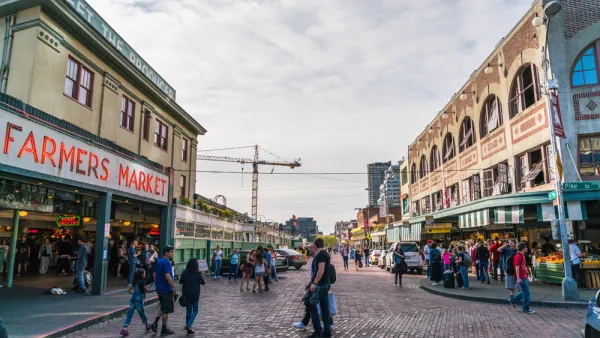
Push and Pull: The Link Between Walkability and Affordability
The increased demand for walkable urban spaces could make them more and more exclusionary if cities don’t pursue policies to limit displacement and boost affordability.
Market Rate Condos Could Replace Harlem Towers Proposal
After facing community opposition and a call for more deeply affordable housing units, developers withdrew their proposal for Harlem’s One45, prompting questions about the future of the site.

When Costs of Living Outpace Housing Costs
Even when they qualify for affordable rents, tenants in high-cost neighborhoods find themselves shut out of essential amenities and services.

Planetizen Federal Action Tracker
A weekly monitor of how Trump’s orders and actions are impacting planners and planning in America.

Amtrak, CN end decades-long dispute with eight-year agreement
The new operating agreement establishes an updated framework for the companies to work together, including processes to resolve disputes.

Colorado’s Largest Data Center Could Rise Next to Homes — Without a Public Hearing
The proposed campus would consume 11 times the power of Denver International Airport; as it has across the country, opposition mounts.

Community feedback ushers in changes to NYC’s Park Avenue redesign
New aspects of the design include a two-way bike lane and separate paths for cyclists and pedestrians.

Road safety in Charlotte, NC, a 'public health crisis'
Twelve serious or fatal crashes happen in the region every week. Since 2021, over 900 people have been killed in accidents.

Federal judge strikes down DOE orders to keep Michigan power plant open past retirement date
The decision is one of the first successful legal challenges to President Trump’s “national energy emergency” ruling, which instructs federal agencies to use emergency powers to increase fossil fuel production.

FREE Course: Walkable City 1: Why Walkability?
After describing his path towards focusing on walkability as the essence of good planning, Jeff Speck marches through his five principal reasons for making more walkable places.
Reinventing Malls: Planning Alchemy—Turning Gray Fields Into Gold
The course focuses on the opportunities and imperatives that shape reinvention of mall sites.

KFH Group Inc.
Greater Baltimore Committee
Eagle County Government
The Architects Foundation
University of Cincinnati Online
The Pocatello Development Authority
The Urban Renewal Agency of the City of Pocatello