The Ridescore system grades cities for their regulatory friendliness to hired drivers—transportation network companies, taxis, and limos. Washington D.C. offers the most friendly regulations for hired drivers, Las Vegas the least.


According to a November 12, 2014 press release from the R Street Institute, "Ridescore 2014: Hired Driver Rules in U.S. Cities grades 50 of the largest American cities on their legislative framework and friendliness toward Transportation Network Companies (or TNCs, like Uber, Lyft and Sidecar), taxicabs and limousines. The grades for each segment are then combined to give each city a cumulative grade for its transportation regulation." The R Street Institute and Engine Advocacy jointly released the study, which is clearly advocates for business friendly regulations in each of the three segments.
The weighted driver for hire rating gives top marks to Washington D.C., Minneapolis, and Fresno. As for the hotly contested and still controversial transportation network company regulations, top marks went to Austin, Colorado Springs, Denver, Fresno, Long Beach, Los Angeles, Minneapolis, Oakland, Sacramento, San Diego, San Francisco, San Jose, Seattle, and Washington D.C.
Las Vegas has, by far, the lowest weighted score, according to the Ridescore system.
The R Street Institute has also created the Ridescore website to present the findings of the report and offer a portal for users to advocate for making cities "more transportation friendly."
Read the full story: Ridescore 2014: Hired Driver Rules in U.S. Cities [pdf]

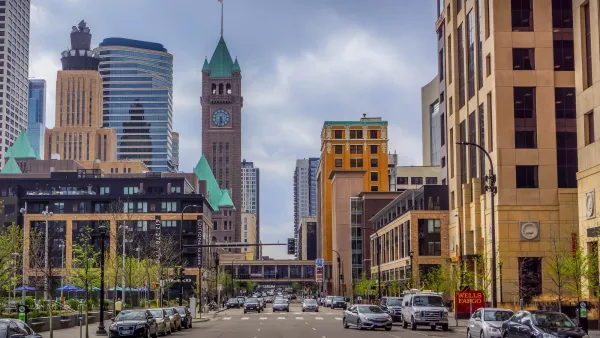
Minneapolis council proposes permitting framework for robotaxis
City leaders say they don't want to be left behind as Waymo and other companies eye the city for the expansion of self-driving fleets.
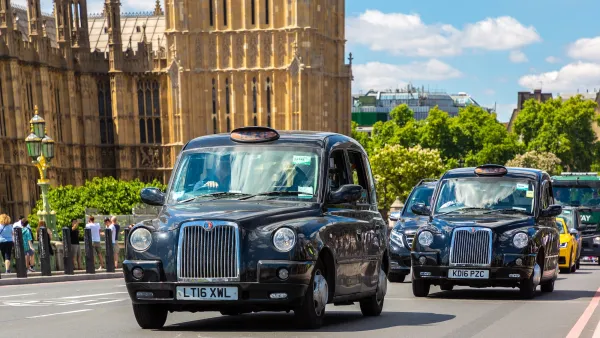
Can Robotaxis Handle London's Famously Tangled Streets?
Black Cab drivers say autonomous cars won’t be able to handle London’s unique conditions.

Hong Kong Cab Hailing App Folds — and Uber Takes Over
HKTaxi launched a year before Uber came to town. Now, it’s shutting down. Lawmakers worry a monopoly looms.

Planetizen Federal Action Tracker
A weekly monitor of how Trump’s orders and actions are impacting planners and planning in America.

Amtrak, CN end decades-long dispute with eight-year agreement
The new operating agreement establishes an updated framework for the companies to work together, including processes to resolve disputes.

Judges permit Denver to divert 77,000 acre feet from the Colorado River for reservoir expansion
Overuse and climate change have caused the Colorado River’s water levels to plummet.

Boston has spent millions making the Green Line more accessible — and there’s no end in sight
While the city has invested millions into expanding and adding platforms to the Green Line to make it more accessible, new train cars set to arrive next year will be too tall for disabled passengers to board without raising the current platforms.

Idaho may see an 18% drop in federal surface transit funding — the largest estimated cut in the US
Transit systems in rural communities are much more reliant on federal funding to provide their services.

How ‘post-disaster gentrification’ alters neighborhoods after natural calamities
After hurricanes, fires or other calamities, the original residents of a community are often replaced by younger, wealthier residents.

FREE Course: Walkable City 1: Why Walkability?
After describing his path towards focusing on walkability as the essence of good planning, Jeff Speck marches through his five principal reasons for making more walkable places.
Reinventing Malls: Planning Alchemy—Turning Gray Fields Into Gold
The course focuses on the opportunities and imperatives that shape reinvention of mall sites.

City of Wisconsin Rapids
Harvard University Graduate School of Design
KFH Group Inc.
The Architects Foundation
University of Cincinnati Online
The Pocatello Development Authority
The Urban Renewal Agency of the City of Pocatello