The New York City set standards for transportation network companies, and now those companies are being a lot more selective about who they hire as drivers.


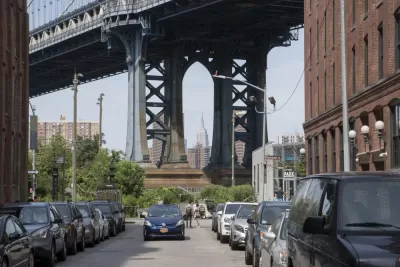
"Uber’s and Lyft’s once inexorable-seeming growth in New York City has ground to a halt," according to an article by Dan Rubinstein.
The evidence to back up that claim: "Uber stopped hiring new drivers in New York City on April 1. Lyft followed suit on April 19."
Rubinstein reports that the two companies have blamed the turn of events on new regulations in the city that set wage requirements and penalties for operating empty vehicles.
"The move suggests New York City’s new driver pay regulations are having some of their desired effect, by restricting the growth of the driver pool and limiting what many driver advocates characterize as an over-saturated market," according to Rubinstein.
FULL STORY: Uber and Lyft stop accepting new drivers in New York City

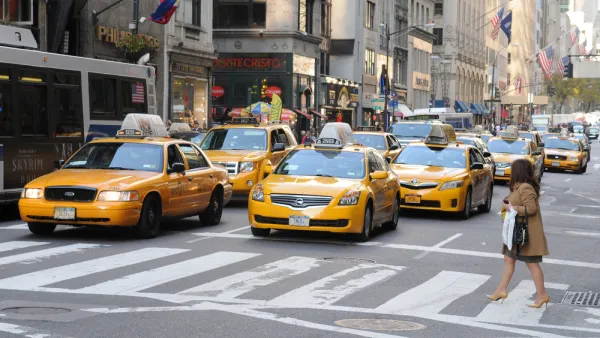
Ride-Hailing Prices Skyrocket as the U.S. Emerges From the Pandemic
A shortage of drivers and spiking demand are driving Uber and Lyft prices higher than ever as the companies struggle to achieve profitability.
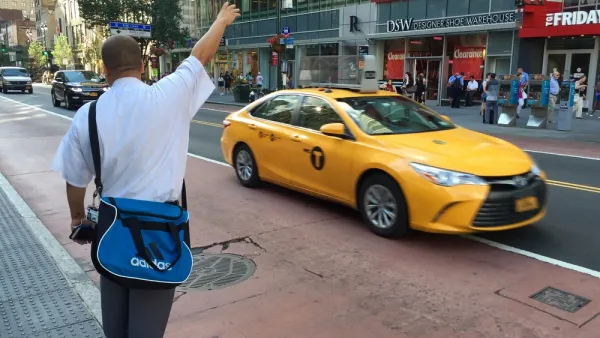
Uber Drivers and Taxi Drivers Agree: Cap the Number of Ride-Hailing Vehicles in New York
Uber (and Lyft, of course) drivers and taxi drivers hope a cap on the number of ride-hailing vehicles would improve wages and reduce congestion.

New York City Council Proposes Cap on Number of Ride-Hailing Vehicles
To support the taxi industry and reduce congestion, the New York City Council could cap the number of ride-hailing vehicles operating in the city. The cap could be a first major step toward a new era of transportation regulation.

The state-sanctioned urbicide of Austin
People don’t kill cities. Freeways do.

US to reduce Colorado River water deliveries to Mexico
A new Colorado Treaty amendment reduces Mexico’s Colorado River water allocation by 250,000 acre feet.

New Jersey’s second-largest city bans standalone data centers
Jersey City will continue to allow co-location facilities, such as those meant for research institutions that store their own data.

Amtrak not solely to blame for New Jersey commuter rail's unreliability, report finds
A new study from the Garden State Initiative found that NJ Transit’s budget grew 20% across a 4 year period, but reliability declined significantly over the same period.

EPA erases limits on planet-warming pollution from power plants
Under Monday’s plan, power plants would still have some limits on how much mercury, arsenic and other contaminants they can emit.

Phoenix announces new on-demand transit service, more frequent RAPID buses
Both new services will launch in October, and are part of Phoenix's Project Effective Access Solutions for Easing Congestion.

FREE Course: Walkable City 1: Why Walkability?
After describing his path towards focusing on walkability as the essence of good planning, Jeff Speck marches through his five principal reasons for making more walkable places.
Reinventing Malls: Planning Alchemy—Turning Gray Fields Into Gold
The course focuses on the opportunities and imperatives that shape reinvention of mall sites.

Eagle County Government
Harvard University Graduate School of Design
Nashville Planning Department
The Architects Foundation
University of Cincinnati Online
The Pocatello Development Authority
The Urban Renewal Agency of the City of Pocatello
Journal of the American Planning Association