An op-ed column by Dana M. Lerner, a New Yorker whose 9-year-old son was struck and killed by taxi while crossing the street earlier this year, explains the legal precedent that lets drivers get away with murder.


Lerner's column explains the legal mechanisms that allow motorists who kill pedestrians: the so-called "rule of two," which "stipulates that there must be two misdemeanors for a charge of criminal negligence to be brought against a driver who kills."
The rule of two means the cab driver who killed Lerner's son will likely incur no more than small fine, though witnesses stated that he failed to yield and was not paying attention at the time of the tragedy.
Lerner's larger point is that only changes in the district attorney's office and the New York Police Department, starting with challenges to the rule of two, will bring about the desired outcomes of the Vision Zero initiative.
Vision Zero is an admirable plan, but this is a city where every 48 hours, a pedestrian or cyclist is killed by traffic. We don’t need more laws named for the victims; we need to hold law enforcement accountable for using the laws we have. It’s either that, or condemn more parents to the misery my husband and I know.
Read the full story: Why Drivers Get Away With Murder


NYC’s Vision Zero Program Saved $90 Million in Medicaid Costs
While traffic fatalities remain far above zero, the city saw fewer injuries compared to areas without Vision Zero initiatives.
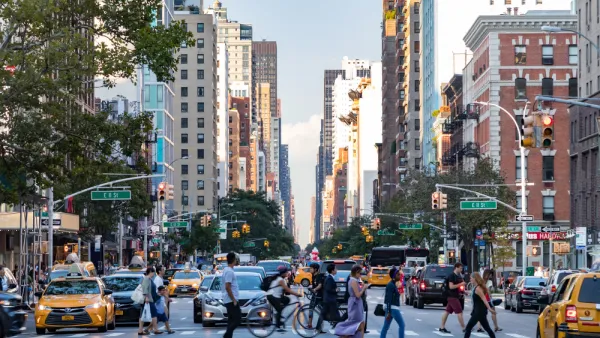
New York’s Deadliest Neighborhoods for Pedestrians
Pedestrian deaths rose last year, but remain below pre-2020 levels.

On the Life-Saving Potential of Leading Pedestrian Intervals
Giving pedestrians a head start at crosswalks is a simple fix that could save lots of lives. New York City has already seen a significant reduction in fatalities and injuries.

Planetizen Federal Action Tracker
A weekly monitor of how Trump’s orders and actions are impacting planners and planning in America.

Amtrak, CN end decades-long dispute with eight-year agreement
The new operating agreement establishes an updated framework for the companies to work together, including processes to resolve disputes.

Northwest rail fans eager for Sept. 30 debut of Amtrak’s Airo fleet
Get ready for that new train smell and more seats. But they won’t go faster or run more frequently on the Cascades route in Washington and Oregon.

Pennsylvania is building data centers in abandoned mines
Housing data centers in mines provides an alternative to destroying local forests and may spare residents from data centers’ noise and air pollution.

If Corpus Christi can’t revive desalination plant project, it may owe Texas $235 million
Earlier this month, city officials declined to pursue developing the plant for the second time in a year.

Brightline Florida expected to file for bankruptcy this week
The transit agency is over $5 billion in debt.

FREE Course: Walkable City 1: Why Walkability?
After describing his path towards focusing on walkability as the essence of good planning, Jeff Speck marches through his five principal reasons for making more walkable places.
Reinventing Malls: Planning Alchemy—Turning Gray Fields Into Gold
The course focuses on the opportunities and imperatives that shape reinvention of mall sites.

City of Thousand Oaks
City of Wisconsin Rapids
Harvard University Graduate School of Design
The Architects Foundation
University of Cincinnati Online
The Pocatello Development Authority
The Urban Renewal Agency of the City of Pocatello