The Austin City Council unanimously approved a $1 billion bond measure on August 7, subject to voter approval on Nov. 4 to provide $600 million toward a $1.4 billion, 9.5-mile light rail line and $400 million for freeway improvements.


One of the nation's fastest growing, but traffic-choked cities may once again have the opportunity to vote on a light rail line that would serve Central and Southeast Austin, writes Austin American-Statesman transportation beat reporter Ben Wear.
But the ballot language approved Thursday includes a caveat that the rail borrowing could occur only after a future City Council commits to spending an additional $400 million for road projects on highways of “regional significance,” such as Interstate 35, U.S. 183 and Texas 71.
In other words, light rail is held hostage to freeway spending, such is politics. Nevertheless, getting the council's approval was the rail line's first hurdle, reports KVUE's Ashley Goudeau. The last time light rail was put to a vote was 14 years ago, and it failed, she adds.
Appearing in the KVUE broadcast video is Austin Mayor Lee Leffingwell, a major light rail backer.
Another caveat placed on the light rail spending is that it must receive federal matching funds. If all hurdles are passed, "rail officials here have said the line would open for service about 2022 and have 18,000 boardings a day by 2030," adds Wear.
Wear also writes a comprehensive six-page comparison piece with Portland, Ore. “Almost a quarter of the city’s 300,000-plus workers ride transit, bike or walk to get to their jobs, about triple the percentage in Austin," he writes.
Portland — with 600,000 residents packed into a tightly knit area less than half Austin’s size, priority streets for bicycles and shady, wide sidewalks — has (a dense, easily walkable urban environment to produce high enough ridership to justify the huge cost shared by taxpayers throughout a metro area, referencing Jarrett Walker, a Portland-based transit consultant).
Wear end's his comparison by asking:
The question for Austin voters, in the end, is whether sprawling Austin, Texas, has what light rail requires — or ever will. And if so, can the city, coming so late to the game, afford to play?
[Hat tips to Streetsblog's Katie Pearce for Austin-Statesman piece, to AASHTO's Daily Transportation Update for KVUE's report, and to Sierra Club transportation listerv member David Orr for Ben Wear's Portland comparison piece]
FULL STORY: Austin American-Statesman: Austin City Council puts $1 billion rail, road plan on November ballot

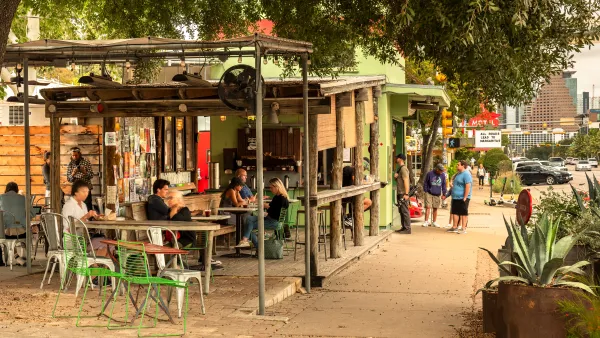
Large projects near Austin's light rail must include affordable housing
Elsewhere in the city, developers can pay into a city bank account for affordable housing rather than providing the required affordable units within their projects.
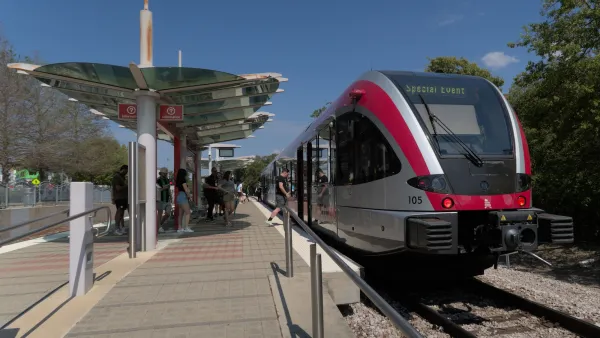
Austin's Project Connect has shrunk to less than half its proposed length — at a higher cost
A highly anticipated light rail project is quickly diminishing in scope as costs soar.

Portland gathers to pay respects to the last of its original light rail cars
The TriMet agency has fully replaced its aging fleet of Type 1 cars.

Planetizen Federal Action Tracker
A weekly monitor of how Trump’s orders and actions are impacting planners and planning in America.

The state-sanctioned urbicide of Austin
People don’t kill cities. Freeways do.

US to reduce Colorado River water deliveries to Mexico
A new Colorado Treaty amendment reduces Mexico’s Colorado River water allocation by 250,000 acre feet.

Colorado’s Largest Data Center Could Rise Next to Homes — Without a Public Hearing
The proposed campus would consume 11 times the power of Denver International Airport; as it has across the country, opposition mounts.

5 New England states march closer to 800 megawatt wind energy project
Securing federal approval for the project may be complicated under the Trump administration, which has historically been hostile towards domestic wind power.

Baltimore to break ground on $50 million Transit Priority Project
The project will bring faster bus trips, safer streets and better bike connections to Baltimore.

FREE Course: Walkable City 1: Why Walkability?
After describing his path towards focusing on walkability as the essence of good planning, Jeff Speck marches through his five principal reasons for making more walkable places.
Reinventing Malls: Planning Alchemy—Turning Gray Fields Into Gold
The course focuses on the opportunities and imperatives that shape reinvention of mall sites.

Eagle County Government
Harvard University Graduate School of Design
Nashville Planning Department
The Architects Foundation
University of Cincinnati Online
The Pocatello Development Authority
The Urban Renewal Agency of the City of Pocatello
Journal of the American Planning Association