A clash between transportation planning mentalities is playing out in Milwaukee over a proposed highway expansion—on one side the car-centric concerns of the state; on the other, the placemaking concerns of the city.


"In Milwaukee, Wisconsin, Governor Scott Walker and Mayor Tom Barrett are brawling in the press over a proposed highway project — a fight that exemplifies the enormous rift in America about what transportation policy should accomplish," reports Angie Schmitt.
"Walker insists on plowing a $1.2 billion expansion of Interstate 94 through Milwaukee. Among the options on the table is a proposal to double-deck a portion of the highway through a densely populated neighborhood."
"[Milwaukee Mayor Tom] Barrett told the Journal Sentinel that he’s “mystified” by Walker’s refusal to pull the double-decker option off the table. He said he would do everything in his power to stop the additional highway deck, which would have a “negative impact on property values and disrupt the lives” of residents of the Story Hill neighborhood."
Schmitt also examines a case study of a similar political situation in Cleveland, where local leaders tried to convert the West Shoreway friom highway to Boulevard, only to have the state dissent.
Read the full story: Moving Cars vs. Investing in Places — The Struggle for American Cities


Milwaukee Environmental Groups Sue to Stop Freeway Expansion
Groups including the Sierra Club say the expansion of I-94 would negatively impact communities of color and increase flood risks.
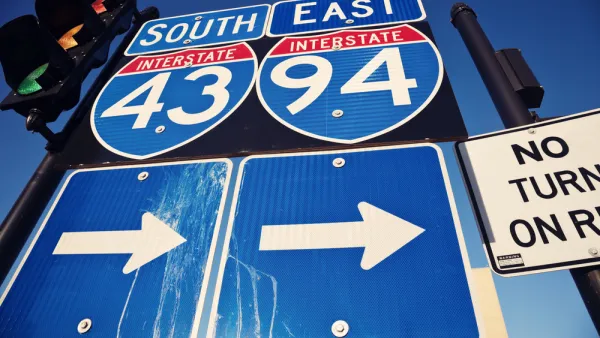
Wisconsin To Expand Interstate 94 in Milwaukee
The state’s department of transportation is moving forward with a proposal that will expand the freeway to eight lanes, rejecting a ‘Fix at Six’ plan that would have kept the existing six lanes.
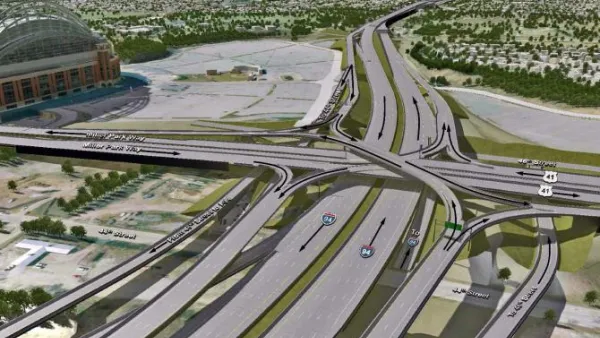
New Governor, Same Billion Dollar Freeway Expansion Plan
Wisconsin Gov. Tony Evers is picking up a plan previously championed and abandoned by former Gov. Scott Walker: The North-South expansion of I-94 west of Milwaukee.

Planetizen Federal Action Tracker
A weekly monitor of how Trump’s orders and actions are impacting planners and planning in America.

Amtrak, CN end decades-long dispute with eight-year agreement
The new operating agreement establishes an updated framework for the companies to work together, including processes to resolve disputes.

Judges permit Denver to divert 77,000 acre feet from the Colorado River for reservoir expansion
Overuse and climate change have caused the Colorado River’s water levels to plummet.

NYC DOT wants faster, more permanent street upgrades
The city is examining ways to build more concrete infrastructure without getting entangled in 'decades-long' projects.

'Something we’ve never seen before:' rising utility rates could strain city finances nationwide
Data centers, climate change and other factors have caused utility rates in the United States to increase by 38% since 2020.

Trump to overrule local leaders, lease millions of acres of America’s Pacific Island territories’ seafloors to mining companies
International law says that the Indigenous people of America’s territories have a right to prior and informed consent regarding projects that impact their countries.

FREE Course: Walkable City 1: Why Walkability?
After describing his path towards focusing on walkability as the essence of good planning, Jeff Speck marches through his five principal reasons for making more walkable places.
Reinventing Malls: Planning Alchemy—Turning Gray Fields Into Gold
The course focuses on the opportunities and imperatives that shape reinvention of mall sites.

Harvard University Graduate School of Design
KFH Group Inc.
Greater Baltimore Committee
The Architects Foundation
University of Cincinnati Online
The Pocatello Development Authority
The Urban Renewal Agency of the City of Pocatello