Aaron Renn recently explored Columbus, Ohio, where he found a city fueled by growth and doing many things right, but lacking the differentiation it merits among the country's urban marketplaces.


"Columbus is basically what I mean by the 'best practices,' city – they are implementing all the best practices in the marketplace, but haven’t yet developed a compelling, unique brand positioning," writes Aaron Renn.
Renn takes the reader through a neighborhood-by-neighborhood presentation of the development events around Columbus—examining neighborhoods like Short North, Grandview Heights, Easton Town Center, and a neighborhood attracting a lot of buzz called Franklinton. Renn also discusses familiar urban themes like bike and car share, river restoration, and downtown green space.
On that last point, and in the article's harshest criticism, Renn revisits the site of the now demolished City Center Mall, which has been converted into a park called the Columbus Commons. Renn uses the park to make a point about the lack of thought devoted to the creation of green space in many cities. Renn says, is an example of "build it and they will come" planning due to a lack of surrounding density in residential and commercial properties.
Read the full story: Checking In On Columbus

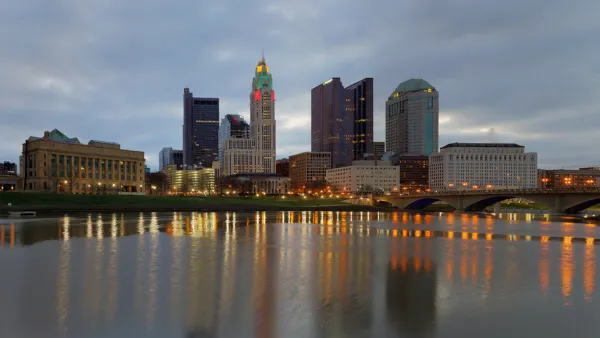
A Showdown Looms as Developers Seek New Building Heights in Columbus
The region surrounding Columbus, Ohio could add a projected one million people by 2050, and developers are looking for new ways to meet growing demand for urban living.
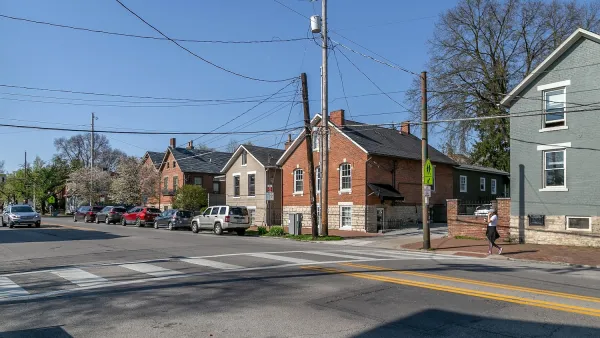
Columbus Introduces New Rules Allowing ADUs in all Residential Districts
The city’s recent zoning code updates include new rules for secondary housing units.

DC, Columbus Bike Share Fleets Introduce Cargo Bikes
Shared mobility is ‘growing up,’ with rental options increasingly expanding to include e-bikes, scooters, and cargo bikes.

Planetizen Federal Action Tracker
A weekly monitor of how Trump’s orders and actions are impacting planners and planning in America.

Amtrak, CN end decades-long dispute with eight-year agreement
The new operating agreement establishes an updated framework for the companies to work together, including processes to resolve disputes.

Judges permit Denver to divert 77,000 acre feet from the Colorado River for reservoir expansion
Overuse and climate change have caused the Colorado River’s water levels to plummet.

NYC DOT wants faster, more permanent street upgrades
The city is examining ways to build more concrete infrastructure without getting entangled in 'decades-long' projects.

'Something we’ve never seen before:' rising utility rates could strain city finances nationwide
Data centers, climate change and other factors have caused utility rates in the United States to increase by 38% since 2020.

Trump to overrule local leaders, lease millions of acres of America’s Pacific Island territories’ seafloors to mining companies
International law says that the Indigenous people of America’s territories have a right to prior and informed consent regarding projects that impact their countries.

FREE Course: Walkable City 1: Why Walkability?
After describing his path towards focusing on walkability as the essence of good planning, Jeff Speck marches through his five principal reasons for making more walkable places.
Reinventing Malls: Planning Alchemy—Turning Gray Fields Into Gold
The course focuses on the opportunities and imperatives that shape reinvention of mall sites.

Harvard University Graduate School of Design
KFH Group Inc.
Greater Baltimore Committee
The Architects Foundation
University of Cincinnati Online
The Pocatello Development Authority
The Urban Renewal Agency of the City of Pocatello