Sound Transit released a request for qualifications to build a 100,000-square-foot mixed-use TOD at the forthcoming Capitol Hill light rail station. Fourteen interested developers responded.


"Fourteen companies and nonprofits officially responded to Sound Transit’s February request for qualifications to develop 100,000 square feet of 'transit oriented development' that will surround the future Capitol Hill light rail station,” reports Bryan Cohen.
Sound Transit spokesperson Bruce Gray told Cohen that the agency received more responses than it expected, in a sign of the Capitol Hill market’s obvious fit for TOD. “It’s obviously a hugly desireable [sic] site,” Gray said. “It’s a fantstic [sic] opportunity for great development, and people want to be in the middle of Capitol Hill.”
A shortlist for final proposals is expected in May, and the “Capitol Hill Station is slated to open for service on a new line of the Sound Transit light rail connecting downtown to UW via Broadway in early 2016.”
Read the full story: 14 developers in running to forge Capitol Hill Station retail and housing sites
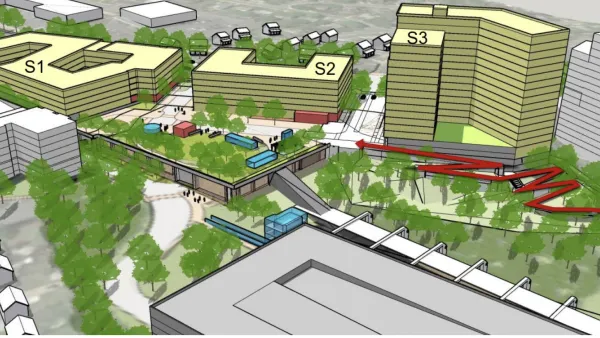
A New Transit Oriented Vision for Fairfax County, Virginia
A new transit station area plan is reaching the finishing line for the Huntington Metro station, serving the WMATA’s Yellow Line in Northern Virginia.
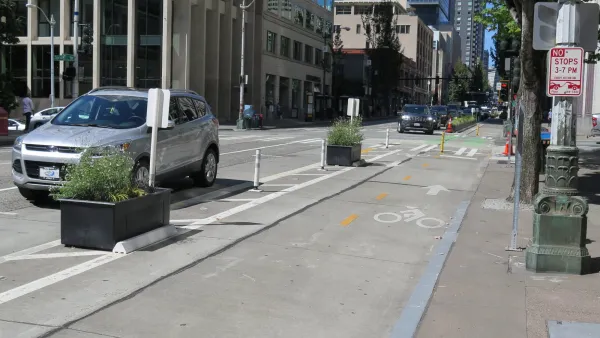
Bike and Pedestrian Improvements Proposed for Seattle Light Rail Stations
Anticipating the opening of two new stations in 2024, the Seattle Department of Transportation released a study prioritizing bike infrastructure in the surrounding areas.
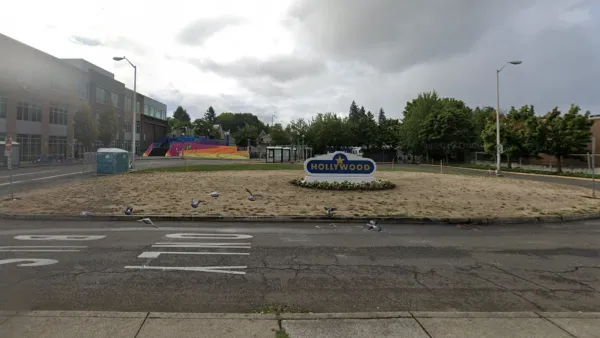
Portland Transit Station to Get Multi-Modal Mixed-Use Overhaul
The regional transit agency for Portland, Oregon is working on a development plan that would drastically multiple the planning considerations at a local transit station.

Planetizen Federal Action Tracker
A weekly monitor of how Trump’s orders and actions are impacting planners and planning in America.

California plans to bury El Niño’s downpour
If the state plays its cards right, it may be able to store a billion acre-feet of El Niño’s water in aquifers.

Desperate measures: Advocates weigh draining Lake Powell to fill Colorado River
Draining the reservoir could reduce evaporation losses by a couple hundred thousand acre-feet.

Chicago voters approve permanent festival grounds, penalty for vacant property owners
Currently, major summer and fall festivals take over public parks for weeks at a time, drawing criticism from nearby residents

NYC votes to cut outdoor dining red tape, speed up permitting
New York City also voted to allow the Department of Transportation to begin work on urgent projects before notifying elected officials.

California appears to reject Prop. 45
The proposition would have expanded the projects that qualify for a streamlined environmental review, effectively paring down the California Environmental Quality Act.

FREE Course: Walkable City 1: Why Walkability?
After describing his path towards focusing on walkability as the essence of good planning, Jeff Speck marches through his five principal reasons for making more walkable places.
Reinventing Malls: Planning Alchemy—Turning Gray Fields Into Gold
The course focuses on the opportunities and imperatives that shape reinvention of mall sites.

City of Rosemead
Rutgers University, Edward J. Bloustein School of Planning and Public Policy
One Hundred Miles
Hunter College, City University of New York (CUNY)
The Architects Foundation
University of Cincinnati Online
City of Cambridge
Montrose County
The Pocatello Development Authority