The “1,500 New Affordable Housing Units Initiative” would target gentrifying neighborhoods in the hopes of preserving a mix of incomes where housing costs are pricing-out long-term residents.


Philadelphia City Council President Darrell Clarke recently revealed plans to build 1,500 new affordable housing units in the city’s gentrifying areas, according to an article written by Jared Brey.
The so-called “1,500 New Affordable Housing Units Initiative” would create 1,000 new affordable rental units and 500 units available for ownership.
The plan is specifically targeted to assist population in gentrifying neighborhoods: “the city wants to preserve housing availability for residents of mixed incomes in areas where property values are rising, while providing new affordable housing for some of the many thousands who are on the Philadelphia Housing Authority waiting list.”
Brey also provides the details of how the city would generate the new units: “The city would transfer vacant properties that it already owns to private and nonprofit developers at very low fees. It would attach a ‘restrictive deed covenant’ to those properties, which would require that the developer sell them at a price that’s affordable to individuals and families earning between 80 percent and 120 percent of Area Median Income.”
Read the full story: How Council plans to create 1,500 new affordable housing units
Philadelphia Gentrification: A Historical Perspective
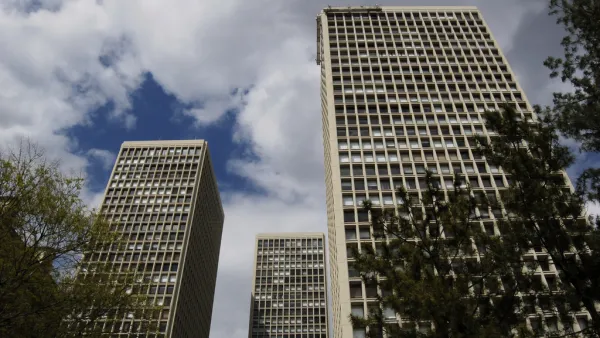
Gentrified in the 1960s during the height of urban renewal, Society Hill is a historical precedent as Philadelphia confronts present-day gentrification.
Working to Avoid the Pitfalls of the High Line
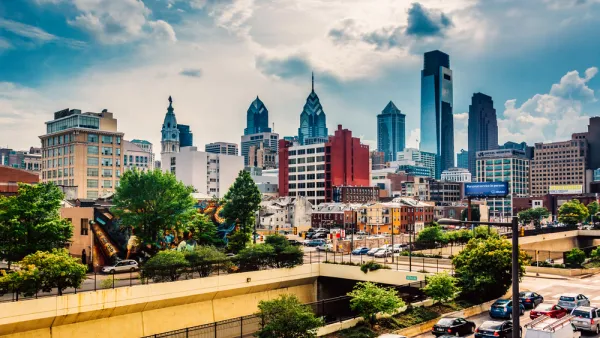
A highly anticipated linear park project in Philadelphia will open this year. Planners and activists have been working in anticipation of increased pressure on the local housing market.

How to Create More Affordable Housing in Philadelphia
Eliminating parking minimums and reforming Philadelphia's tax abatement program could do a lot in making Philadelphia affordable, Inga Saffron argues.

Planetizen Federal Action Tracker
A weekly monitor of how Trump’s orders and actions are impacting planners and planning in America.

California plans to bury El Niño’s downpour
If the state plays its cards right, it may be able to store a billion acre-feet of El Niño’s water in aquifers.

Desperate measures: Advocates weigh draining Lake Powell to fill Colorado River
Draining the reservoir could reduce evaporation losses by a couple hundred thousand acre-feet.

Mamdani’s pied-à-terre tax survives legal challenge
A panel of judges found that the plaintiffs failed to demonstrate injury as a result of New York City's implementation of the tax.

Eastern Nebraska is running out of electricity
Data centers and electrification are straining eastern Nebraska’s grid, throttling economic development.

Seattle passes record-breaking transit services expansion
Proposition 1 will double the city’s transit tax to add 95,000 more bus trips and preserve 180,000 bus trips annually.

FREE Course: Walkable City 1: Why Walkability?
After describing his path towards focusing on walkability as the essence of good planning, Jeff Speck marches through his five principal reasons for making more walkable places.
Reinventing Malls: Planning Alchemy—Turning Gray Fields Into Gold
The course focuses on the opportunities and imperatives that shape reinvention of mall sites.

City of Rosemead
Rutgers University, Edward J. Bloustein School of Planning and Public Policy
One Hundred Miles
University of Michigan School for Environment and Sustainability (SEAS)
Hunter College, City University of New York (CUNY)
The Architects Foundation
City of Cambridge
Montrose County
The Pocatello Development Authority