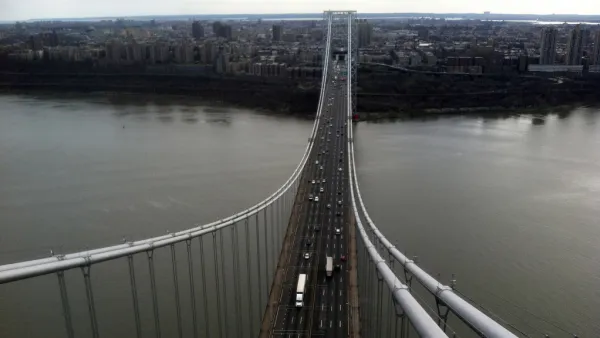
David Wildstein, the former Port Authority official who resigned over the George Washington Bridge-Gate lane closures and has refused to answer investigators' questions, indicated in his lawyer's letter that N.J. Gov. Christie knew of the closures.


To those who have been following Bridge-Gate, the revelation that Gov. Chris Christie knew of the early September lane closures to Fort Lee N.J. conflcts with what the N.J. governor has stated publicly, blaming the closures on his "rogue staff" from whom he was careful to distance himself.
"In a letter [PDF] released by his lawyer,...Wildstein...described the order to close the lanes as 'the Christie administration’s order' and said 'evidence exists as well tying Mr. Christie to having knowledge of the lane closures, during the period when the lanes were closed, contrary to what the governor stated publicly in a two-hour press conference' three weeks ago," writes Kate Zernike in what was described as a "bombshell" report" by Salon's Elias Isquith.
During his news conference, Mr. Christie specifically said he had no knowledge that traffic lanes leading to the bridge had been closed until after they were reopened. “I had no knowledge of this — of the planning, the execution or anything about it — and that I first found out about it after it was over,” he said. “And even then, what I was told was that it was a traffic study.”
The letter did not specify what the evidence was. Gov. Christie's response came quickly, "insisting the letter supports Mr. Chrisitie’s contention that he did not know of the closings in advance."
In USA Today, John Schoonejongen of Asbury Park Press writes that Wildstein attorney Alan "Zegas' letter sent shock waves through New Jersey's political community, with one veteran pundit saying the revelation was a 'bombshell'."
As with so many "gate" scandals, it's the denial or cover-up that gets the politician at the end. However, Bridge-gate has many more acts to play, so we'll try to limit our reports to the "bombshells."
Read the full story: Ex-Port Authority Official Says ‘Evidence Exists’ Christie Knew About Lane Closings

Bridgegate Winding Down
N.J. Gov. Chris Christie was never charged in the scandal that shut down access to the nation's busiest bridge for three days in September 2013 for political retribution. His aide and an appointment to the Port Authority were sentenced to prison.
Bridgegate Implications for New Jersey and Beyond
In The New York Times Sunday Review, Matt Katz, a political reporter for WNYC and New Jersey Public Radio, gives an update on the federal trial for 'Bridgegate' and also paints a bleak picture for New Jersey, and maybe the United States.
'Bridge-Gate' Attorneys Make Their Case: You Can't Sue Over Traffic
Attorneys representing the state of New Jersey responded to the allegations of a class action lawsuit rising from the "bridge-gate" scandal.

Planetizen Federal Action Tracker
A weekly monitor of how Trump’s orders and actions are impacting planners and planning in America.

Amtrak, CN end decades-long dispute with eight-year agreement
The new operating agreement establishes an updated framework for the companies to work together, including processes to resolve disputes.

Northwest rail fans eager for Sept. 30 debut of Amtrak’s Airo fleet
Get ready for that new train smell and more seats. But they won’t go faster or run more frequently on the Cascades route in Washington and Oregon.

St. Louis Metro to test if single-car trains can reduce operating costs, maintain rider satisfaction
The pilot program will run from October to spring 2027, and begin with one single-car train operating on Metrolink’s Red and Blue lines.

Pennsylvania is building data centers in abandoned mines
Housing data centers in mines provides an alternative to destroying local forests and may spare residents from data centers’ noise and air pollution.

If Corpus Christi can’t revive desalination plant project, it may owe Texas $235 million
Earlier this month, city officials declined to pursue developing the plant for the second time in a year.

FREE Course: Walkable City 1: Why Walkability?
After describing his path towards focusing on walkability as the essence of good planning, Jeff Speck marches through his five principal reasons for making more walkable places.
Reinventing Malls: Planning Alchemy—Turning Gray Fields Into Gold
The course focuses on the opportunities and imperatives that shape reinvention of mall sites.

City of Thousand Oaks
City of Wisconsin Rapids
Harvard University Graduate School of Design
The Architects Foundation
University of Cincinnati Online
The Pocatello Development Authority
The Urban Renewal Agency of the City of Pocatello