Once left for dead by the Bush Administration and subsequently revived by the Obama Administration, the FutureGen clean coal project was granted approval by the U.S. Department of Energy. Construction could begin this year.


The U.S. Department of Energy (DOE) has produced a 25-page document granting approval to the FutureGen clean coal project proposed for Meredosia in western Illinois. The $1.65 billion FutureGen project (with $1 billion in funding from the DOE) will remove carbon dioxide produced during the energy generation process and store it underground.
The project developer, FutureGen Alliance, isn’t completely through the permitting process and must still secure some of the remainder in funding, but construction is expected to commence before the end of the year.
The FutureGen project has been in the works since 2003, when the Bush Administration proposed the project for Mattoon in eastern Illinois, and was thought dead until the Obama Administration launched FutureGen 2.0 and shifted the project to western Illinois. The Sierra Club sued the project in December.
The FutureGen project is an important component of the Obama Administration’s “all of the above” policy for energy infrastructure investment.
Read the full story: FutureGen gets key U.S. Energy Department approval

A Postmortem on the FutureGen 'Clean Coal' Project
Earlier this month the Energy Department pulled the plug on the FutureGen "clean coal" project. The media has been sifting through the ashes to make sense of where the project went wrong.
Making Natural Gas Power Plants Cleaner
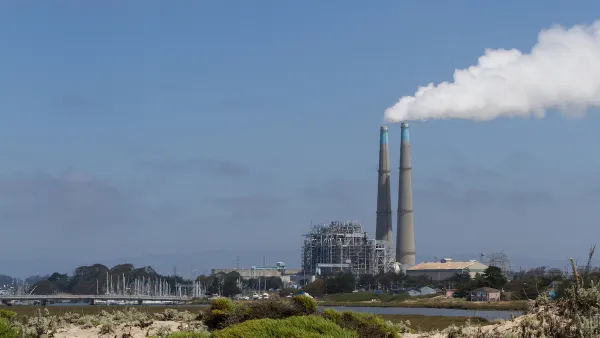
Carbon capture and storage has long been associated with coal-burning power plants. Calpine Corp. hopes to apply the controversial technology to existing natural gas power plants, beginning with a pilot project to start this month in the Bay Area.
World's Largest Carbon Capture and Storage Project Breaks Ground in Texas
Construction began July 16 on the Petra Nova project, 27 miles from Houston. President Obama and many climate experts are banking on CCS to mitigate carbon emissions from the world's largest source of carbon emissions: coal burning power plants.

Planetizen Federal Action Tracker
A weekly monitor of how Trump’s orders and actions are impacting planners and planning in America.

Amtrak, CN end decades-long dispute with eight-year agreement
The new operating agreement establishes an updated framework for the companies to work together, including processes to resolve disputes.

Judges permit Denver to divert 77,000 acre feet from the Colorado River for reservoir expansion
Overuse and climate change have caused the Colorado River’s water levels to plummet.

NYC DOT wants faster, more permanent street upgrades
The city is examining ways to build more concrete infrastructure without getting entangled in 'decades-long' projects.

'Something we’ve never seen before:' rising utility rates could strain city finances nationwide
Data centers, climate change and other factors have caused utility rates in the United States to increase by 38% since 2020.

Trump to overrule local leaders, lease millions of acres of America’s Pacific Island territories’ seafloors to mining companies
International law says that the Indigenous people of America’s territories have a right to prior and informed consent regarding projects that impact their countries.

FREE Course: Walkable City 1: Why Walkability?
After describing his path towards focusing on walkability as the essence of good planning, Jeff Speck marches through his five principal reasons for making more walkable places.
Reinventing Malls: Planning Alchemy—Turning Gray Fields Into Gold
The course focuses on the opportunities and imperatives that shape reinvention of mall sites.

Harvard University Graduate School of Design
KFH Group Inc.
Greater Baltimore Committee
The Architects Foundation
University of Cincinnati Online
The Pocatello Development Authority
The Urban Renewal Agency of the City of Pocatello