On Wednesday, backers of California's embattled $68 HSR project were grilled by the chairman of the House Transportation and Infrastructure Subcommittee on Railroads, Pipelines, and Hazardous Materials, Jeff Denham (R-Turlock), who wants to kill it.


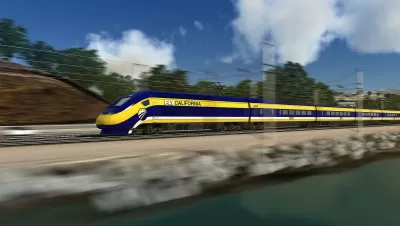
At stake is not new federal funding for high speed rail, of which there is none listed in the omnibus bill unveiled Monday for California (nor for any other state for that matter), but existing funds promised to the California project.
"Six lawmakers from California testified before their own colleagues at the House Transportation and Infrastructure Committee hearing, with Republicans -- led by Turlock's Jeff Denham -- opposing the project and Democrats including Fresno's Jim Costa generally supporting it," writes Curtis Tate of The Bee's Washington Bureau.
The Federal Railroad Administration has continued to make payments on its $3 billion commitment to the project. Denham questioned whether the Obama administration should continue to make those payments until the legal issues are resolved. He introduced legislation, H.R. 3893 [readers can vote and send email to Congress members via Popvox] to suspend the federal spending.
Denham targeted FRA Deputy Administrator Karen Hedlund (see her testimony) as well as the California High Speed Rail Authority's chairman, Dan Richard. Both assured lawmakers "that there was no reason to stop federal payments to the project in spite of the setbacks."
However, "the state faces an April deadline to make a $180 million payment required to keep the federal money coming." That deadline explains what perhaps was mistermed here as a Hail Mary pass to keep the project alive by funding it with $250 million from the state's cap and trade fund [PDF] intended to reduce carbon emissions. However, that allocation must be approved by the legislature.
The hearing did bring out support for the project as well. Backers pointed to the fact that "criticism was less about substance and more about politics. Republicans widely oppose Obama's high-speed rail program, and the entire economic stimulus," writes Tate.
Unlike Republican governors in Florida, Wisconsin and Ohio who rejected federal stimulus funds for high speed rail, Calif. Gov. Jerry Brown remains a stalwart backer of the Los Angeles to San Francisco project despite recent setbacks.
FULL STORY: Battle of words over high-speed rail erupts on Capitol Hill

Emergency Crude-by-Rail Safety Orders Take Effect
The emergency rules issued by DOT, including lowering oil-train speeds to 40 mph in urban areas, go into effect on April 20. They are in addition to rules expected to be released May 12 that address oil tanker car construction.
Report: California High-Speed Rail Won't Meet Travel Time Requirement
In 2008, California voters approved the country's only true HSR project with a travel time of 2 hours, 40 minutes from L.A. to San Francisco. Anything more than that might cause legislators to balk at proposed cap-and-trade funding for the train.
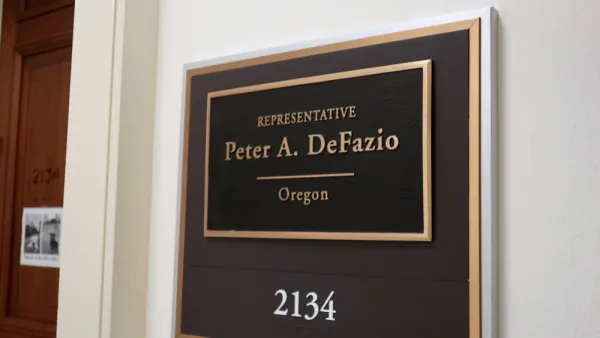
Peter De Fazio, Chair of the House Transportation and Infrastructure Committee, to Retire
The end of an era for Oregon in Congress.

Planetizen Federal Action Tracker
A weekly monitor of how Trump’s orders and actions are impacting planners and planning in America.

The state-sanctioned urbicide of Austin
People don’t kill cities. Freeways do.

US to reduce Colorado River water deliveries to Mexico
A new Colorado Treaty amendment reduces Mexico’s Colorado River water allocation by 250,000 acre feet.

Mamdani overhauls NYC's Vision Zero plan with 100 new policy goals
The overhaul aims to reduce traffic deaths and make streets safer for pedestrians, cyclists and drivers through lower speed limits, new safety infrastructure and more.

Amtrak not solely to blame for New Jersey commuter rail's unreliability, report finds
A new study from the Garden State Initiative found that NJ Transit’s budget grew 20% across a 4 year period, but reliability declined significantly over the same period.

EPA erases limits on planet-warming pollution from power plants
Under Monday’s plan, power plants would still have some limits on how much mercury, arsenic and other contaminants they can emit.

FREE Course: Walkable City 1: Why Walkability?
After describing his path towards focusing on walkability as the essence of good planning, Jeff Speck marches through his five principal reasons for making more walkable places.
Reinventing Malls: Planning Alchemy—Turning Gray Fields Into Gold
The course focuses on the opportunities and imperatives that shape reinvention of mall sites.


Eagle County Government
Harvard University Graduate School of Design
Nashville Planning Department
The Architects Foundation
University of Cincinnati Online
The Pocatello Development Authority
The Urban Renewal Agency of the City of Pocatello
Journal of the American Planning Association