Despite their fears, the well-off residents of Mount Laurel have been unaffected by the “fair share” of affordable housing mandated by the U.S. Supreme Court in the landmark battle over the socioeconomic integration of suburbia.


"SUBURBIA beckons many poor and working-class families with the promise of better schools, access to non-dead-end jobs and sanctuary from the looming threat of urban violence," writes David L. Kirp, professor at the University of California, Berkeley. "But many suburbanites balk at the prospect of affordable housing in their midst."
"Are the fears supported by facts? A comprehensive new analysis of what has transpired in Mount Laurel, N.J., since 140 units of affordable housing were built in that verdant suburb in 2000, answers with a resounding 'no.'"
Kirp discusses the findings of “Climbing Mount Laurel," a new book co-written by Princeton sociologist Douglas S. Massey and several colleagues, which "concludes that this affordable housing has had zero impact on the affluent residents of that community — crime rates, property values and taxes have moved in step with nearby suburbs — while the lives of the poor and working-class families who moved there have been transformed."
Read the full story: Here Comes the Neighborhood

Op-Ed: Christie Administration Hobbles Affordable Housing
The Mount Laurel doctrine, as its known, has been a constant sticking point for New Jersey Governor Chris Christie's administration. The New York Times editorial board suggests that the court must take control of affordable housing.
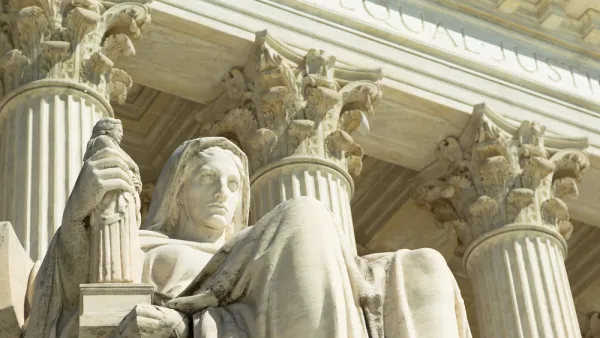
U.S. Supreme Court Won't Overturn California's Inclusionary Zoning Laws
The U.S. Supreme Court turned down a case with the potential to eradicate inclusionary zoning and in-lieu housing fees in the state of California.

Op-Ed: Why Cities Need the 'Poor Door'
Drawing on a distinction between equality and equity, Rick Jacobus argues that so-called 'poor doors' are a necessary compromise to promote affordable housing and neighborhood integration.

Planetizen Federal Action Tracker
A weekly monitor of how Trump’s orders and actions are impacting planners and planning in America.

Amtrak, CN end decades-long dispute with eight-year agreement
The new operating agreement establishes an updated framework for the companies to work together, including processes to resolve disputes.

Judges permit Denver to divert 77,000 acre feet from the Colorado River for reservoir expansion
Overuse and climate change have caused the Colorado River’s water levels to plummet.

NYC DOT wants faster, more permanent street upgrades
The city is examining ways to build more concrete infrastructure without getting entangled in 'decades-long' projects.

'Something we’ve never seen before:' rising utility rates could strain city finances nationwide
Data centers, climate change and other factors have caused utility rates in the United States to increase by 38% since 2020.

Trump to overrule local leaders, lease millions of acres of America’s Pacific Island territories’ seafloors to mining companies
International law says that the Indigenous people of America’s territories have a right to prior and informed consent regarding projects that impact their countries.

FREE Course: Walkable City 1: Why Walkability?
After describing his path towards focusing on walkability as the essence of good planning, Jeff Speck marches through his five principal reasons for making more walkable places.
Reinventing Malls: Planning Alchemy—Turning Gray Fields Into Gold
The course focuses on the opportunities and imperatives that shape reinvention of mall sites.

Harvard University Graduate School of Design
KFH Group Inc.
Greater Baltimore Committee
The Architects Foundation
University of Cincinnati Online
The Pocatello Development Authority
The Urban Renewal Agency of the City of Pocatello