What has the United States lost in its journey from a nation of communities to a nation of individuals? Resilience, for one, says Scott Doyon, who suggests how we can utilize community design and planning processes to regrow social ties.


"If there’s one thing the 20th century gave us, it’s the luxury of not needing each other. It so defines our culture that it’s physically embodied in our sprawling, disconnected landscapes."
"That alone begets a classic, chicken-n-egg question: Did the leisurely lure of the suburbs kill our sense of community? Were our social ties unwittingly severed by the meandering disconnection of subdivisions and strip malls or was sprawl just a symptom of something larger? After all, for all their rewards, meaningful relationships take a lot of work. Perhaps, once the modern world elevated our prospects for personal independence, we cut those ties ourselves, willingly, and embraced the types of places that reinforce those inclinations, lest our happy motoring be weighted down with excess emotional baggage."
Scott Doyon ponders the myth of the rugged individual and argues that strengthening our web of interdependent relationships is the key to building successful communities.
Read the full story: Resilience: It’s who ya know.
How the Suburbs Killed Our Connectivity, And How to Fix It
The deeper our sense of community, the better positioned we are to take on change, says Scott Doyon, but the leisurely lull of the suburbs may have killed our ability to work together.
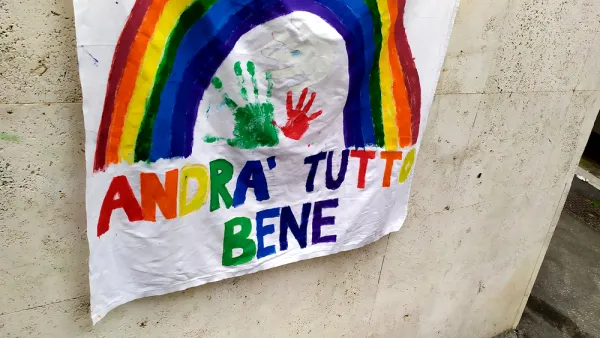
Overcoming Social Distance
People are finding new ways to connect digitally across physical spaces during the coronavirus pandemic, and these temporary solutions could have a lasting impact on the way we live.
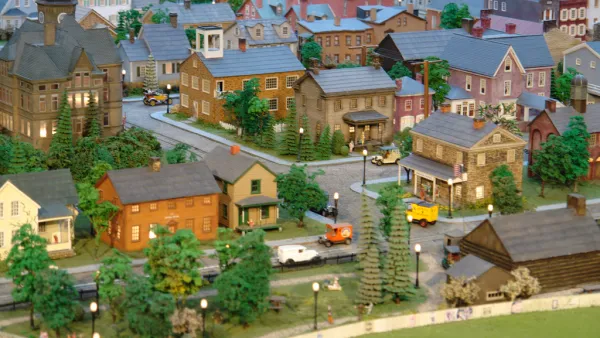
The Death of Neighborhoods
In the same vein that Robert Putnam explored decaying community and social capital in American in his work, Bowling Alone, Brian Bethune discusses how the decay of Western communities shapes our health and political realms.

Planetizen Federal Action Tracker
A weekly monitor of how Trump’s orders and actions are impacting planners and planning in America.

Eastern Nebraska is running out of electricity
Data centers and electrification are straining eastern Nebraska’s grid, throttling economic development.

Study reveals best places in the U.S. for cycling, walking
New research from Streetlight Data examines bicycle and pedestrian miles per capita in the 100 largest U.S. cities by population.

Why does it take an emergency for the U.S. to expedite infrastructure projects?
In June 2023, Philadelphia repaired a melted interstate in 12 days thanks to an emergency order.

Federal government nominates new FTA administrator
Mark Aesch is currently the founder and CEO of a transportation management consulting firm.

Developers reveal $10 billion stadium plan as ‘Hail Mary’ to keep Bears in Chicago
The plan would also boast a public park, high- and mid-rise buildings and a youth sports complex.

FREE Course: Walkable City 1: Why Walkability?
After describing his path towards focusing on walkability as the essence of good planning, Jeff Speck marches through his five principal reasons for making more walkable places.
Reinventing Malls: Planning Alchemy—Turning Gray Fields Into Gold
The course focuses on the opportunities and imperatives that shape reinvention of mall sites.

City of Charlotte
City of Rosemead
Rutgers University, Edward J. Bloustein School of Planning and Public Policy
University of Michigan School for Environment and Sustainability (SEAS)
Hunter College, City University of New York (CUNY)
The Architects Foundation
City of Cambridge
The Pocatello Development Authority
The Urban Renewal Agency of the City of Pocatello