The deeper our sense of community, the better positioned we are to take on change, says Scott Doyon, but the leisurely lull of the suburbs may have killed our ability to work together.


Scott Doyon suggests how to reconnect communities:
"If there's one thing the 20th century gave us, it's the luxury of not needing each other. It so defines our culture that it's physically embodied in our sprawling, disconnected landscapes."
Instead of our former "nation of associations" we've started "bowling alone." And that's a problem, he says:
"Given the less-than-desirable state of our economy and the national financial obligations that go with it, common sense would dictate that we invest in the strength of our community ties as a reasonable tool for reducing demands on the Fed. Yet, curiously, those most concerned with whittling down the size of government are more often than not the same ones opposing the local community visioning and smart growth planning efforts necessary to restore the social fabric that makes such reductions possible."
Thanks to Hazel Borys
Read the full story: Resiliency: It’s who ya know.

Building Resilience Through Reconnected Communities
What has the United States lost in its journey from a nation of communities to a nation of individuals? Resilience, for one, says Scott Doyon, who suggests how we can utilize community design and planning processes to regrow social ties.
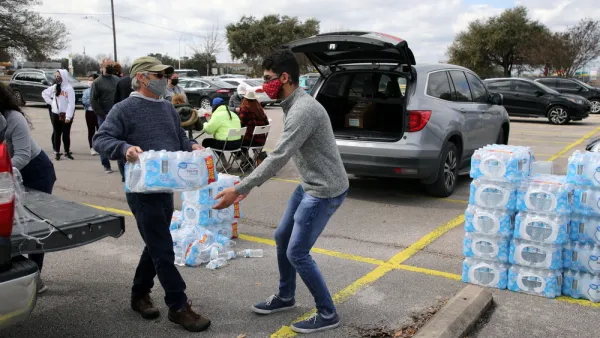
How Mutual Aid Increases Community Resiliency
Recent devastating weather events highlight the importance of community connection in keeping people safe when infrastructure fails.
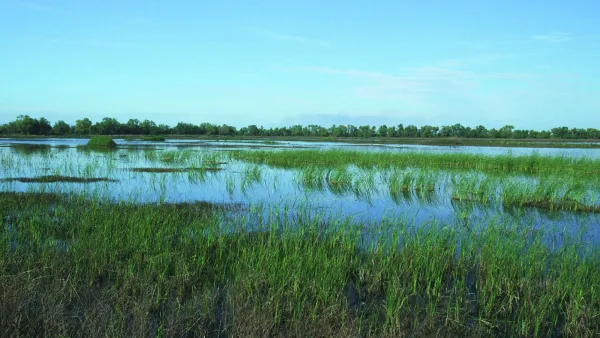
How to Fight Climate Change and Increase Resiliency, Naturally
Five actions governments could take quickly to reduce emissions and restore ecosystems.

Planetizen Federal Action Tracker
A weekly monitor of how Trump’s orders and actions are impacting planners and planning in America.

Amtrak, CN end decades-long dispute with eight-year agreement
The new operating agreement establishes an updated framework for the companies to work together, including processes to resolve disputes.

Judges permit Denver to divert 77,000 acre feet from the Colorado River for reservoir expansion
Overuse and climate change have caused the Colorado River’s water levels to plummet.

NYC DOT wants faster, more permanent street upgrades
The city is examining ways to build more concrete infrastructure without getting entangled in 'decades-long' projects.

'Something we’ve never seen before:' rising utility rates could strain city finances nationwide
Data centers, climate change and other factors have caused utility rates in the United States to increase by 38% since 2020.

Trump to overrule local leaders, lease millions of acres of America’s Pacific Island territories’ seafloors to mining companies
International law says that the Indigenous people of America’s territories have a right to prior and informed consent regarding projects that impact their countries.

FREE Course: Walkable City 1: Why Walkability?
After describing his path towards focusing on walkability as the essence of good planning, Jeff Speck marches through his five principal reasons for making more walkable places.
Reinventing Malls: Planning Alchemy—Turning Gray Fields Into Gold
The course focuses on the opportunities and imperatives that shape reinvention of mall sites.

Harvard University Graduate School of Design
KFH Group Inc.
Greater Baltimore Committee
The Architects Foundation
University of Cincinnati Online
The Pocatello Development Authority
The Urban Renewal Agency of the City of Pocatello