Monorails, reinstating the 'commuter tax,' and a city takeover of the MTA are among the proposals being bandied about by the candidates vying to become New York City's next mayor. Just one problem: they're all pie in the sky, say observers.


"For decades, City Hall hopefuls have wooed voters by promising better commutes—but when those candidates actually get elected, they find that it is hard to turn their plans into reality," writes Ted Mann. "In the 1920s, Mayor John Hylan campaigned on building a subway to Staten Island. More recently, Mayor Rudolph Giuliani wanted a train connection to La Guardia Airport. Both didn't happen."
"This year, many candidates are promising a similarly difficult feat: taking over the MTA."
"Transportation is a much more complex policy arena than the candidates understand. They're very comfortable speaking without any understanding of what the mayor can and cannot do," said Mitchell Moss, who directs the Rudin Center for Transportation Policy and Management at New York University.
The New York Times Editorial Board has weighed in on the topic as well.
Read the full story: New York Mayoral Candidates' Transit Plans Panned
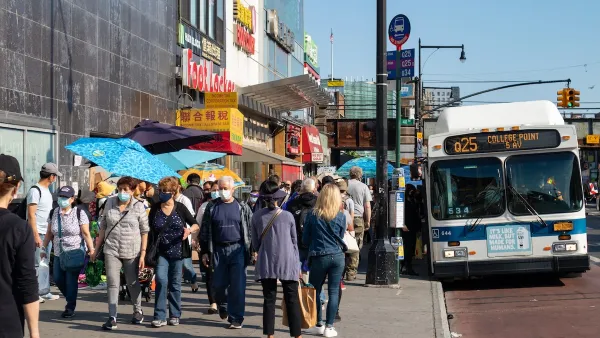
NYC bus network redesign speeds up Queens buses
Rush routes have seen a 4.6% speed increase after the redesign.
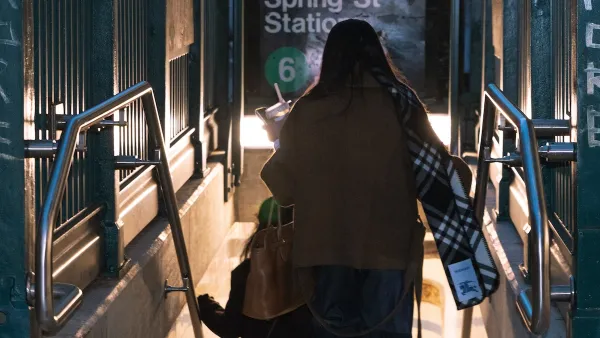
MTA kicks off six-year, $1 billion transit upgrade project
The authority is replacing the roughly 90-year-old train signals on the A and C line with modern technology.

Data reveals that NYC’s bet on congestion pricing has paid off
After almost two years of the program, reports show positive impacts on traffic and air quality and no disruptions to parking.

Desperate measures: Advocates weigh draining Lake Powell to fill Colorado River
Draining the reservoir could reduce evaporation losses by a couple hundred thousand acre-feet.

Eastern Nebraska is running out of electricity
Data centers and electrification are straining eastern Nebraska’s grid, throttling economic development.

Move over, LA: St. Louis gears up for Olympics, invests millions in downtown redevelopment
The Missouri city will host the 2028 Olympic soccer group stage and knockout matches.

Officials claim feds 'rushed' Amtrak environmental review
Amtrak plans to move their Chicago maintenance facility from an industrial area to a residential one.

NYC breaks ground on anti-flooding infrastructure project
New York City's new system will reduce stormwater flows to local sewers by 90%.

One Kentucky town’s secret to affordable housing
The Smoketown Community Land Trust has already built seven affordable homes for community members.

FREE Course: Walkable City 1: Why Walkability?
After describing his path towards focusing on walkability as the essence of good planning, Jeff Speck marches through his five principal reasons for making more walkable places.
Reinventing Malls: Planning Alchemy—Turning Gray Fields Into Gold
The course focuses on the opportunities and imperatives that shape reinvention of mall sites.

City of Rosemead
Rutgers University, Edward J. Bloustein School of Planning and Public Policy
One Hundred Miles
University of Michigan School for Environment and Sustainability (SEAS)
Hunter College, City University of New York (CUNY)
The Architects Foundation
City of Cambridge
Montrose County
The Pocatello Development Authority