The Southeast Michigan Council of Governments is considering $4 billion in highway expansion projects at a meeting today. With Detroit pursuing several alternative transportation initiatives, is this the best way to spend scarce federal dollars?


"On the one hand, some Detroit power players are starting to embrace sustainable transportation," writes Angie Schmitt. "Regional leaders recently brought together urban and suburban officials to create the first unified regional transit system for the area. The city of Detroit is working to add 100 miles of bike lanes this year. And then there are the plans for downtown light rail and bus rapid transit to the suburbs."
"But amid the signs of progress are two highway projects that threaten to undermine the region’s recovery," notes Schmitt. "The worst of the two, perhaps, is the $2.7 billion plan to widen I-94 through Midtown. SEMCOG and the political leaders who appoint its members apparently believe that ramming more than half a dozen new highway lanes through one of the city’s most promising neighborhoods will help stabilize Detroit."
"City residents in Detroit are still trying to cope with hours-long waits for the bus. Extravagant highway projects through city neighborhoods should be a non-starter," she urges. "With this vote, greater Detroit has an opportunity to avoid repeating the mistakes of the past, to demonstrate that the region is looking ahead, that it has the vision to solve its formidable problems."
Read the full story: Detroit’s Regional Planners Need to Kick the Highway Habit

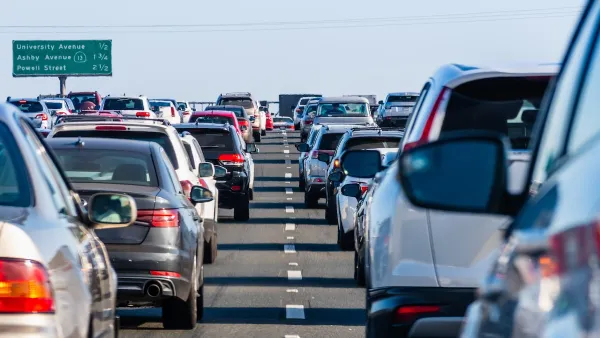
States Claim Highway Expansions Reduce Emissions
The argument is being used to channel climate funding to projects that expand automobile infrastructure, according to an analysis from Transportation for America.
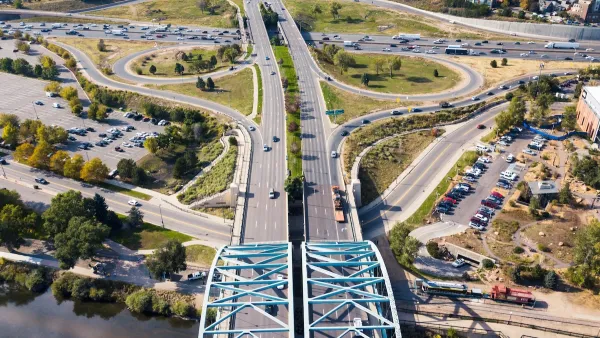
Colorado Requires DOT to Reduce Emissions. Is it Working?
A new rule calling for emissions reduction plans as part of highway projects has led to two canceled road expansions and a shift toward greener transportation investments.
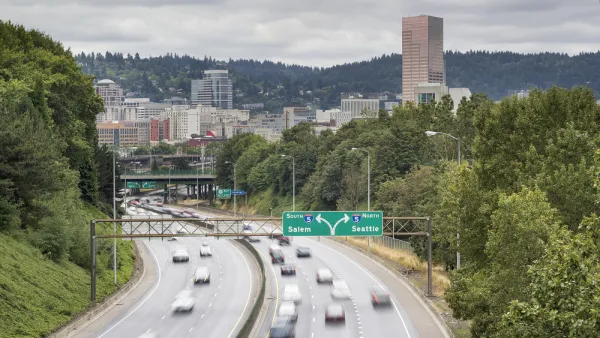
Oregon Youth Activists Protest Highway Expansion
A group of young climate activists are demanding an end to traffic-inducing road expansion projects and a renewed commitment to sustainable, transit-oriented transportation.

Planetizen Federal Action Tracker
A weekly monitor of how Trump’s orders and actions are impacting planners and planning in America.

Amtrak, CN end decades-long dispute with eight-year agreement
The new operating agreement establishes an updated framework for the companies to work together, including processes to resolve disputes.

Judges permit Denver to divert 77,000 acre feet from the Colorado River for reservoir expansion
Overuse and climate change have caused the Colorado River’s water levels to plummet.

NYC DOT wants faster, more permanent street upgrades
The city is examining ways to build more concrete infrastructure without getting entangled in 'decades-long' projects.

'Something we’ve never seen before:' rising utility rates could strain city finances nationwide
Data centers, climate change and other factors have caused utility rates in the United States to increase by 38% since 2020.

Trump to overrule local leaders, lease millions of acres of America’s Pacific Island territories’ seafloors to mining companies
International law says that the Indigenous people of America’s territories have a right to prior and informed consent regarding projects that impact their countries.

FREE Course: Walkable City 1: Why Walkability?
After describing his path towards focusing on walkability as the essence of good planning, Jeff Speck marches through his five principal reasons for making more walkable places.
Reinventing Malls: Planning Alchemy—Turning Gray Fields Into Gold
The course focuses on the opportunities and imperatives that shape reinvention of mall sites.

Harvard University Graduate School of Design
KFH Group Inc.
Greater Baltimore Committee
The Architects Foundation
University of Cincinnati Online
The Pocatello Development Authority
The Urban Renewal Agency of the City of Pocatello